Community Corner
Cleanup of Tappan Terminal to Begin on Monday, Residents Still Concerned About Safety
Exxon/Mobil will begin the long-awaited cleanup of Hastings' southern portion of the waterfront next week.

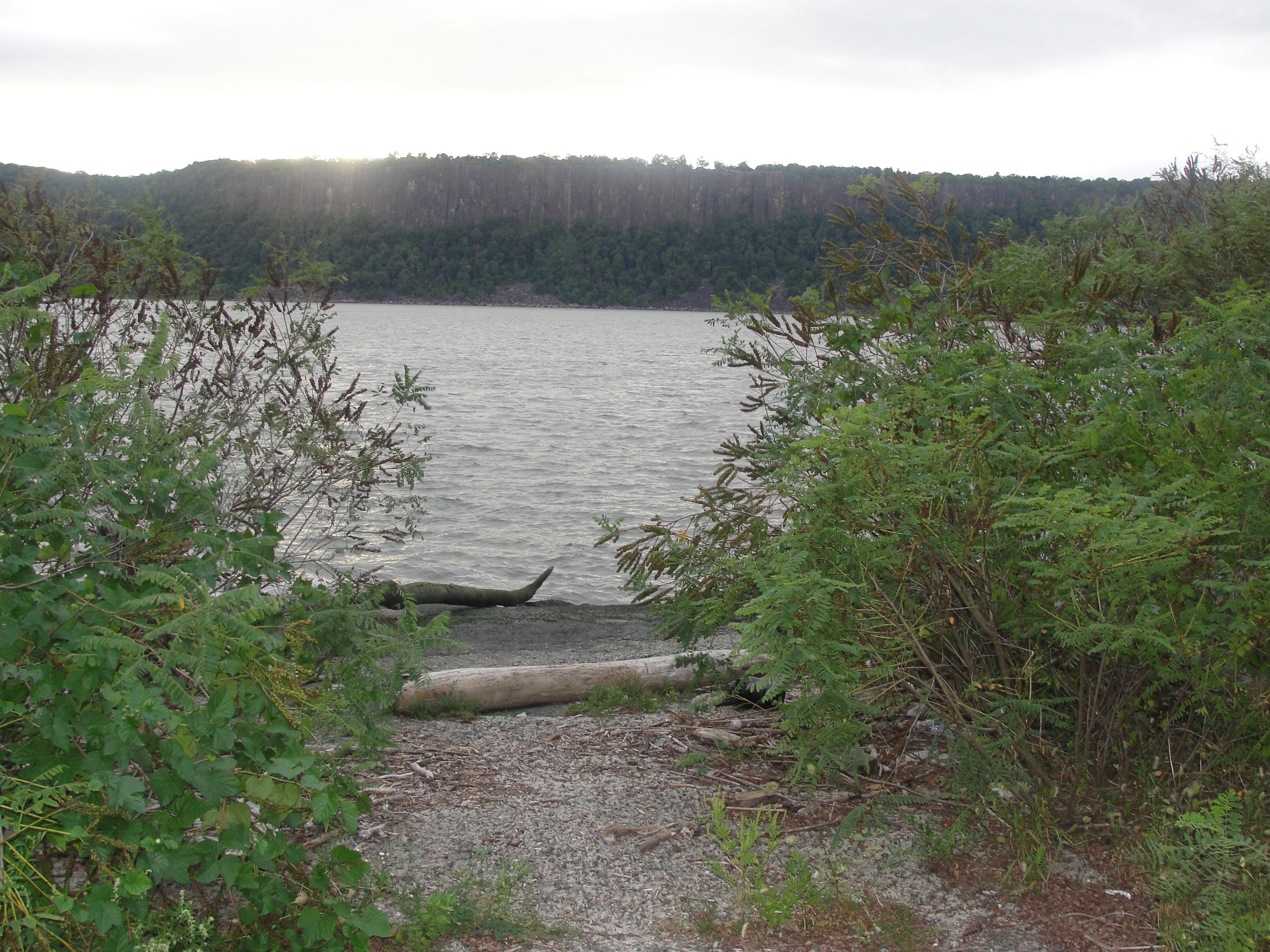


The long-awaited cleanup of the southern portion of Hastings' waterfront, or Tappan Terminal, is slated to begin on Monday, village officials said.
After years of discussion with little result, oil company Exxon/Mobil will commence "Phase I" of the remediation process, removing the vegetation from the area, breaking-up the concrete pathways and hauling away the dirt underneath that has been saturated with toxic chemicals since the 1860's. Officials expect the first stage in the process to take about three weeks.
"This is, indeed, a historic moment for Hastings: We can begin to visualize a waterfront one day open to all residents," Mayor Peter Swiderski wrote in a letter addressing all Hastings residents.
Find out what's happening in Rivertownsfor free with the latest updates from Patch.
But before even imagining what will ultimately become of the landmass that was once home to the Hastings Pioneer Boat Club, residents must contend with the lengthy—and some believe possibly dangerous—process of remediating the soil.
For the next few weeks, work will take place on Monday through Friday from 8 a.m. to 4 p.m. Trucks will discontinue hauling materials from 7:00-8:30 a.m. and 2:30-3:30 p.m. to reduce disruptions to school traffic.
Find out what's happening in Rivertownsfor free with the latest updates from Patch.
"Air monitors were installed on Wednesday on Warburton Avenue," Village Manager Francis Frobel said. "The monitors will take baseline readings and then keep track of levels of toxins in the air as the project proceeds. If toxicity reaches a certain level, we have been told that a signal will sound and the work will be immediately shut down."
Resident Jim Metzger was present at (DEC); he is not entirely convinced that either the oil companies or the government agency has locals' best interest as a top priority.
"At that original meeting, I was very upset to learn that there would be air quality monitors installed only within the construction site," Metzger said. Though he was pleased to learn that monitors had been installed further up the hill, Metzger said he still felt uneasy knowing that actions wouldn't have been taken without the strong urgings of a few concerned citizens.
Michael Curtis, another resident who attended the meeting earlier this summer, expressed similar concerns. "I live on Warburton right above the site," said Curtis, an attorney with a history of environmental litigation. "It seemed like common sense to me that they should monitor the air quality where people actually live."
Though Curtis and Metzger pushed for additional monitors in such populated areas as the Hastings-on-Hudson train platform, the DEC deemed such locations too far away for concern.
"It was decided that it would not be needed [near the station] because the air monitoring near the excavations provides earlier notification for appropriate action and protection of the community," a DEC representative said. "The train station is remote from the work area, and not downwind of prevailing winds."
If higher levels of toxins are detected, DEC representatives said: "The excavations would be halted, the source would be identified and corrective action—such as dust control or foam application—would be taken. In general, the neighbors would not be notified, because the excess toxicity is usually addressed in a timely way so that human exposure isn't an issue."
According to DEC reports, contaminants known to be present at the site include: petroleum, benzene, chlorobenzene. and semi-volatile aromatic hydrocarbons.
Particularly disturbing to Curtis was the presence of benzene, which, he said had been linked in rare cases to Acute Myelocytic Leukemia.
"During the hearing the DEC official present said the worst thing benzene could do is cause a minor respiratory problem," Curtis said. "While I am aware that it would take profound levels of exposure to cause cancer—levels we most likely would not come close to here—I would have expected the DEC to disclose the worst possible scenario at a public hearing."
The southern portion of the waterfront is composed of two properties: the Exxon/Mobil property, which is located next to the river, and the Uhlich Color Company property, which is located along the railroad tracks on the eastern end of the site. Much of the benzyne is believed to have originated from the dye company.
Though Mobil (now Exxon/Mobil) discontinued use of the property in 1985, the DEC reports discovering several oil spills and bulk storage violations soon after. In 1996 Mobil agreed to investigate petroleum contamination on the western portion of the site. Because none of the many potentially responsible parties agreed to perform comprehensive studies of the site, it was referred to a state-funded investigation in 1998.
Twelve years later, the preliminary phases of the cleanup will finally begin.
Once the most contaminated soil has been hauled in trucks from the site, an expected two-year process of bioremediation will begin to purify the groundwater.
Bioremediation is a process of infusing a contaminated area with microorganisms that consume the toxins and convert them into less caustic byproducts.
At the July meeting DEC spokesman William Ports said, "A pilot study and bench testing showed that bioremediation is capable of remediating groundwater. Bioremediation has a 50 percent reduction in chlorobenzene in six months as opposed to natural processes which show a decline of 40 percent of 10 years."
But Curtis and Metzger were disappointed that the DEC representatives could not provide real-world examples of sites in which bioremediation had been successful.
"My fear is that companies tend to spend as little as possible in these situations," Curtis said. "We were trying to understand if we were getting the highest quality of work done."
While Curtis made it clear he was not personally frightened to breathe the air outside his home, he said it was important for residents to be vigilant and ask questions when something doesn't seem right.
"I am always fascinated that people are so complacent as to say, 'Well there are government agencies watching out for our health; nothing could go wrong,'" Curtis said. "People need to wake up and realize that installing regulatory apparatus is one thing, but that enforcing the restrictions is what's important."
Get more local news delivered straight to your inbox. Sign up for free Patch newsletters and alerts.