Politics & Government
Countdown to Primary Between Dems Abinanti and Sterne
The democratic primary for New York's 92nd assembly district is tomorrow, Sept. 14. The winner will face Republican Tom Bock in November's general election.

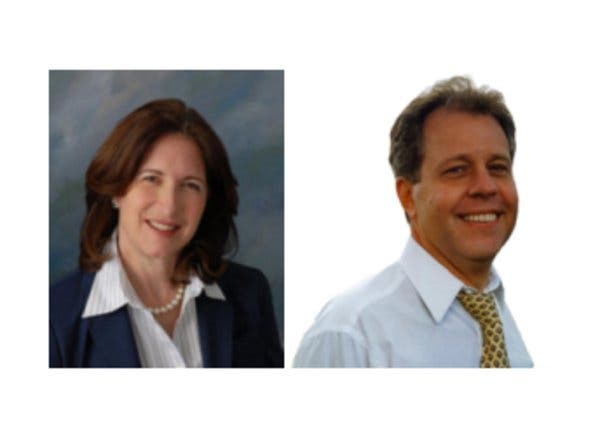
Results of the much-anticipated democratic primary between state assembly candidates Tom Abinanti and Anna Sterne will be determined tomorrow, Tuesday Sept. 14.
Patch asked both Abinanti and Sterne to articulate their plans to reduce property taxes, increase use of renewable energy sources and—if elected to represent the district in Albany—how they would strive to combat the widely perceived ineffectiveness of the state's current lawmaking body.
Tuesday's winner will go on to face republican Tom Bock in the Nov. 2 general election.
Find out what's happening in Rivertownsfor free with the latest updates from Patch.
Patch: If elected, what would be your plan to reduce school taxes?
Abinanti: First, I would fight to change the school aid formula to put Westchester schools in the same group as schools in Suffolk and Nassau Counties, rather than be grouped with upstate districts in which the cost of living is much lower. This would provide an immediate spike in state aid.
Find out what's happening in Rivertownsfor free with the latest updates from Patch.
Next, I would put together a coalition of suburban legislators to counter the strong influence of New York City legislators on tax policy. We need to stop the shift of school districts' accruing costs to individuals' property taxes.
Finally, I would join the legislators currently working on a law that would limit the amount paid in property taxes to a percentage of one's income. Assemblywoman Sandy Galef has been working on this for some time; I'd like to see it passed.
Sterne: My plan to reduce school taxes starts with controlling the number of unfunded mandates placed by the state on public school districts. This could control the tax rate or even potentially lower it; conservatively, this would save districts two to three percent of their budgets, which is money that could go directly back to classrooms.
Another issue is the need for pension reform because retirement benefits are becoming out of control.
A main reason I am running is that districts have done all that they can to save money and cut added expenses; everything else must be dealt with at the state level.
Patch: New York State government is currently associated with chaos and ineffectiveness—why do you think you're the best candidate to help change that perception?
Abinanti: I have a record of reform that proves I am not afraid to take on powerful interests. I can make changes against significant odds.
I am the only candidate in this race with legislative experience and experience putting together large budgets. Passing laws requires a special type of know-how, which I have acquired through working on the Greenburgh Town Board, Westchester County Board and hope to put to use on the New York State Assembly. No one person has the power to change Albany, but I can be part of the solution.
We need a strong suburban coalition to represent this district and districts like ours—I am a strong-willed person who is very reform-minded. The way to enact change is to be able to compromise on specific issues without compromising principals.
To get last year's county budget passed, I went to each legislator to find out their specific needs and then helped put together a budget I knew a majority would approve.
Sterne: All consensus building comes to negotiating with one person at a time, and, although on a smaller level, that is exactly what I have done while serving on the Dobbs Ferry school board.
People think the current legislative bodies are the most dysfunctional in the history of NY State government and that representatives must change the way they do business.
Residents in this district feel disenfranchised. I intend to change that.
Patch: If elected, how would you continue to keep your constituents abreast of what is happening in Albany to assure that that you're staying true to your campaign promises?
Abinanti: I am constantly out on the street. I attend public meetings, give out my phone number and e-mail address to anyone who wants it, and I or a staff member responds to every message we receive that requires a response.
Just like the county board sends out e-mailed newsletters, I would send e-mails from Albany letting residents in the district know what's currently being worked on. And, despite the rigors of the job, I will continue to go to as many municipalities' meetings as my schedule permits.
Sterne: The model on the school board is that when you have a major issue, you hold a public forum to garner public opinion. I would try to build on that model while serving on the state assembly.
I have already started collecting names of community groups, and as this district's representative, I would arrange to meet with citizen's groups, chambers of commerce and, of course, school boards.
While serving as legislative liaison to the Dobbs Ferry school board, I was rarely pointed in the right direction as to whom to approach about important issues—as an assemblywoman, I would make sure to help constituents navigate the state government. It shouldn't be a mystery.
Patch: How would increase the use of renewable energy sources within this district and in the state at large?
Abinanti: We need to convince people—both inside and outside of government—that renewable energy sources can work, can meet a significant part of our overall energy needs and deserve the same funding opportunities as other more traditional sources of energy.
We need to share some of the funding for fossil fuels and nuclear energy with sustainable sources like: solar, wind and waterpower. There is excess state waterpower being generated upstate—we need to harness some of that energy to be used here in Westchester. I have visited the Niagara Falls Power Plant and know some of their excess energy could be used down here.
We also need to educate people to conserve. I would push to incentive-ise energy audits to that individuals and businesses ca learn where specifically to cut down on usage.
Sterne: We should implement more incentives for residents and businesses to "go green." The Dobbs Ferry schools participated in an energy audit a few years ago because there were financial incentives to do so. I plan to push for increased incentives and work to publicize them better.
Also, our infrastructure for electric car usage could be much better. We have the perfect conditions for driving an electric car—with so many residents driving mainly locally and commuting to the train stations. There should be more charging stations in convenient places such as train stations.
Patch: After spending so much time at community events like Tarrytown's "Third Friday," Irvington's July 4 fireworks display and Hastings' "Friday Night Live," what has struck you most about residents of this district and their major concerns?
Abinanti: I was surprised by so many people's lack of understanding of the issues and how state government works.
I was also surprised by the number of people—mainly republicans—who want to give tax breaks to businesses while also lowering property taxes for everyday residents. I try to explain you can't have it both ways.
If we decrease revenue collected from taxes on businesses, we won't be able to cut individuals' property taxes—that, to me, should be the first priority.
Sterne: I was surprised by how well versed everyone is about Albany and its dysfunction.
It seemed to me younger people were most concerned about taxes and older people most concerned about the state's implementation of federal healthcare reform. So many people expressed fear of healthcare reform because of fear of losing services. As a nurse, I would fight to make sure that didn't happen.
Get more local news delivered straight to your inbox. Sign up for free Patch newsletters and alerts.