Community Corner
Hastings Mayor Shelves Deer Cull, Recommending Non-Lethal Alternative
In his most recent newsletter, Mayor Peter Swiderski announces he no longer recommends lethal control of deer population.

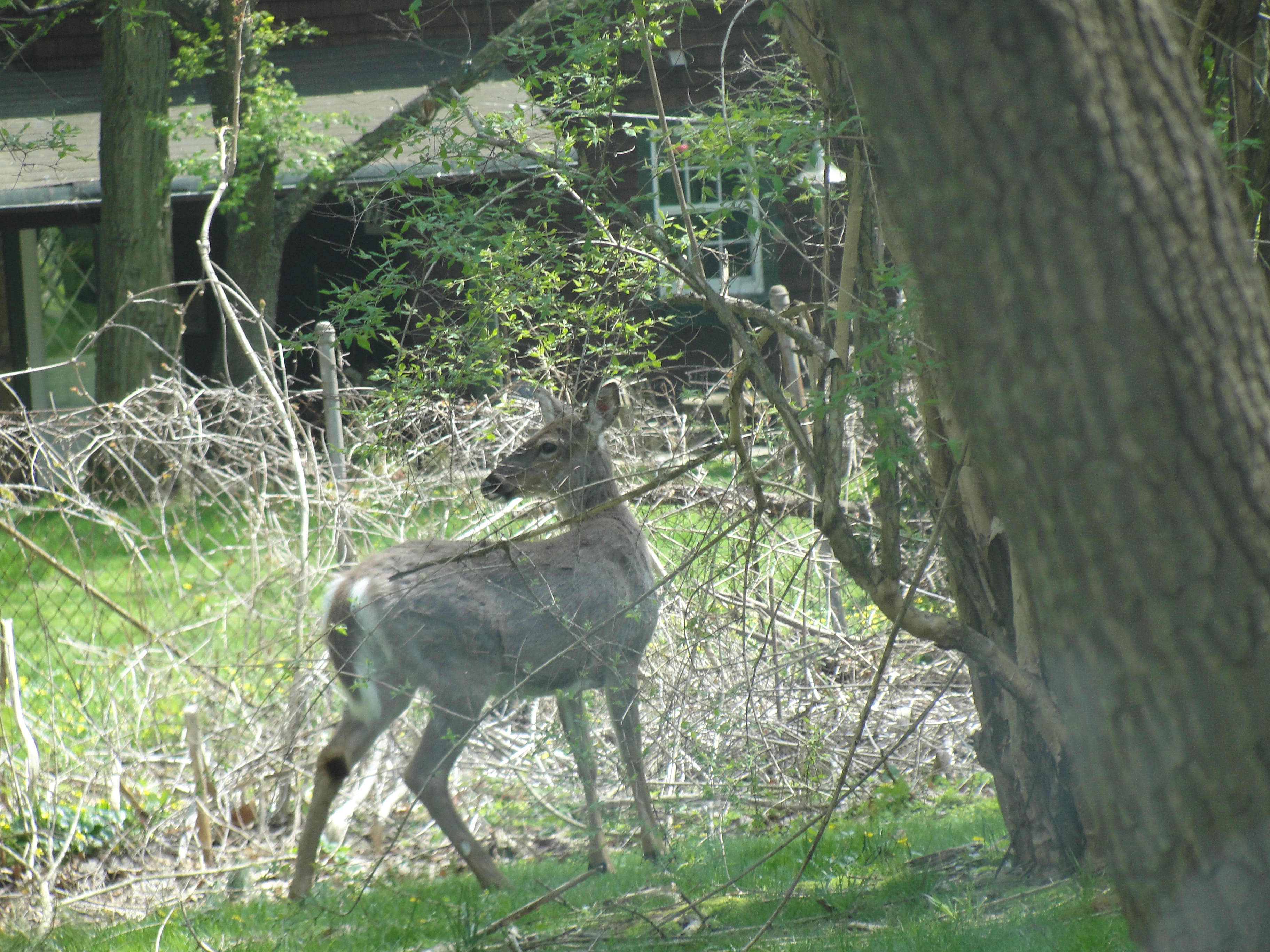
In a newsletter sent to the community Wednesday night, Hastings Mayor Peter Swiderski announced he no longer intends to use the permit obtained from New York State to cull deer. His new plan is to pursue immunocontraception — in essence, birth control for deer.
Around the time Swiderski procured approval for a cull in Hastings, nearby Pound Ridge participated in a controlled hunt, trying to reduce their deer population by upwards of 70 percent. Swiderski said hunters got no more than 15 to 20 percent of the population.
"That was my first inkling a cull might not work as well as we had hoped in Hastings," Swiderski said.
Find out what's happening in Rivertownsfor free with the latest updates from Patch.
But the process through which a net-and-bolt cull would have to be executed also posed a problem for the village. To get the herd down to the size officials wanted, Hastings would have had to engage in a cull three years in a row and return to it every two years after that indefinitely.
"While I was campaigning, I was surprised at the number of people who asked, 'If you get elected, what will you do about the deer?'" Swiderski recalled. At the time it seemed as if a cull were the most natural solution; but given the number of times the process would have to be repeated, Swiderski realized Hastings' residents "wouldn't have the stomachs for it."
Find out what's happening in Rivertownsfor free with the latest updates from Patch.
Forced to pursue non-lethal approaches, the village turned to the idea of immunocontraception.
"Basically, every two years, you have to hit the deer with a dart that makes it sterile," Swiderski said. According to guidelines of the new approach, at the same time the vaccine penetrated the animal, it would also be marked so experts could recognize which deer had been hit.
And at $30 per dart, multiplied by 70 deer, the cost of immunocontraception would be significantly less than any form of lethal control, Swiderski said.
According to the Humane Society of the United States, immunocontraception is a preferred method of wildlife control, although they do warn that studies are still underway and data is not yet conclusive.
"We have actively forged partnerships with public agencies, communities, parks, zoos, and other entities to test immunocontraceptive vaccines and begin to control wildlife populations," the website says. "We have several active deer immunocontraception field sites, including locations in New York, Maryland, and Ohio."
Skeptics say immunocontraception has only proven effective on small, self-contained islands, but proponents argue this method can be potentially more effective than lethal alternatives.
"If it works and we can get a permit to try, I see this as a no-brainer," Swiderski said.
Swiderski's letter:
"Last month it was worrying about coyotes, now back to deer. While we secured a permit to cull from New York State, we've looked at the issues around implementation and just don't believe it will work here in Hastings. We're setting that permit formally aside and will be pursuing a non-lethal option potentially just as effective over time (something called immunocontraception). There are some exciting developments on that front that we will share at the August 24th Board Meeting. If you spend a lot of time spent outside remember to check for ticks and see your doctor if you develop growing, circular rashes."
Get more local news delivered straight to your inbox. Sign up for free Patch newsletters and alerts.