Politics & Government
Hastings Officials Delve into the Comprehensive Plan
Hastings Comprehensive Plan Committee and Board of Trustees discuss the plan for the village's future.

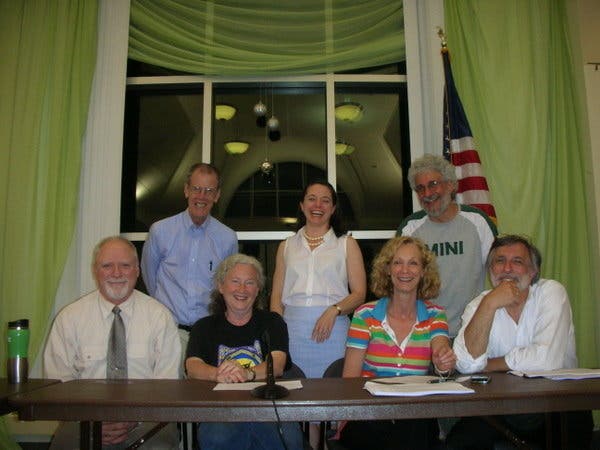
For two and a half years 11 members of the Hastings community have worked assiduously to create a 102-page comprehensive plan for the village. In a recent Board of Trustees meeting, the committee submitted the document to the mayor and board, meaning it's now up to them to decide if, how and when to implement it.
This week, members of the Comprehensive Plan Committee, Planning Board and village Board of Trustees met to discuss the document and how certain aspects could be clarified or improved.
"We don't want to slow down the process over wordsmithing," Mayor Peter Swiderski said, emphasizing that the early stages of review should focus only on big ideas.
Find out what's happening in Rivertownsfor free with the latest updates from Patch.
Divided into nine chapters—with the first and last being an introduction/village overview and implementation matrix—the plan addresses: The downtown, large tracts, circulation, environmental sustainability, sustainable infrastructure and quality of life.
"A comprehensive plan is a document that plans for land use and the economic components of a village, town or city," Kathy Sullivan, CPC chairwoman, said. "Our community is basically already developed, built out, so we felt we needed to start seriously addressing land use requirements and the character of Hastings."
Find out what's happening in Rivertownsfor free with the latest updates from Patch.
After sending out surveys, holding community workshops and meeting among themselves, the CPC was able identify three major goals for their plan:
- Fostering economic development
- Promoting environmental sustainability
- Protecting and enhancing the community character
To foster economic development, the plan recommends that the village strive to create "economic development opportunities in the downtown and on some of the large tracts, such as the waterfront."
Promoting environmental sustainability is another key aspect of the plan, outlined as "protecting resources, landscape and water bodies." Also recognizing the country's new 'green' values, the plan aims to "promote walking and bicycling, protect open spaces and natural features, preserve and reuse buildings, envision a cleaned-up waterfront and promote 'green' design…"
The third goal, protecting the community's overall character, is less tangible, and focuses on maintaining Hastings' "small town feel."
Because the CPC began its work in 2007, the village was in a very different place economically from now. "We were very cautious about cost," Sullivan said. "The recession reined us in, in a way that made us more frugal than we might otherwise have been."
In studying the downtown, the CPC outlined a number of objectives, including: enhancing the social character, making the village an "inviting dining and shopping destination" for both locals and visitors, protecting the history of the village and addressing parking limitations.
"I am very much in favor of promoting tourism in the Rivertowns that emphasizes walking and outdoor dining," Trustee Meg Walker said during the boards' meeting with the CPC. "I think we should also look at the high turnover rate in downtown storefronts—and promote the most stable businesses."
Large tracts, defined as the village's "largest remaining open spaces"—including the waterfront are also a major focus of the comprehensive plan. Goals include: improving the gateways, or making the village more attractive upon entering; protecting environmentally-sensitive areas, maintaining existing parkland, diversifying the tax base, and "providing residents and the development community with transparent, simplified procedures for project review and approval."
"Having a set plan makes it easier for developers who come in, because we can say, 'This is exactly what we expect,'" Sullivan said.
To improve circulation, or transportation into and within the community, the comprehensive plan calls for a number of improvements for pedestrians such as: sidewalks, staircases, walking trails and cleaned-up intersections to provide for safer crossings. For automobiles, the document recommends roadways and bridge connections be enhanced and maintained, and finally the CPC calls for increased promotion of public transportation such as Bee-Line buses and the Metro-North railroad.
To promote environmental sustainability, the CPC urges the village to: reduce energy consumption by both the village and its residents and encourage sustainable design.
"One of the recommendations we make is that the village government do outreach on composting and recycling," Sullivan said.
Next focusing on infrastructure, the plan aims to: "Minimize stormwater runoff; preserve and protect floodplains and water bodies; preserve, protect and restore wetlands; anticipate more intense storms and higher water levels associated with climate change; and to conserve water."
Among the many ways to conserve water, the committee suggests requiring low-flow toilets in new construction and finding opportunities to reuse gray water, or water that has already been used for showers, dishwashing and laundry.
The final component of the village the plan is quality of life, a concept harder to quantify and judge than the others.
Ideas discussed in this chapter are: making sure the village stays affordable to a variety of people—often through construction of affordable housing units-- protecting historic resources, working with neighboring communities to reduce costs and expand programs, making sure public schools are supported, promoting volunteerism, providing opportunities for public art and easing the property tax burden on residents.
Now that the document is complete and has been submitted to the Board of Trustees, it is up to them to make the final changes and establish an implementation plan.
"I see planning as an opportunity to design a better future for the village," Walker said.
Although the timing of release of the 2010 census may hinder the approval and implementation of the document, Sullivan stressed that by setting up an implementation matrix, the board could circumvent problems stemming from outdated numbers.
"We see this as a solid five-year plan," Sullivan said. "And if it can endure longer, that's great."
To see the most recent draft of the comprehensive plan, click here
Get more local news delivered straight to your inbox. Sign up for free Patch newsletters and alerts.