Community Corner
Proposed Dobbs Ferry Zoning Code Protects Open Spaces, Prohibits McMansions
A public hearing will be held in September to discuss elements of Dobbs Ferry's proposed zoning code.

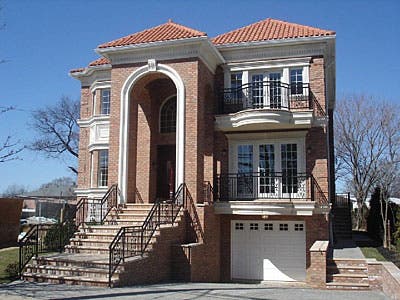
For some, the thought of reading about zoning codes and land ordinances seems just about as appealing as watching C-SPAN in slow motion; but in Dobbs Ferry, the proposed zoning code may be the key to understanding the future of the village.
The Dobbs Ferry Land Use Committee, comprised of members of various boards such as the planning board and architectural review board,have been working for years to devise a comprehensive zoning code and vision plan for the village that sets clear guidelines on what can and can't be built.
At a public board of trustees meeting last week, members of the committee presented their updated plan to the board; there will be a public hearing on the specifics at the next regular board meeting on September 14.
Find out what's happening in Rivertownsfor free with the latest updates from Patch.
According to land use committee member Padriac Steinschneider, there are four key elements of the plan that residents should understand: enforcing a context-based code, mandating cluster, legalizing accessory apartments and creating a technical advisory committee.
Context-Based Code
Find out what's happening in Rivertownsfor free with the latest updates from Patch.
While many villages, such as Scarsdale and Irvington, also have rules setting a maximum size of new construction in given neighborhoods, they generate their numbers using a floor area ratio, or FAR.
"Outside of big cities, FAR's are extremely ineffective," Steinschneider said. "They set no limits on how high a building can be, so you can be well within the FAR and have a house the doesn't fit at all."
For this reason, Dobbs Ferry's land use committee is recommending a context-based code, or formula for building that measures the roof height and angle from the property line to the top of the house to determine acceptable dimensions for new construction.
"We use three basic tools to determine the context-based code," Steinschneider said. "First, we look at the sky plane, or angle from the property line to the top of the house. Then we determine appropriate heights by measuring the heights of the eave [bottom of roof] and ridge [top of roof].
The average sky plane, prevailing eave and prevailing ridge are each determined for all the homes in a given neighborhood. And according to a context-based plan, any new construction must fall within a set range of the averages for its neighboring homes.
"This prevents the risk of having someone build an enormous house that's looming over all its neighbors," Steinschneider said.
The only major municipality to have adopted a context-based code is Denver, Colorado, and Dobbs Ferry's land use committee is excited by the possibility of becoming the second.
"This is definitely a novel concept," Darius Chafizadeh, Dobbs Ferry's village attorney said. "The whole idea behind this is to assure homes are built to scale within a given neighborhood, and the architects believe this is the best formula to make sure that happens."
Mandating Cluster
The second important aspect of the new code is mandating cluster, or making sure that new projects are built compactly to preserve the village's open spaces.
"The concern here is that Dobbs Ferry uniquely still has large tracts of open land that could potentially be available for development," Steve Hunter, chairman of the land use committee said. "We wanted to create a guide for developers as to how they can go forward with projects without eating up all our open space."
Examples of open space in the village include: Children's Village, The Ardsley Country Club golf course and parts of Mercy College. While Hunter does not foresee any of these institutions selling land in the near future, he and his colleagues believed it was worth deciding on ground rules before it's too late.
Steinschneider said there was one myth relating to mandating cluster he wanted to debunk.
"People think mandating cluster means building lots of attached town houses," Steinschneider said. "That's just not true. It means that if you have a five-acre plot, you can't build one house on each acre, robbing the village of its undeveloped space. Homes do not need to touch."
Accessory Apartments
Accessory apartments refer to small apartments within single-family homes that can be rented out to a family member or someone looking for affordable housing in the community.
Currently, accessory apartments are illegal—though many residents have them—and the land use committee believes they can serve an important purpose in the community.
"Dobbs Ferry doesn't seem to be getting any cheaper," Steinschneider said, "And it's hard both for entry-level workers and retired seniors to continue living here because of the taxes."
Steinschneider suggests that by allowing accessory apartments residents could rent space to their 20-something-aged child or an ailing parent who's not ready for assisted living.
"Our first goal would be to legalize the accessory apartments that already exist, making sure they're all safe and up to code," he said.
Steinschneider added that there should also be a cap on the number of accessory apartments allowed at a given time, suggesting 50 was a reasonable number.
Creation of a Technical Advisory Board
Tough it may appear absurd, comical even, to add another board to Dobbs Ferry's already long list of boards and committees, Hunter believes the technical advisory board will actually serve to expedite the process by which projects are rejected or approved.
"This board will help direct projects to the most reasonable groups given its scope and state of development," Hunter said. "Sometimes it makes sense to have two boards looking at a project at once so they can collaborate, rather than have the proposal start with one group, be sent to another, only then to be sent back to the first."
Steinschneider added that the zoning code's amended approval process can also potentially save developers money by giving the board of trustees the opportunity to review a proposal even before it goes to the planning board.
"This way, if the board is completely against the project, the developer won't waste his or her money tweaking plans that would have been rejected regardless of the expensive changes made," Steinschneider said.
The public hearing on Dobbs Ferry's zoning code will be held at 7:00 p.m. on September 14 in Dobbs Ferry Village Hall.
Get more local news delivered straight to your inbox. Sign up for free Patch newsletters and alerts.