Politics & Government
Hastings Residents Protest Construction of New Affordable Housing Units
Much to the chagrin of many locals, Hastings'Affordable Housing Committee has proposed two new sites for low-income housing in the village.

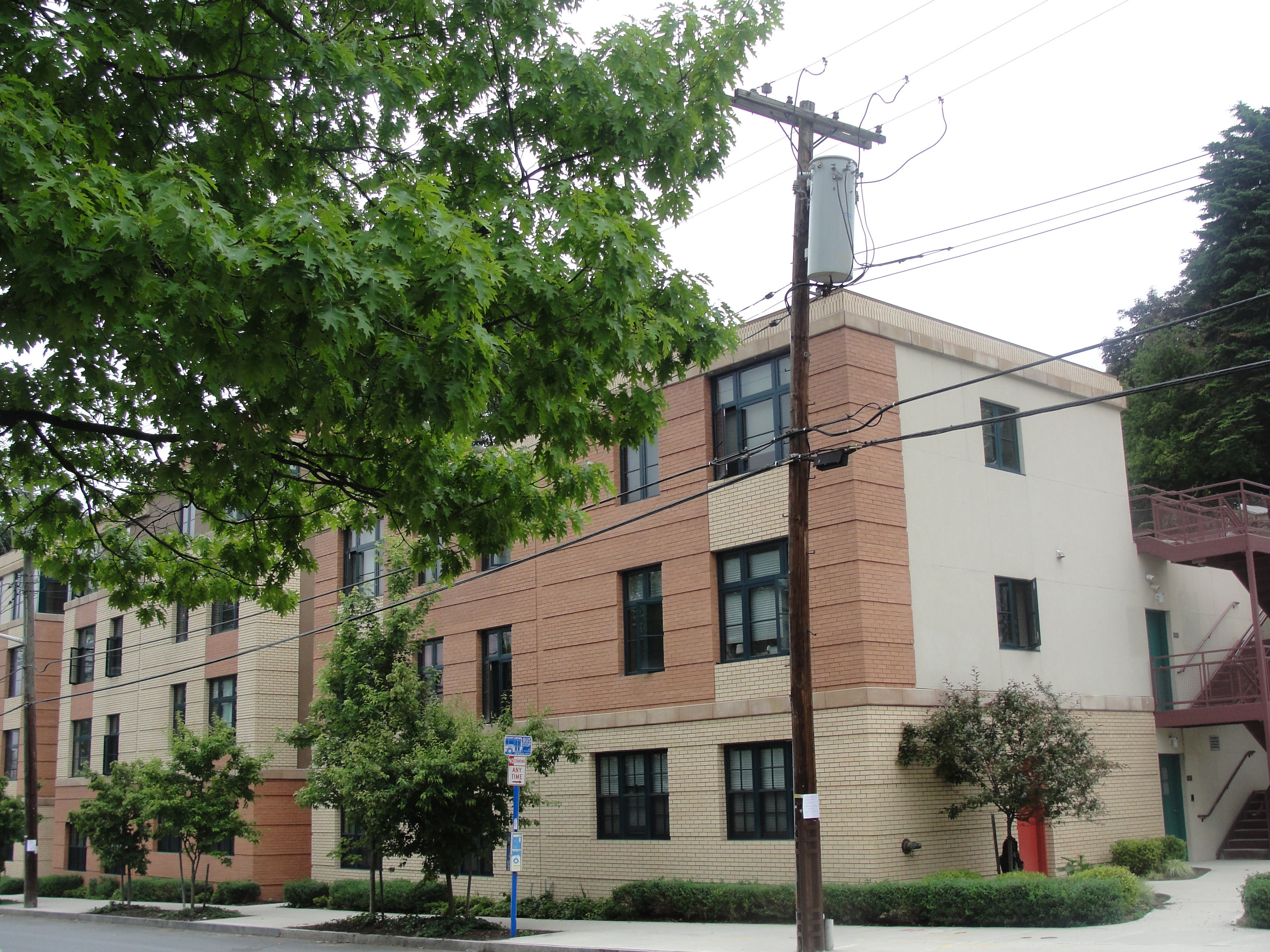


Hastings Affordable Housing Committee members faced nothing short of hostility this month after informing neighbors they wanted to build units on Mount Hope and Farragut Avenues.
"I was raised to believe that if you can't afford to live in a certain area, then you shouldn't live there," said Hastings newcomer Michael Wagner at a meeting on May 13. "I have worked hard to live in this community."
The Hastings Affordable Housing committee maintains that although homes they construct will be sold far below the market price, the structures themselves will blend in with their current neighborhoods, varying little from other Hastings houses in terms of size and general design.
Find out what's happening in Rivertownsfor free with the latest updates from Patch.
Since Hastings' Affordable Housing Committee was established in the 1990's, 18 of the their target 100 distinct units have been completed, the most recent of which were 331 and 333 Warburton Avenue—sold in 2003—and a 14-unit complex on Warburton and Division streets sold in 2008.
"We urge you to go take a look at those homes," said Affordable Housing Committee Chair Susan Smith. "You would never know they were affordable homes."
Find out what's happening in Rivertownsfor free with the latest updates from Patch.
Although Hastings was leagues ahead of many other Westchester villages in its effort to increase affordable housing, the initiative has recently become not just a local priority but a county-wide mandate.
After losing an important antidiscrimination lawsuit in 2009, more than 30 towns and villages throughout Westchester were ordered by the federal government to utilize funds from the US Department of Housing and Urban Development to create a total of 750 new affordable housing units in Westchester's most racially homogenous villages, including: Hastings, Chappaqua, Ardsley, Bedford and Pleasantville.
"We almost always face opposition from neighbors when we propose to create affordable housing in any given area," Smith said. "But whether residents want it or not, affordable housing is something we must expand by law."
Under the terms of the 2009 lawsuit, affordable housing units must be purchased by families or individuals making less than 80 percent of Westcester's median income, which is currently recognized as $67,400 for a family of two and $75,800 for a family of three.
In the past, Hastings could give "preference" to local service providers and municipal employees, such as firefighters, police officers and school employees. However, under the county plan, housing recipients must be selected completely at random.
There are specific challenges associated with both potential housing sites--on Mount Hope and Farragut Avenues--and residents who attended the May 13meeting came prepared with an arsenal of arguments as to why the committee should not go forward.
"Years ago I wanted to purchase the land at the end of Mount Hope Boulevard from the village, but was told I couldn't because it was deemed a non-conforming lot," said Mount Hope resident Leonard Mastrangelo. "I don't understand why you can just buy it from the village and build on it now when I couldn't more than 30 years ago."
In addition to the argument that land on Mount Hope is too rocky and eroded to make construction financially worthwhile, neighbors expressed ecological concerns as well.
"This town is constantly talking about 'going green' and living more sustainably, but now they wan to cut down the beautiful forest at the end of my block," said resident Pamela Pardy. "For years we have been looking at a green, gorgeous lot; it would be a shame to clear it."
But probably the most palpable fear residents expressed about introducing affordable housing to their neighborhoods was that their own homes would depreciate in value.
"If affordable housing comes to our street, then we deserve a huge tax break because the market values of our homes absolutely will decrease," Pardy said.
Committee member Nick Fascone responded by assuring residents that affordable housing units would not be taken into account when calculating a neighborhood's average property value; and Hastings real estate agent John Doherty also pointed out that home values on Warburton Avenue had not been affected when affordable housing was constructed there.
Although the vast majority of community members present at the committee's most recent meeting came to protest construction on Mount Hope, the land on Farragut also sparked a few concerns.
"I live on Farragut Avenue, which has a huge drainage problem," John Conway said. "I have one of the few homes on the street whose cellar remained dry during this winter's storms and I am afraid that if you start construction near me, it will make drainage issues worse."
Because the land on Mount Hope Boulevard belongs to the Village of Hastings, the village board of trustees welcomed public comment regarding the two proposed affordable housing sites during their regular meeting May 18.
Many of the same residents that attended the committee's open meeting the week before posed similar concerns to the board of trustees.
Though village mayor Peter Swiderski and the village trustees were receptive to the community's opinion, Swiderski made it clear that the implementation of affordable housing was not within his jurisdiction.
"The only thing we have to power to do in this particular case is not give the land on Mount Hope to the Affordable Housing Committee," Swiderski said in a later interview. "Once it belongs to them, the next decisions are in the hands of the planning and zonings boards. Because the property on Farragut is already private, we cannot get involved."
Once the Affordable Housing Committee is in possession of both plots, they will need to conduct complete surveys of the land to evaluate whether preparing it for construction will allow the project to fit within their scant government-awarded budget.
"If we find out that just clearing the land will be too expensive, we will not go ahead with the project," Smith said.
Though logistical concerns such as rocky foundations and drainage problems may be surmountable, the philosophical rift within the community will undoubtedly be harder bridge.
"Although I have no say in where and when affordable housing units get built, I am whole-heartedly behind their existence in the village," Swiderski said. "Affordable housing helps foster diversity in the community and helps keep individuals who perform essential village services local."
Not everyone agrees.
"People say they're in favor of affordable housing until it's about to be built on their own block," Pardy said. "We've all worked hard to live in a nice town, and as politically incorrect as it is to say it, I don't want people from lower-income neighborhoods moving onto my street."
After hearing these and other remarks earlier in the month, Smith conceded that often the most difficult job for her and her committee is changing the public's mindset.
"People still seem to equate building affordable housing units with 1950's-style urban renewal," Smith said. "Hastings residents especially have this fear that Yonkers is someday going to start marching upwards and engulf Hastings. There are definitely undertones of racial fear and prejudice [in the affordable housing debate] that will only get stronger the longer we wait to diversify the community."
Get more local news delivered straight to your inbox. Sign up for free Patch newsletters and alerts.