Politics & Government
Rivertown Polls Workers Hope to See Technical Glitches Resolved by November
Problems with new voting machines were rampant throughout NY state, and Rivertowns election inspectors reported some issues they would like to see fixed.

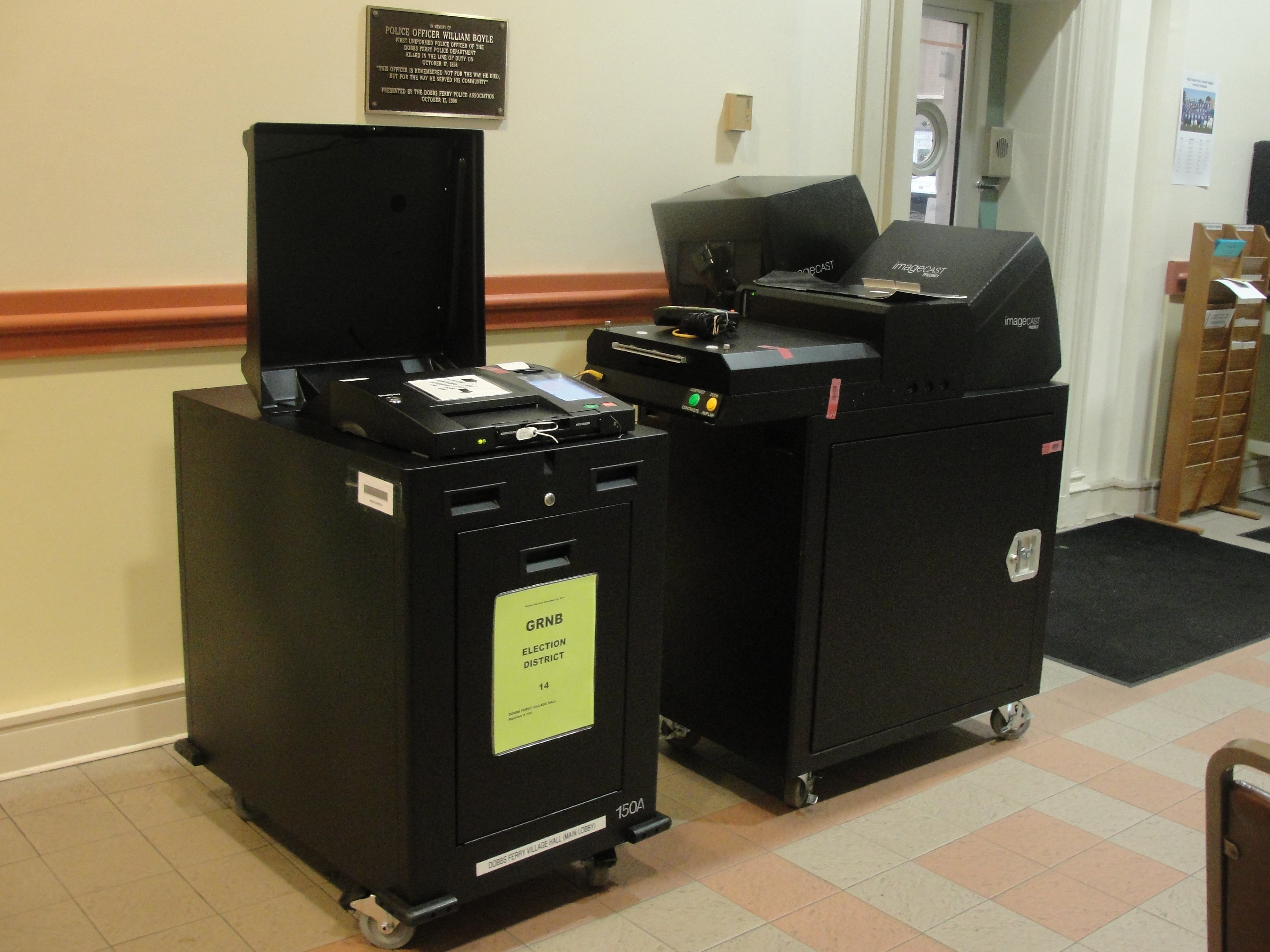
Problematic voting machines and a low voter turnout were symptomatic across Westchester on Primary Tuesday.
The state implemented the new voting technology after a federal law was passed in 20o2 that mandated changes in the voting process in the wake of the 2000 Gore vs. Bush election. ImageCast, is an update from the analog lever machines that voters throughout county have used during previous election cycles.
However, the new machines were troublesome to set up in many cases, causing polls to open late. In some instances poll workers were not given the proper keys to open the voting machines, and some machines didn't work all together, forcing election inspectors to issue emergency paper ballots.
Find out what's happening in Rivertownsfor free with the latest updates from Patch.
Election inspectors in Hastings and Dobbs Ferry however, reported overall satisfaction with a few minor complaints they would like to see resolved by the general elections in November.
In Hastings' 23rd District, the voting machine seemed to have functioned well throughout the day, but when it came time to release the results, "the machine would not spit them out," reported Hastings resident Ellen Hendrickx, who was also on the ballot as a candidate for district leader.
Find out what's happening in Rivertownsfor free with the latest updates from Patch.
The malfunctioning machine is currently being held at the county Board of Elections and will be canvassed sometime at the end of the week.
The new voting process has also raised some concerns about privacy. The "privacy booths" in which individuals marked their ballots were more open than in previous years, when a curtain closed behind the voter. Some voters complained that election inspectors would look over their shoulders as they input their votes into the optical scanning machines.
"The election inspectors can read them over voters' shoulders as they help them enter the ballots into the machines," Hendrickx said. The machines were supposed to accept ballots entered face-up or face-down--adding to voter privacy--but inspectors said the machines would generally register them face-up only.
Hastings' Deputy Village Manager Susan Maggiotto heard nothing but good things from election inspectors early in the day when she went to submit her vote, but later found out many problems in the village did not surface until the end of the day.
"One of the election inspectors working in the community center said his biggest problem was closing the machine down," Maggotto said. "He said it took hours because the inspectors had not been trained in post-election procedures."
Another curious incident reported at the community center was a "6-foot tape full of voting results came out of one of the machines." Maggiotto said the election inspectors surmised results of a trial run had been left in the machine before Tuesday's primary.
A few blocks away from the James Harmon Community Center—in Hastings' Protection Engine 21 Firehouse—election inspector Michael Fuller reported few problems, but said many voters seemed apprehensive about the process.
"People come in mystified because they're overwhelmed by the fact that the system's new," Fuller said.
By 2 p.m., four voters at the firehouse had been required to submit ballots twice because circling too many choices rendered their slips invalid.
"But everyone got it right on the second try," Fuller said. Voters are permitted only three attempts at submission.
Bill Crosby, another election inspector in Hastings, reported two more stumbling blocks he would like to see resolved by November.
"Some voters said they wished magnifying glasses had been provided so that vision-impaired voters could see the ballots," Crosby said.
And, before about 3 p.m.—when he received some advice from polls workers in Dobbs Ferry—Crosby and his colleagues were unable to locate sample ballots within the kits provided by the Board of Elections.
"People very much wanted to see the sample ballots this morning," Crosby said.
And--even with sample ballots provided at the polls--some voters expressed a desire to have the samples accessible online to review even earlier.
In Dobbs Ferry, the biggest complaint was that the Board of Elections had not provided enough democratic ballots, and excess paper ballots had to be sent over.
"Luckily, we caught the problem early enough that nobody was turned away due to lack of ballots," Rhona Neuwirth, an election inspector in Dobbs Ferry, said. "But we hope we'll have enough that can go through the machine in November."
Emergency paper ballots submitted in Dobbs Ferry will undoubtedly be counted, but they were not factored into the election results logged by 10 p.m. on Tuesday.
At Cabrini Nursing Home in Dobbs Ferry, polls workers said some voters--especially Cabrini residents--were confused by the new ballots.
"We had one resident who said it was too complicated and walked away and another who had to resubmit because the first attempt was rejected," Jean Howell, a Dobbs Ferry election inspector, said.
Howell also noted some voters were uncomfortable with the "privacy booths" not being particularly private.
Susan Berger, chairwoman of the Greenburgh Democratic Committee was visiting polling locations around Greenburgh to speak with inspectors and see if there were issues. She said she encountered numerous problems.
"We've been in various locations around the Town of Greenburgh," Berger said. "We had some late opening polls that didn't get up and running by six... For the most part locations were up and running by 9 a.m. In some places the machines were not initially operating, but people were always offered, as far as we could tell, emergency ballots to vote on rather than coming back at another time."
And Greenburgh Town Supervisor Paul Feiner was extremely disappointed by the new process.
"The new voting machines are horrible," he wrote in a town-wide e-mail. "There are privacy issues. Election inspectors look over the shoulders of voters as they scan their ballots in the scanner – causing voters to wonder if someone is watching how they voted."
Other local election inspectors said the amount of paper they used this year far exceeded previous years, partially due to the use of paper ballots and additional checks and balances that require more paper during the primary--they agreed less paper would be used less during November's general election.
However, for most citizen voters who came in, submitted their ballots and left, the problems were completely undetectable.
"People seem to almost enjoy it," Dobbs Ferry Election Inspector Peter Halpin said. "Despite a few kinks, it's been rather smooth going."
Get more local news delivered straight to your inbox. Sign up for free Patch newsletters and alerts.