Health & Fitness
Field Safety Counts Toward Injury Prevention
If your child loves to play field sports but you're concerned for his or her safety, you're presented with a tough choice.
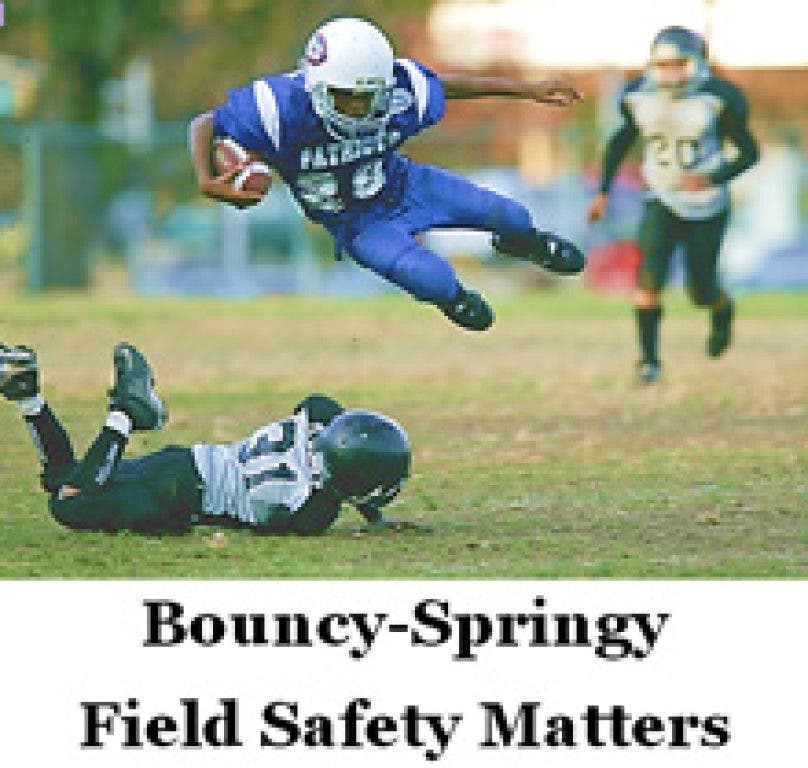
Soon the school house doors fly open–l and back to sports we go. As kids and parents are shopping for supplies and schools wrap-up summer maintenance, what are athletic departments doing to prepare?
Field Safety
Most fall sports are field sports, such as football, soccer and field hockey. Sport safety is a hot topic thanks to 2,400+ former NFL players who’ve filed suit against the NFL. As pro players share their stories about life after head trauma, parents are wondering how safe football is for their kids. That’s prompted NFL Commissioner, Roger Goodell to initiate discussion about youth sports safety. The inaugural Youth Health and Safety Workshop takes place August 22, at NFL headquarters, and I’ve been invited to join in. As I get ready to contribute, I’ve been busy learning from experts.
Find out what's happening in Scarsdalefor free with the latest updates from Patch.
Innovative Agronomics
Tom Margetts, T. Ag is the owner of Innovative Agronomics and is a leading expert in field safety testing, particularly G-Max testing. I spoke with Tom last week and he explained the importance of field surface conditions in injury prevention.
Find out what's happening in Scarsdalefor free with the latest updates from Patch.
Hard surfaces absorb less shock leaving the human body vulnerable to major injury—particularly head injury.
The American Society of Testing and Materials (ASTM) established strict testing protocols for both natural and artificial turf. As Tom explained, test scores are used to relate surface hardness with potential injury due to impact. According to the ASTM a G-Max below 200 is considered safe for play, but that’s only because over this level death or life threatening injury is likely to occur. Neither Tom nor I think that this level is safe enough for our kids.
Testing is done by dropping a 20 pound object from a height of 2 feet to simulate the impact received to a 300 pound linebacker’s head if he fell down, i.e. his head weighs 20 pounds and is 2 feet from the ground while in the ready position. Mind you, the simulation doesn’t account for movement or tackle.
Tom believes that for truly safe conditions, the ASTM should update and fine-tune protocols relative to user groups. “A 10-year old has a very different body type than a 300 pound linebacker,” he said. He also believes that “ASTM guidelines need to be lower and should reflect injury levels.” Tom believes a positive change is coming within the next two years and that it will significantly reduce all injuries. Okay, but what do we do in the meantime?
Ask Questions
If your child loves to play field sports but you’re concerned for his or her safety, you’re presented with a tough choice. The decision to allow play or not becomes overwhelming considering what’s at stake, parenting peer pressure, confusing technical data and of course your busy schedule that makes digging for information difficult. Perhaps the best place to start is by asking lots and lots of questions.
To make a good decision
Ask coaches, field maintenance staff, town or village representatives, and friends in other communities about sports safety. Ask about field testing and keep asking questions until you fully understand methods and frequency of testing. ASTM only suggests annual testing, but there are no mandates, yet. Allow your circle of friends to support you in gathering the information you’ll need to ultimately choose well for you and your family.
Remember, regardless the data you collect the ultimate decision is for you and your family to make; no one else has a vote. So, as you prepare for the upcoming school and sport season, start asking questions about safety so you can confidently choose well.