Health & Fitness
Letter Writing: A Dying Art?
With the disappearance of personal letter writing in this age of mass and instantaneous communication, what effect will this have on future mementos of the past?

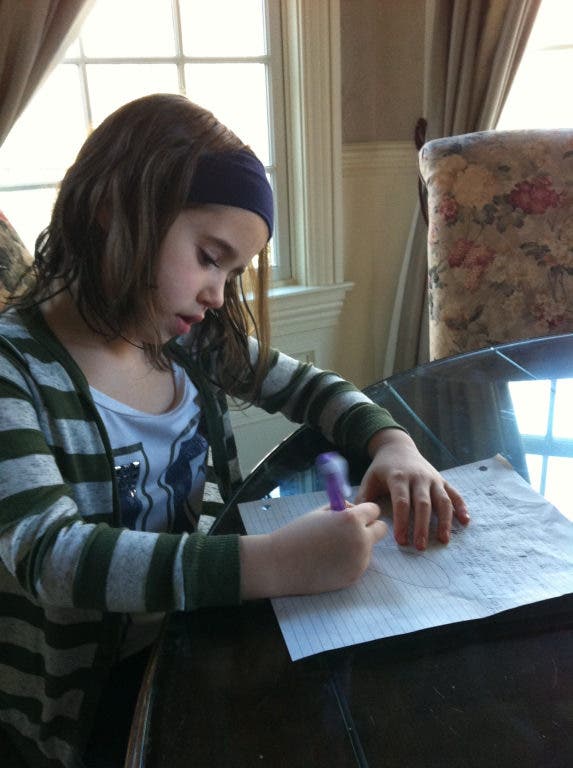
When did you last receive a proper letter? Not a bill or a request for charitable donations, which seem to make up the bulk of the mail these days, but a handwritten, chatty epistle from a friend or family member? With the exception of short notes in Christmas cards (and even many of these have been replaced by typed summaries of the previous year’s events distributed to all and sundry) I can’t remember the last time I received one.
Communications have changed immensely even in the last few years. It’s faster – to the point of instantaneous – and you don’t need to buy paper and stamps or worry that the message will go astray in the mail (assuming you use the correct email address,) but somehow getting an email doesn’t have the same excitement factor as receiving a missive in the mail.
I used to be a prodigious letter writer. The habit started in my teens when my desire to know about other places outside my home town in England led me to find pen-pals. At one point I was writing to nine people from Germany, Sweden, France, Japan and the U.S., comparing stories of life in our respected countries, in one particular case, on an almost weekly basis.
Find out what's happening in Scarsdalefor free with the latest updates from Patch.
As well as the educational benefits, one of the great pleasures from my efforts was to see the brightly stamped airmail envelope (occasionally two or three!) amongst the morning mail delivery. True sometimes the handwriting was hard to read and, in the case of the Europeans and Japanese, the English often broken, but those letters forged a personal connection which in most cases lasted for years until the busyness of careers and romance interrupted the flow.
After leaving home, letter writing was the way to stay in touch with family and friends (who could afford to phone then?) and even after the arrival of email and cheap international calls, I still continued to write to my parents. A few years before her death, my mother gave me a bundle of letters I had written to her in my late teens/early twenties while in Toronto and New York – an unexpected record of my travels and observations preserved for many years. So imagine my surprise when, on helping to clear out her house, I discovered all the letters I’d written to her in later years from Hong Kong (during which time my daughter was born) and from the first few years of our time in New York.
Find out what's happening in Scarsdalefor free with the latest updates from Patch.
While these letters wouldn’t mean much to anyone else, to me they are priceless, and on looking at them the other day, I had to wonder how the changes in communications will affect our records of the past. Historical museums often display handwritten letters to evoke the attitudes and concerns of the time – letters which can add an intensely human touch to the other objects on display whether the writer was a president, an activist, a soldier or just an ordinary person living through challenging times.
Will future generations view museum-worthy e-mails and get the same sense of connection? Given how easy it is to delete an e-mail will potentially important messages from history be lost before it is realized how valuable they are? Will pen-pals become email-pals or will Facebook and Twitter signal the end of personal letter writing altogether?