Business & Tech
History for Sale
How much is history worth? Is a home special because someone famous once stayed there?
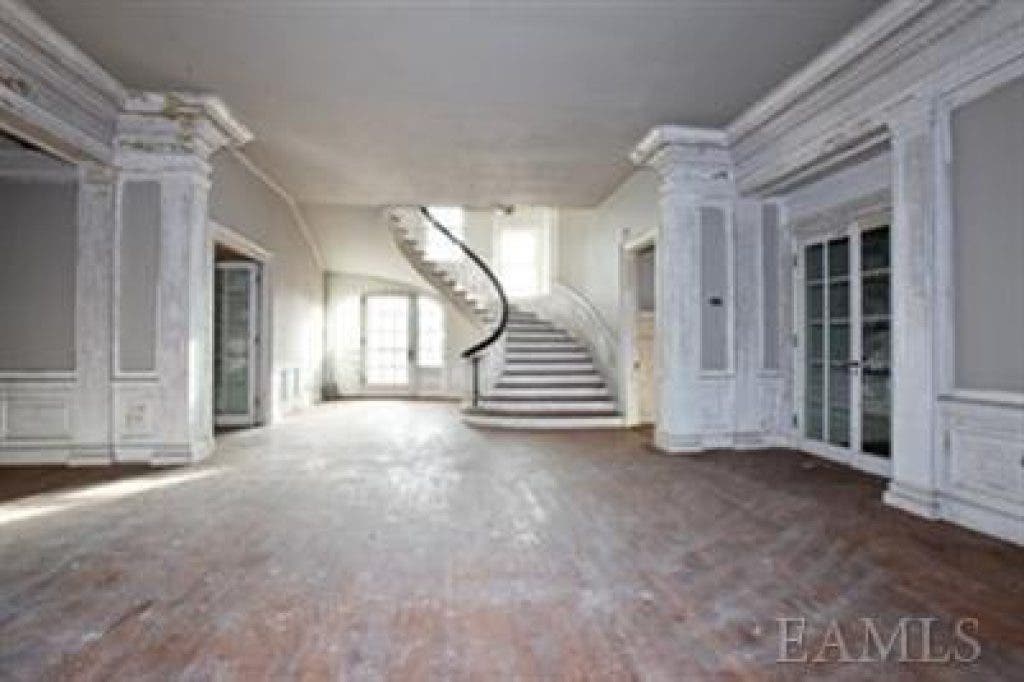


The home neighbors refer to as “the pit” is for sale. A house that has been vandalized numerous times by local teenagers. The house which, 30 to 40 years ago, once saw hundreds of kids lined up during Halloween. This historic gem is now available for purchase at a bargain price of $2,995,000.
The estate was once owned by Louis Marx, a businessman whose toy company was the largest in the world in the 1950s.
Marx, sometimes referred to as the "toycoon" and "the toy king of America," has been described as an intense, hard-driving and energetic man, who "talks, walks, and gestures tirelessly, like one of his own wound-up toys.”
Find out what's happening in Scarsdalefor free with the latest updates from Patch.
Marx was generous to kids on Halloween, making the house a favorite stop for trick-or-treaters.
''We used to set up in the dining room and pile packages of toys and candy on the table, and we would line the children up and let them take their pick,'' Nicholas Mellilo, a caretaker, recalled. ''We had 800, 900, 1,000 children, but some were repeaters—they would go around the house and come in again.''
Find out what's happening in Scarsdalefor free with the latest updates from Patch.
Maycen Lundgren, the housekeeper, recalled that Marx's children ''liked to go to other people's houses for trick or treat.'' She said Marx's youngest son, disguised in a mask and wig, once got in line at the Marx house and got a present.
''Mr. Marx used to sit on the hall stairs and give each kid a dollar bill," Mellilo said. "One time, there was a busload of students from Iona College, and I told him 'Mr. Marx, you can't keep on doing this.' ''
Marx also donated hundreds of toys to area children during Christmas.
''Before Christmas, I used to spend about a month wrapping toys, and we took them to police and fire departments for their children," Mellilo said.
Born in Brooklyn, Marx graduated high school at age 15 and started his career working for Ferdinand Strauss, a manufacturer of mechanical toys. By 1916, Marx was managing Strauss' East Rutherford, New Jersey plant. Less than a year later, he was fired.
In 1919, Marx and his brother David incorporated, founding the company that bore his name. Initially working as a middle man, Marx was soon able to purchase tooling to manufacture toys himself. When Strauss fell on hard financial times, Marx was able to buy the dies for two Strauss toys and turn them into best-sellers. By age 26, three years after founding his company, Marx was a millionaire.
By 1951, Marx's company had 12 factories worldwide. As World War II drew to a close, Marx had toured Europe and acted as a consultant on how toy manufacturing could aid reconstruction efforts. Marx used the contacts he made to forge partnerships and open factories in Europe and Japan.
Marx retired in 1972 at the age of 76, selling his company to Quaker Oats for $54 million.
Imagining the Home's Heyday
Built in 1903, the home stands at almost 10,000 square feet on 1.75 acres. Architecturally, some of the grandeur still exists in the house's tall, gothic columns and detailed crown molding, though inside the walls are moldy and the paint peeling.
The foyer is a shadow of its former days, but there are hints of its past glory. The herringbone floors are magnificent—dusty, but magnificent. The floating staircase is in terrific condition, and crown moldings are in every room. To the right is the parlor, a welcoming room with fireplace, built-ins and French doors that open out on to what once was a terrace.
The house was the scene of parties attended by a number of famous people. President Dwight D. Eisenhower, a close friend of Marx and the godfather of one of his children, gave him two paintings which were displayed in the home.
By closing your eyes and using your imagination, you can still picture the beautiful women in their gowns and handsome men in their suits gathered for drinks and gossip. Perhaps the ladies wanted to steal away to the living room right next door. It was just as comfortable and large as the parlor, hosting its own fireplace and even a bar.
The butler was never very far. Through the over-sized dining room—featuring what was probably a fantastically sized and grand chandelier—was the butler’s pantry and kitchen. Even if staff were hurrying to prepare gourmet food for all the guests, they wouldn't bump into each other in that extra-large kitchen.
At the end of the evening, the tired hosts would climb the staircase to the second floor and to his and her master suites—each outfitted with sitting rooms, baths and walk-in closets. The 10 fireplaces in the home kept occupants warm.
What Is the Price of History?
In 1982, Louis Marx died at the age of 85. After Marx's death, Anthony Scarcella, a New Rochelle builder, paid ''about $2 million'' for the property and received approval to subdivide it and build 29 homes.
In 1985, Scarella sold the original home to Alexander Raydon. When Raydon died, Scarcella re-purchased the house and attempted to obtain approval to tear it down, hoping to build three more new homes on the property. The village denied him a permit to tear down the home because of its substantial historic importance. Recently, the New York State Supreme Court upheld the village’s findings.
There is no doubt about its historical significance, but does that automatically make the home valuable?
The home is still an outstanding piece of architecture, though the amount of money it will take to restore this gem to its originally glory could be vast.
Many Scarsdale residents appreciate history and historic homes, but do we fight too quickly to protect a piece of history without understand the money it will take to preserve it?
The buyer of this home is one who will appreciate the history while being willing to invest a lot of time, as well as a lot of money. Know anyone like that? Do you think the house will be worth the amount of money it cost to purchase it as well as restore it? Then again, some history is priceless.