Politics & Government
New Jersey Offers Clues to Westchester Affordable Housing Q's
New Jersey's Mount Laurel Doctrine is similar in spirit, criticism.
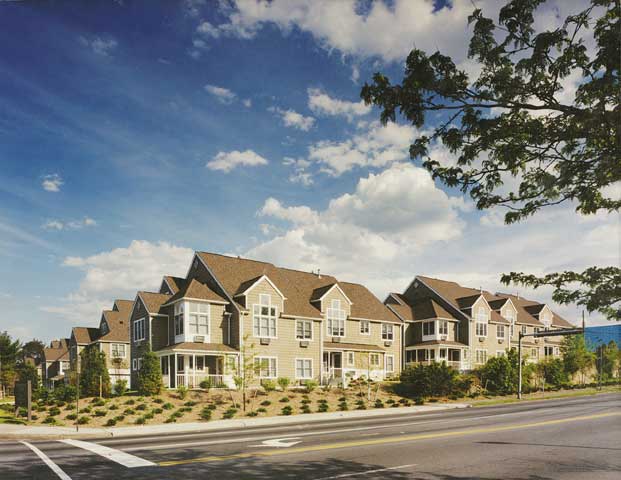

In the 1970s Mount Laurel, NJ, a bucolic and wealthy Philadelphia suburb, had less than 12,000 residents.
In the middle of that decade, and again in the early 1980s, New Jersey court rulings led to a landmark doctrine named after Mount Laurel that requires all towns in the state to use zoning laws to build affordable housing.
A generation later, Mount Laurel's population nearly quadrupled to 40,000, with some municipal officials blaming the desegregation law for the explosion in population and stretched-too-thin municipal resources.
Find out what's happening in Scarsdalefor free with the latest updates from Patch.
"Good intentions do not necessarily make good law," said Mount Laurel township attorney Chris Norman. "It sounds like a good thing, but the unintended consequences are really bad."
Though there are some policy differences, the Mount Laurel Doctrine is similar in spirit to a landmark agreement in Westchester County that could force predominantly white, upper-class New York suburbs, such as Scarsdale and Tarrytown, to build affordable housing.
Find out what's happening in Scarsdalefor free with the latest updates from Patch.
Just this week a federal monitor rejected Westchester County's plan to build hundreds of homes for moderate-income people. Under the desegregation agreement that the county signed almost a year ago, it is required to spend more than $50 million on 750 units of affordable housing.
While the debate rages about how Westchester County can meet its obligation, a glimpse at the new law's ramifications might be seen just across the state line in New Jersey where residents have grappled with a similar desegregation law, the Mount Laurel Doctrine, for a generation.
Pam Mount, a councilwoman for Laurence Township, a suburb of Trenton, NJ about 30 miles from Mount Laurel, said that the state law mandating more housing available to moderate and low-income families was a good thing for her town.
"Affordable housing has been a big plus for this town," she said. "When you talk about the Mount Laurel decision, you're talking about housing for your school teachers, your police, your young families and first time homebuyers."
In 1980 there were close to 20,000 residents in town. Two decades later that number was close to 30,000, according to the census. In 2000 nearly 80 percent of the town was white, less than 10 percent African-American and less than 5 percent Latino.
Mount said that while some in town were suspicious of the Mount Laurel Doctrine, today she calls Lawrence Township vibrant and diverse with a wide cross-section of civic volunteers and no seemingly corollary negative impacts like overstretched budgets or spikes in crime.
"Some people think that affordable housing is like having an aqueduct from the worst neighborhood in the Bronx straight to your backyard," she said laughing. "We have not found that to be true."
In 1975 the Southern Burlington County NAACP sued Mount Laurel Township for using zoning laws to keep people with low and moderate-incomes from being able to buy homes, and developers from building affordable and low-income housing. The state supreme court ruled in the NAACP's favor, but it wasn't until the NAACP appealed the decision in 1983, on the grounds that little progress had been made, that the state passed tougher laws resulting in a spike in affordable homes. In 1985 the legislature created the Council on Affordable Housing to determine the number of affordable units each municipality had to provide.
Colandus "Kelly" Francis, a member of the Camden County NAACP who helped the Southern Burlington County NAACP file the original Mount Laurel lawsuits, said the laws were vital. In the 1960s and 1970s urban centers in the northeast saw an exodus of white residents, known colloquially as "white flight," and the Mount Laurel Doctrine was essential, he said, in keeping the suburbs from being exclusionary.
"Basically, it's an order to integrate and at the NAACP that was one of our goals from our beginning," he said. "The intent of the Mount Laurel doctrine was to integrate all social classes and ethnicities throughout the state, so instead of having white, black and Latino communities you would have integration."
Despite the doctrine's lofty goals, Mount Laurel attorney Norman said the actual effects are messier. The law means the town needs to hire more police, teachers and firemen to serve the new residents who moved in because of the law. Towns must then pay for those services, which when things like police officer salaries and teacher benefits packages are factored in, has left the town strapped for cash and on the precipice of making painful cuts.
"The services and infrastructure you have to provide to build affordable housing is an unfunded mandate coming down from the state," Norman said.
He said the unfunded mandates from the M0unt Laurel Doctrine, combined with other costs that saddle the town, "are a nightmare."
Additionally, he said, conflicts are brewing in Mount Laurel between environmental advocates who want to keep the little remaining open space, and fair-housing advocates who want to see more homes built.
In 2000 the census showed that Mount Laurel was nearly 90 percent white with around 7 percent African-American and around 2 percent Latino.
Adam Gordon, a staff attorney at Fair Share Housing Center in Cherry Hill, NJ said the New Jersey issues could parallel Westchester's.
"It's a continual fight in New Jersey," he said. "But on the other hand there's a lot of people who support it, which is why it's still around."