Politics & Government
Rep. Eliot Engel Announces Opposition to Iran Deal
Engel and other New York officials are calling for further negotiations.


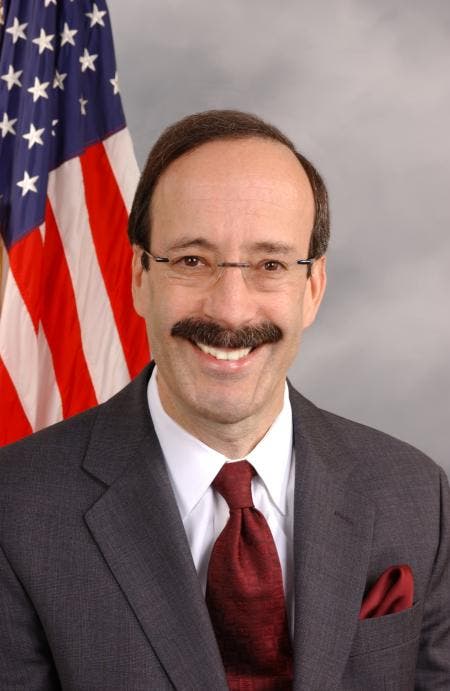
United States Rep. Eliot Engel (D-Westchester/Bronx) has joined Rep. Nita Lowey in opposing the P5+1 agreement with Iran, marking another Democrat to break with President Barack Obama who supports the deal.
Engel, who represents Eastchester, Scarsdale, Rye, Pelham and other sections of Westchester, made the announcement Thursday evening, following Sen. Chuck Schumer, who also said he opposes the deal. Lowey voiced her opposition earlier in the week.
Sen. Kirsten Gillibrand says that while the proposed treaty has some flaws, she is supporting it.
Find out what's happening in Scarsdalefor free with the latest updates from Patch.
Below is Engel’s full statement:
“Over the last two years, I’ve supported our negotiating team in the P5+1, seeking to give them time and space to achieve a diplomatic breakthrough and foreclose Iran’s pathways to a nuclear weapon. I’m grateful for the tireless efforts by President Obama, Secretary Kerry, Secretary Moniz, Secretary Lew, and Undersecretary Sherman as well as our P5+1 partners in concluding an agreement with Iran. Unfortunately, I cannot support the Joint Comprehensive Plan of Action.
Find out what's happening in Scarsdalefor free with the latest updates from Patch.
“At the outset, I was troubled that Iran was not asked to stop enriching despite the fact that there were several separate UN Security Council resolutions compelling them to do so. I have raised questions and concerns throughout the negotiating phase and review period. The answers I’ve received simply don’t convince me that this deal will keep a nuclear weapon out of Iran’s hands, and may in fact strengthen Iran’s position as a destabilizing and destructive influence across the Middle East.
“First, I don’t believe that this deal gives international inspectors adequate access to undeclared sites. I’m especially troubled by reports about how the Iranian military base at Parchin will be inspected. With these potential roadblocks, IAEA inspectors may be unable to finish their investigation into the potential military dimensions of Iran’s nuclear program. While it may not be essential for Iran to provide a full mea culpa of its past activities, the access levels that Iran grants to the IAEA are indeed critical to our understanding of Iran’s progress toward a nuclear weapon. If the IAEA is dissatisfied by December 15th, the JCPOA does not clearly provide for a delay of sanctions relief.
“I also view as a dangerous concession the sunset of the international sanctions on advanced conventional weapons and ballistic missiles. I was told that these issues weren’t on the table during the talks. So it’s unacceptable to me that after a maximum of five and eight years, respectively, the deal lifts these restrictions. Worse, if Iran were to repeat past behavior and violate the arms embargo or restrictions on its ballistic missile program, such an action wouldn’t violate the JCPOA and wouldn’t be subject to snapback sanctions.
“In my view, Iran is a grave threat to international stability. It is the largest state sponsor of terror in the world and continues to hold American citizens behind bars on bogus charges. Its actions have made a bad situation in a chaotic region worse. Even under the weight of international sanctions, Iran was able to support terrorist groups, such as Hezbollah, Hamas, and other violent extremists. Awash in new cash provided by sanctions relief, Iran will be poised to inflict even greater damage to Syria, Yemen, Iraq, Lebanon, Israel, and our Gulf partners. Iran’s leadership has every interest in shoring up support from hardliners. After all, if a deal goes through, hardliners will need to be placated. We can have no illusions about what Iran will do with its newfound wealth. We can have no doubt about the malevolent intent of a country’s leaders who chant ‘Death to America’ and ‘Death to Israel’ just days after concluding a deal.
“Finally, I have a fundamental concern that 15 years from now, Iran’s leaders will be free to produce weapons-grade, highly enriched uranium without any limitation. This amounts to Iran as a legitimized nuclear threshold state after the year 2030 with advanced centrifuges and the ability to produce without restriction a stockpile of enriched uranium. If Iran pursues that course, I fear it could spark a nuclear arms race across the region. After years of intransigence, I am simply not confident that Iran will be a more responsible partner and comply with the Nuclear Non-Proliferation Treaty and its Additional Protocol.
“I still believe that a negotiated solution is the best course of action. That’s the path I believe we should pursue. But after careful consideration of all of the material; more than a dozen hearings since the beginning of the negotiating period; and conversations with Administration officials, experts, and many of my constituents, I regret that I cannot support this deal.”