Schools
Scarsdale Whiz Kid: Gibran Mian
SHS's latest Intel semifinalist shares his accomplishments with Scarsdale Patch.

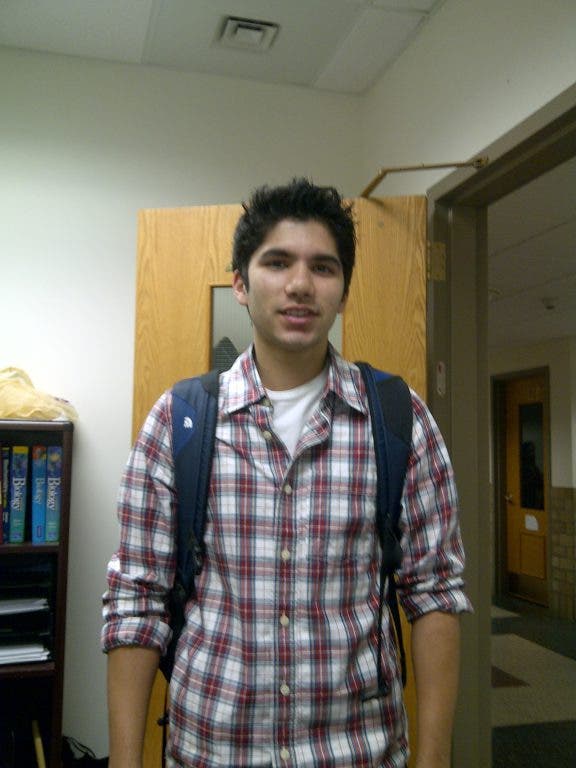
Name: Gibran Mian, 17
School: Scarsdale High School, 12th grade
Accomplishment: Gibran was named an Intel semifinalist earlier this month. For those not in the know, the Intel Science Talent Search is a nationwide research competition in which the best and brightest high school scientist are given the opportunity to present original research projects to established scientists.
Find out what's happening in Scarsdalefor free with the latest updates from Patch.
Key to Awesomeness:
Gibran, who moved to Quaker Ridge three years ago, dove right into SHS's famously rigorous curriculum by enrolling in a special research program in which sophomores choose a scientific topic and study it over the course of their high school career. Gibran's initial interest was cell death.
Find out what's happening in Scarsdalefor free with the latest updates from Patch.
"His entire sophomore year, Gibran was reading about the topic at a much higher level than students ever would have in an ordinary biology class," said SHS teacher Jeremy Szerlip.
Gibran eventually narrowed his scope to cornea cell death and found a mentor in Dr. Roy Chuck, Albert Einstein College of Medicine's chair of ophthalmology and visual sciences. Together, the two studied cornea transplants, focusing on eye banks that pre-load corneas into injection cartridges to simplify the transplant process.
"Lots of surgeons were worried that the corneas could become damaged and compromised if the prep wasn't right," Szerlip said. "Gibran was examining whether the method scientists use to load injections increases cornea cell death and leads to lower success rates in transplants."
No scientific techniques existed to evaluate whether eye banks caused cornea cells to become compromised. Gibran and his lab partners skirted this obstacle by developing a series of procedures in which they received pre-loaded corneas from eye banks and stained them with concentrations to evaluate cell death.
"We developing a standing method for evaluating the eye bank tissue. We found good concentrations to use, and at the end of the study we found that the new technique eye banks were proposing did not work because of the tissue damage they caused. It shouldn't be put into practice yet. They need to refine their techniques," Gibran said.
"There many reasons we came up with to explain why the corneas are more damaged. One can be that there is added pressure when the corneas sit in the injector for a long period of time. Another is that scientists aren't yet good at pre-loading corneas into the injectors because they don't have enough practice with the procedure."
Gibran's accomplishments recently yielded him an early acceptance to Northwestern University.
"I might be pre-med," Gibran said. "I'm not 100 percent sure I want to be a doctor yet, but as of right now I'm planning on it."
Get more local news delivered straight to your inbox. Sign up for free Patch newsletters and alerts.