Arts & Entertainment
Franklin Arthur Farm: A Time Capsule on Main Street
The Franklin Arthur Farm property, built in 1740, is now part of the Smithtown Historical Society's educational programs about colonial life.

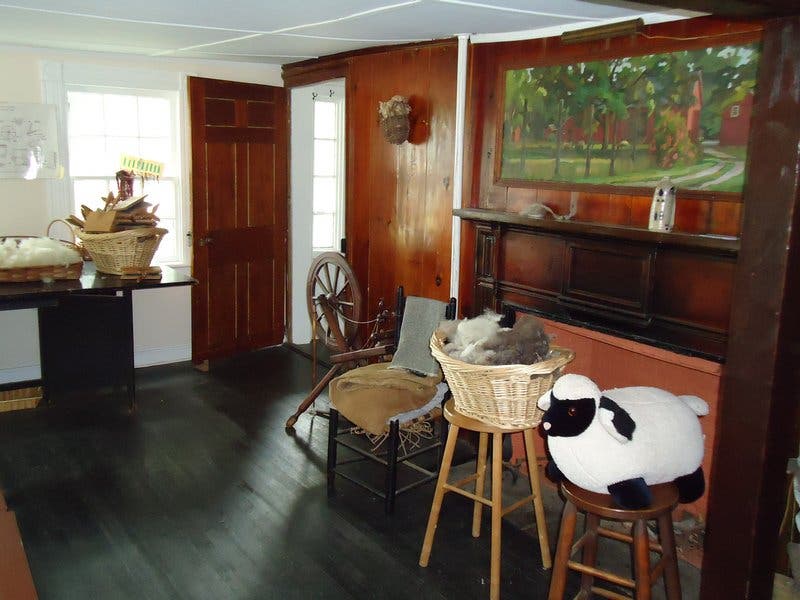


Since its initial construction in the mid-18th century, someone has always lived in Smithtown's historic Franklin Arthur Farm house. Even today, a tenant lives upstairs, helping to supplement any funding needed to maintain the historic property, which sits at the east end of a 20-acre area maintained by the Smithtown Historical Society.
"It's one of the oldest surviving properties on Main Street and one of the earliest built by the Arthurs," said Brad Harris, Smithtown historian and board president of the Smithtown Historical Society.
The property has been passed down through generations of the same family and relatives who married into the family since it was built in approximately 1740.
Franklin Arthur lived in the house in the mid 1800s, though it was his grandfather, William Arthur, who is believed to be the first resident. He was known to have owned several properties in Long Island, most of them concentrated in Smithtown.
Through the 1900s, the Rockwell's were the last family to own the home. In 1983, the Smithtown Historical Society began leasing the land from the town for a 71 year period. Funding for maintaining the site comes from grants and donations.
Today, it is one of three historic houses (out of 14 buildings) on the 20-acre property used for educational programs about colonial life. The Arthurs' homestead is used to demonstrate the process of textile production, which is represented on the ground floor with antiquarian weaving looms.
The design of the house itself is a testament to its age. Stair steps are narrow and the ceilings are lower than in modern homes. As with houses built at the time, the chimney stands in the middle of the house, with a fireplace in multiple rooms and on both floors. Over the years, the house has had many extensions and modifications.
Find out what's happening in Smithtownfor free with the latest updates from Patch.
"What we have today is like a mini time capsule," Harris said. "You don't just have a history of the house, you have a history of a whole time period from 1730 to today."
Kiernan Lannon, executive director of the historical society, explained its significance to the town.
"This area speaks to a bygone area of Smithtown's history," he said. "It's good to know your roots and this helps to define what the roots are for today's generation."
Behind the house are two barns, built in the mid to late 1800s. A pony, sheep and chickens currently reside there. In addition to raising animals, the Arthurs had their own crops on the land. A blacksmith by trade, Franklin Arthur also made his own tools for his self-taught dentist work, which he practiced in the house. Certainly, this is something unique to the time period.
"The people in Smithtown, especially the folks that have been here a really long time, have a distinct feel and enthusiasm for the history," Lannon said. "So it's not surprising that this land would be preserved for this long."