Politics & Government
Bellone To Pitch 1-Year Moratorium On Growing, Sale Of Marijuana
Do you agree or disagree with the idea of a one-year moratorium in Suffolk County on the growing and sale of adult-use cannabis?


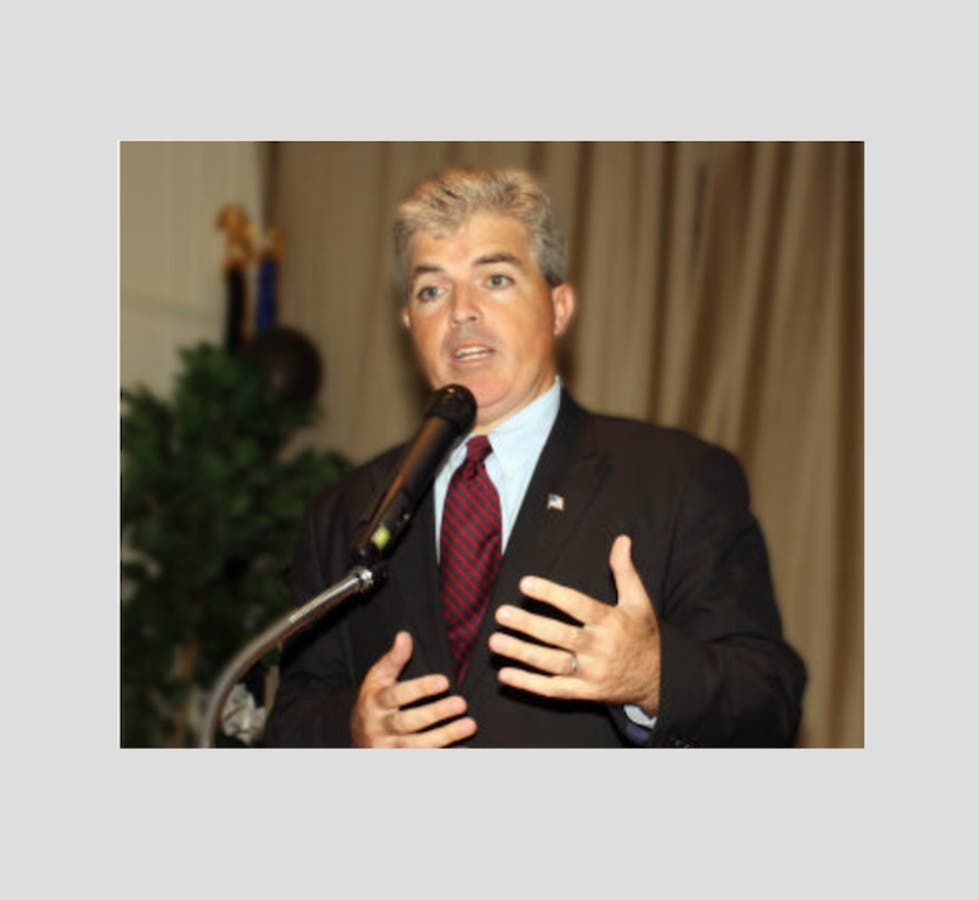
SUFFOLK COUNTY, NY — Suffolk County Executive Steve Bellone is poised to introduce a resolution establishing a one-year moratorium on the cultivation and sale of adult-use cannabis countywide, sources at the county level said.
The one-year moratorium would extend to the cultivation, processing, distribution and sale of adult-use cannabis in Suffolk County; the legislation is designed to give the county sufficient time to assess the potential effects and evaluate the benefits, if any, should the state proposal to legalize marijuana become law, country sources added.
"A one year window will provide the county the necessary timeframe to solicit feedback from experts, law enforcement, and community leaders on the health and safety issues associated with this proposal," Bellone said.
Find out what's happening in Southamptonfor free with the latest updates from Patch.
Bellone has also convened a cannabis inter-agency working group that will be tasked with examining the "myriad of issues associated with marijuana legalization," including public safety, public health, economic development, job creation, impacts on veterans, youth, and on "communities of color as well as potential impacts on the budget and county programs," county sources said. In gathering information, the working group will engage various experts and stakeholders.
Working group members include Chairman Jon Kaiman, deputy county executive; Suffolk County Sheriff Errol Toulon; Police Commissioner Geraldine Hart; Brendan Ahearn, chief of the Suffolk County District Attorney's vehicular crimes unit; Health Commissioner Dr. James Tomarken; Dr. Greg Pigot, director of minority health; Vanessa Pugh, chief deputy commissioner at the Suffolk County Department of Labor; Theresa Ward, commissioner, economic development and planning; Dennis Nowak, acting social services commissioner; Tom Ronayne, veterans services agency director; Dennis Brown, chief legal advisor; and Paul Margiotta, of the traffic and parking violations agency.
Find out what's happening in Southamptonfor free with the latest updates from Patch.
Nassau County Executive Laura Curran, in her state of the county address earlier in March,also announced that she would oppose the sale of recreational marijuana in the county if it becomes legal in New York.
Gov. Andrew Cuomo has made legalizing recreational marijuana a priority of 2019. But under his proposal, municipalities could opt out of selling marijuana.
"Over the past several months, I have personally received input from community leaders, school leaders, village officials and healthcare professionals a well," Curran said from the stage at Nassau Coliseum, where she was giving her speech. "So tonight, I am announcing that I will not support recreational marijuana sales in Nassau County."
While legalized marijuana has been popular with many people, it has also received a lot of blowback, especially from other government officials. The Town of North Hempstead has already preemptively banned marijuana sales, and the Town of Hempstead is considering a year-long ban on recreational pot sales. Suffolk County legislators have also proposed banning recreational marijuana.
The legalization of adult use marijuana was hotly debated last month; the Suffolk County Legislature, led by Presiding Officer DuWayne Gregory, Legislator William Spencer and Legislator Tom Donnelly hosted a public hearing at the William H. Rogers Legislature Building in Smithtown.
The hearing, which lasted for almost three hours, had scores of speakers speaking passionately on the issue.
Gregory said the hearing coincides with Cuomo announcing his support of legalization; 10 states, he said, have already passed legislation allowing for legalization of adult use recreational marijuana.
A proposed legal marijuana program in New York would generate about $300 million in tax revenue, Cuomo has said. The Democratic governor gave the revenue estimate during his State of the State address in Albany along with a few details about his proposal to legalize cannabis.
"We have to do it in a way that creates an economic opportunity for poor communities and people who paid the price, and not for rich corporations who are going to come in to make a buck," he said.
Cuomo's proposal to legalize cannabis for adults 21 and older would impose three taxes: one on the cultivation of marijuana by weight, and two on the sale of it from wholesalers to retailers.
At the hearing Gregory said the information on impacts is still unclear. "Many, many issues require investigation," with impacts explored from all sides, he said.
And with the number of towns and villages across Long Island, he added, "It would seem impossible to reach a consensus," adding that some towns have instituted a ban on retail sales, with the Suffolk County Legislature currently considering a bill to opt out of Cuomo's plan.
There are far-reaching impacts that must be weighed, Gregory said. "I don't know everything there is to know about the legalization of marijuana but it's important to listen to everyone."
The first speaker, Steve Chassman, executive director of the Long Island Council on Alcoholism and Drug Dependence, said the critical question is if the legalization of marijuana would adversely or positively impact public health.
"No one denies the medicinal value of marijuana," he said. However, he said, with marijuana available in highly concentrated forms, some will misuse cannabis and others will "become dependent" and struggle with a substance abuse disorder.
"Suffolk County has, regrettably, the highest rate of overdoses in the state," Chassman said. Teens who are "watching this play out in New York State" often tell him that they think marijuana is harmless, he said.
"It is not harmless," Chassman said. "Young people ask me all the time, how many people do you know that OD'd from marijuana? The answer is none. But ask me how many got derailed from pursuing their goals, such as sports, because of the obsession and compulsion of mind and mood altering drugs, beginning with marijuana."
Also, he said, potency is an issue. "If you used marijuana in the 60s, 70s or 80s, this ain't it. This is not Mother Nature's marijuana," Chassman said.
He urged those involved to ensure studies being read have not been funded by those with a fiduciary interest in legalization.
"You have the health of Suffolk County on your hands"
Marijuana use plays a role in car crashes, Chassman said. To the Legislature, he said: "Education and prevention is so very, very important. You have the health of Suffolk County on your hands."
John Durso, president of labor union Local 338, said medical marijuana has led many to lead pain-free lives. Legalization would allow additional individuals to enroll in the state's program.
"A rare opportunity for economic development"
Legalization also presents "real opportunity for economic development," Durso said. New start up businesses in the cannabis industry, he said, create jobs for young people. "We all talk about the brain drain on Long Island. We see this as an opportunity for an innovative new career."
Durso also said that he understand the significant community concerns. "This is, and will be, a tightly controlled market," he said. "The bottom line is we support legalization. We look forward to working with this body and the community to make sure this program works — and works properly — for all," he said.
Jeffrey Reynolds, president and chief executive officer of the Family and Children's Association in Mineola, said the question was not whether legalization was a good idea. "That's being decided in Albany," he said. But what needed to be considered were the impacts on Suffolk County, "and the pros and cons of opting out."
The process, he predicted, is bound to be "long and drawn out. We hope you will use your voices."
There are key questions that need to be answered, Reynolds said, including how the product will be labeled, if there will be childproof caps and warning labels, how to handle impaired driving, and how to educate young people.
Reynolds said professionals have already seen an increase in marijuana use among young people. "Their perception is that it's not a big deal, anyway. A percentage will not go on to use other drugs — but a percentage will."
And, Reynolds said, with thousands struggling against the demon of heroin, adding another legal drug scares him.
A resident of Smithtown, Reynolds said there is also a question of where stores would be located, with concerns already existing about "vape shops and massage parlors . . .that do nothing for economic development and put our kids at risk."
Lastly, he said, no dollars were put into the governor's proposal to deal with the upfront cost of legalization, including police costs associated with the need to hire new officers, and costs borne by school districts that will need programs to educate.
"We just lost Amazon," Reynolds said. "I'm not sure we need pot stores to replace those revenues."
Others raised the issue of potency, saying in the past, a person who smoked an average of two joints a day would see 175 to 200 nanograms of THC in urine, compared to the current number of between 3,000 to 7,000 nanograms. Experts present said they believed there is a "significant" link between early pot smoking and schizophrenia.
"We are selling our children for tax revenues," one health care professional said.
Others said long-term effects must be studied because very little is known about marijuana, especially from a medical standpoint. Mixing medical use and recreational use could pose major problems for health care providers, some said.
Joseph Liotta of Families for Sensible Drug Policy said he believes legalization would provide benefits, such as taking marijuana distribution out of the hands of gangs and criminals and ensure proper regulation; it would also help to be able to issue health warnings and determine potency, as well as generate revenue to be used for prevention programs, education, and harm reduction, he said.
"Legal regulation should not be understood as a revenue generating activity," he said. "Legally regulating the supply will reduce criminality."
Abu Edwards, director of state affairs for Smart Approaches to Marijuana, which also opposes legalization, discussed the local justice perspective and racial disparities. "For decades, drug policy contributed to skyrocketing incarceration rates for the black community," Edward said.
As it stands, poor communities are already carrying the burden of an excess of liquor stores. "While some will argue marijuana isn't harmful, science says otherwise," he said, adding that it could cause a higher dependency on welfare and permanent IQ loss.
Kym Laube, executive director of the HUGS program, who also sat on Cuomo's task force to combat the heroin crisis, said it's important to look at the whole picture, not just the "drug of the day. We need to look at the whole, instead of saying one is safer than the other. There is no such thing with a developing young brain."
Laube said programs need to be in place and ready should legalization become a reality.
"Let's delay this for as long as we possibly can and then make sure youth have as much access to prevention as to drugs and alcohol," she said. "Let's build the infrastructure to brace ourselves," with prevention programs and education. "Let's band together and say, 'If this is to be, let's do it better,'" she said.
A hearing to discuss legalization was held in Lindenhurst in December.
That hearing was the fourth of four statewide hearings related to the topic following a well-attended Assembly hearing held earlier in the year.
"Forty-one years ago, New York decriminalized non-public possession of small amounts of marijuana, making such possession a non-criminal violation punishable only by a fine," a letter announcing the meeting read. "Despite decriminalization in New York, a disproportionately high number of Black, Hispanic and Latino people continue to be arrested for marijuana-related offenses — particularly possession in public view — which often results in a criminal record that can prevent gainful employment and full participation in society."
Several states in the U.S., as well as Canada, have recently legalized or are in the process of legalizing adult marijuana use.
"Creating an adult-use system in New York raises important issues about the economic structure and regulation of production, distribution and sale," the letter read. "Criminal justice and public health concerns, social and economic equity demands, ensuring opportunities for smaller scale and minority-and-women-owned businesses, and other relevant regulatory matters all need to be considered."
Get more local news delivered straight to your inbox. Sign up for free Patch newsletters and alerts.