Business & Tech
Hamptons Cafes Offer Variety of Drinkable Chocolate Options
Kates shares some cocoa history, and seeks out chocolate-y treats on the East End.
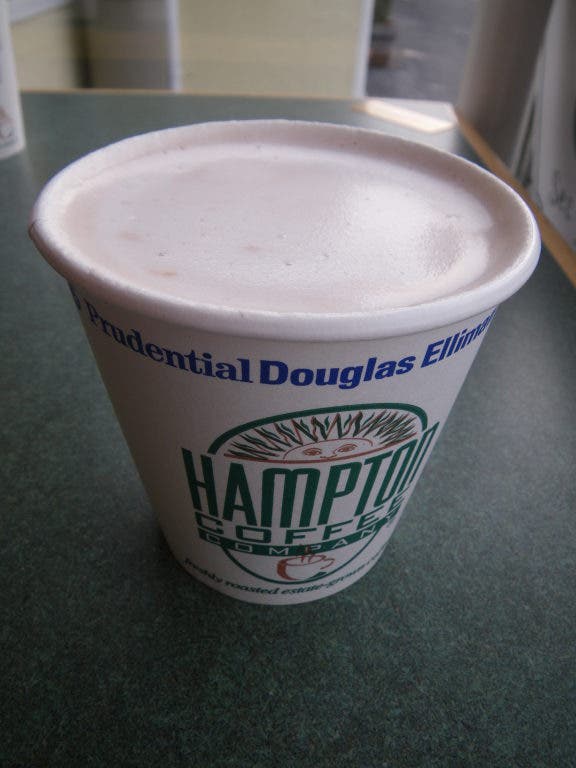


Hot cocoa, hot chocolate, drinking chocolate or simply "cocoa" is an in-demand beverage in the Hamptons this time of year, second perhaps only to hot coffee. Cold, volatile weather calls for beverages that will fight off the dampness and cheer the mood — and hot cocoa certainly fits that bill.
Today, Americans use the names "hot chocolate" and "hot cocoa" interchangeably, but there is a definite difference between the two. "Hot cocoa" is generally made from powdered chocolate created by extracting cocoa butter from the ground cocoa beans. By contrast, "hot chocolate" is made from bar chocolate, which still includes cocoa butter and also includes sugar — "hot chocolate" is definitely richer, and is considered the "true" hot chocolate beverage by chocolate connoisseurs.
Many of today's cafes, however, use chocolate syrups, an easier, quicker, and less time-intensive way to make hot cocoa, such as that of Water Mill's , who stick to an All-American basic.
Find out what's happening in Southamptonfor free with the latest updates from Patch.
"We just use Hershey's Syrup and steamed milk," said Hampton Coffee Company barista Juan Jaramillo. "The whipped cream is the customer's choice. But either way, it's good."
Starbucks has developed something that's a far cry from basic hot cocoa — their popular salted caramel hot chocolate. manager Emily Tarpey explained that it's more complex than the usual cocoa drink.
Find out what's happening in Southamptonfor free with the latest updates from Patch.
"We can't really give away any trade secrets," she laughed, "but it's essentially mocha with steamed milk, toffee-nut flavored syrup, caramel and a sprinkling of sea salt."
Bridgehampton Starbucks barista Shawn Harris, who makes dozens of drinks in a day, thinks that the salted caramel hot chocolate is a standout.
"I like how it's a lot different," he said, "when I first heard of it, I thought, 'Salt and chocolate? Hmm, that doesn't sound too good.' But it's actually the most unreal, great flavor."
No matter how you enjoy your hot cocoa — or which of the Hamptons cafes you choose to visit for a cup — the consensus is that chocolate, in moderation, can be as good for your health as it is for your warmth and your winter psyche. Compared to coffee — which can have up to 130 milligrams of caffeine in 8 ounces — hot chocolate only has minimal amounts of caffeine, around 9 milligrams per 8-ounce cup.
Chocolate has also been found to carry high levels of chemicals known as phenolics (as do coffee and tea), which may help lower the risk of heart disease. The flavanol-rich cocoa may also help to reduce blood pressure. And, of course, it has an equal ability to keep you warm as winter wanes, so drink away.
Outside of gourmet cafes, though, hot cocoa in the United States is often made in instant form, from a packet of cocoa powder, sugar and dry milk, to which hot water is added. It's thinner in consistancy than "real" hot chocolate, so is sometimes topped with marshmallows or whipped cream to add a little density and interest.
Carnation invented the first instant hot cocoa in 1935, while Nestle introduced Quik in 1948, quickly followed by Land O'Lakes and Swiss Miss' envelopes of hot cocoa mix, which were first served exclusively on airplanes — and which are now available locally at and groceries.