Community Corner
How To Stay Safe From Sharks: Experts Weigh In
With 3 shark bites reported in Suffolk County in recent days, here's how to stay safe.


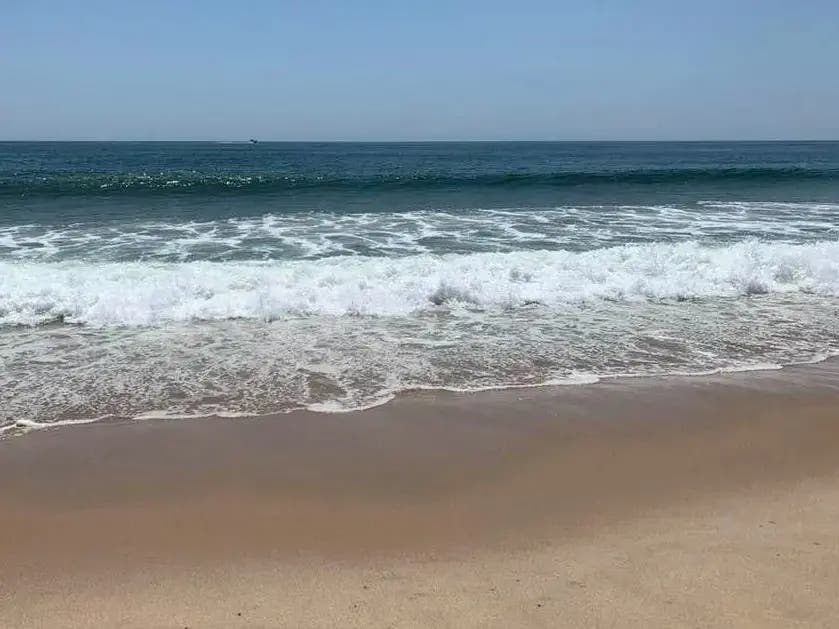
SUFFOLK COUNTY, NY — With three shark bites reported in Suffolk County waters in recent days, and another recorded in Nassau County, experts are offering tips to keep swimmers safe in the water.
The Suffolk County Parks Department listed tips on social media Friday:
- Avoid areas with schools of bait fish, diving sea birds, or the presence of marine mammals such as dolphins or seals.
- Avoid swimming in the ocean at dusk, dawn, or night time.
- Avoid swimming in murky water.
- Always swim, paddle, kayak, and surf in groups
- Always follow instructions of lifeguards and parks staff
Find out what's happening in Southamptonfor free with the latest updates from Patch.
"As shark and marine life activity has increased in the waters around Suffolk County this year, we wanted to share some important tips to help keep you safe as you enjoy the beach this season. Remember, we share these waters with a variety of marine life and it’s important to stay alert and pay attention when entering these habitats," the post said.
Suffolk County Steve Bellone said the shark bites were "unprecedented."
Find out what's happening in Southamptonfor free with the latest updates from Patch.
He added that before the three recent bites, there had not been a shark bite recorded in Suffolk County since Smith Point opened in 1959.
And now, there were two reports at Smith Point on Tuesday alone, he said.
Bellone emphasized that the ocean was a marine environment. "Sharks are here. What we are experiencing may have become the new normal, with more interactions — that remains to be seen, but from what we have experienced so far this season, that is very possibly the case."
The county executive also described some of the enhanced efforts ongoing to protect beachgoers, including drones providing visuals and lifeguards out on jet skis, paddle boards and surfboards in response to the "spate of shark bites in Suffolk County waters."
Bellone urged swimmers to avoid dusk and dawn, not wear shiny jewelry and not go into the water if bleeding, all common sense measures; also, he said, go into the water with someone so if a person is in distress, help is close.
In addition to the Suffolk reports, a 37-year-old man suffered a cut to his right foot while swimming in the ocean at Jones Beach recently, police said.
Sharks have become a more visible presence on the East End in recent years: In 2016, a great white shark nursery was found in the waters off Montauk, according to Ocearch founder Chris Fischer.
According to Ocearch Chief Operating Officer Fernanda Ubatuba at the time — Ocearch is a nonprofit organization dedicated to shark research — shark attacks on humans are extremely rare — the odds are about one in 12 million. Most shark attack victims survive; bites on humans by sharks are normally exploratory.
Worldwide, 200,000 sharks are killed per day; in contrast, about 10 to 12 human lives are lost yearly as a result of shark attacks, researchers told Patch.
Sharks, experts agree, are farless of a danger to people than mankind is to sharks.
"You have more risk of dying by a defective toaster or driving a car than a shark attack, but it's perception," Ubatuba said.
There are few shark attacks worldwide, Ubatuba said.
Joe Yaiullo, curator and co-founder of the Long Island Aquarium and Exhibition Center, has told Patch in previous interviews that there are precautions swimmers can take, such as not going into the water at dawn or dusk when bait fish, such as bunker, are being fed upon. "Avoiding that situation is always wise," he said.
But, for the most part, humans aren't the first choice for shark fare, he said. "We're not on the menu. If we were, sharks would just be lining up off of Jones Beach, Robert Moses and the Hamptons, just waiting for us to go in. But they're not," Yaiuloo said. "We're large, obnoxious, bony creatures in the water."
Sharks, Yaiullo said, don't have fingers to feel; instead, they "mouth" things, and many times, a shark attack is "just them being inquisitive, asking, 'Is this something I want to eat?' Most shark attacks are not a person getting eaten, it's usually a bite, and the shark swims off, leaving the person intact for the most part."
Caution is key, Yaiullo said. "It's something to be aware of. Just as if you were going to walk into the plains of Africa, you'd be wary of a lion," he said.
Shark sightings are actually a good thing, he said. "With them being the apex of the food chain, if they're here, it's a good thing for humans," Yaiullo explained. "People shouldn't think that more sharks in the water mean they're going to be attacked. That's not the case at all."
Sharks are a sign of a healthy ecosystem with plentiful fish, clean water and less pollution, an indicator that the United States is doing a good job of managing its fisheries, he said.
On the East End, Mike Bottini said one reason for the increase in sharks could be the explosion of the gray seal population after the passage of the Marine Mammal Protection Act and removal of bounty on seals in the 1970s, he said. The gray seals are a major source of food for great white sharks, he said.
But despite the reality that the chance of a shark attack is relatively nil, Bottini said when he was working at Jones Beach and "Jaws" had just come out, "Every other person sitting on the beach that summer had that book. It spooked a lot of people, including veteran lifeguards. They're out of sight, so you think, 'Maybe they're in there. How do I know?' It's a little spooky."
How to stay safe
"People have this fear of sharks," Fischer said in a prior interview. "They look out and see a little 4- or 5-foot shark, eating something the size of menhaden or a small squid or mackerel — it's not something you need to be too worried about."
It's not until sharks are much older and about 10 to 12 feet long that they begin to target larger prey such as seals, he said.
Common sense in the water is key, Fischer said: "Don't go swimming looking like a seal," he said. "But people do that every day. They put on wetsuits, dressed up like shark food, when they are going swimming with real shark food. Those are the kinds of things you want to avoid."
Even "dressed up like shark food," most of the time, sharks can tell the difference between a human and a seal, Fischer said.
Another tip, he said, is not to go swimming if there is a good amount of activity, such as birds swooping down to feed on bait, with seals in the area. "Don't swim out in the middle of that. The food chain is happening, and if there is a large white shark in the area, it will be there, balancing the system," Fischer said. "Just think about it as if you were going for hike in the forest and you know mountain lions were tracking deer. You would probably walk in the opposite direction; you wouldn't walk into the middle of that. Humans seem not to apply the same type of logic in the ocean as we do in the forest. Once you're out into the waves, deep into the ocean, you're deep into the wilderness and anything can happen. It's not a swimming pool."
Fischer added: "Be practical, look at what's going on. Make good, safe decisions, use common sense — and enjoy the ocean."
Get more local news delivered straight to your inbox. Sign up for free Patch newsletters and alerts.