Politics & Government
Opioid Addiction Task Force Outlines Suggestions To Save Lives
"We're fighting against a monster." — Lars Clemensen.


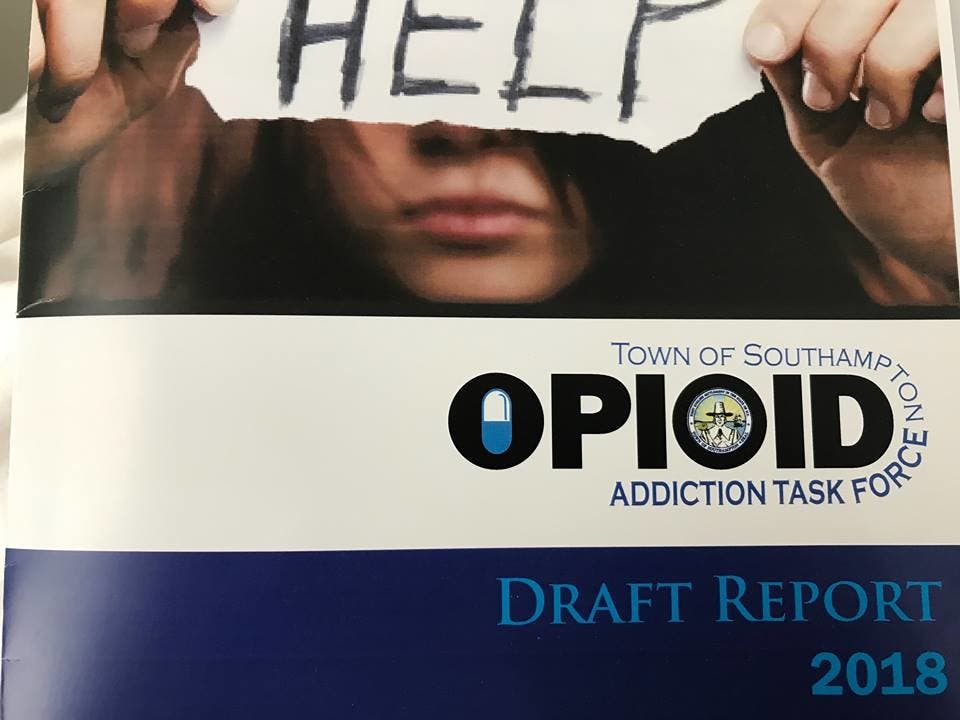
SOUTHAMPTON, NY — Southampton's Opioid Addiction Task Force has spent eight months working furiously to stem the insidious tide of addiction — and on Thursday, the group convened at Town Hall to present their draft report and recommendations.
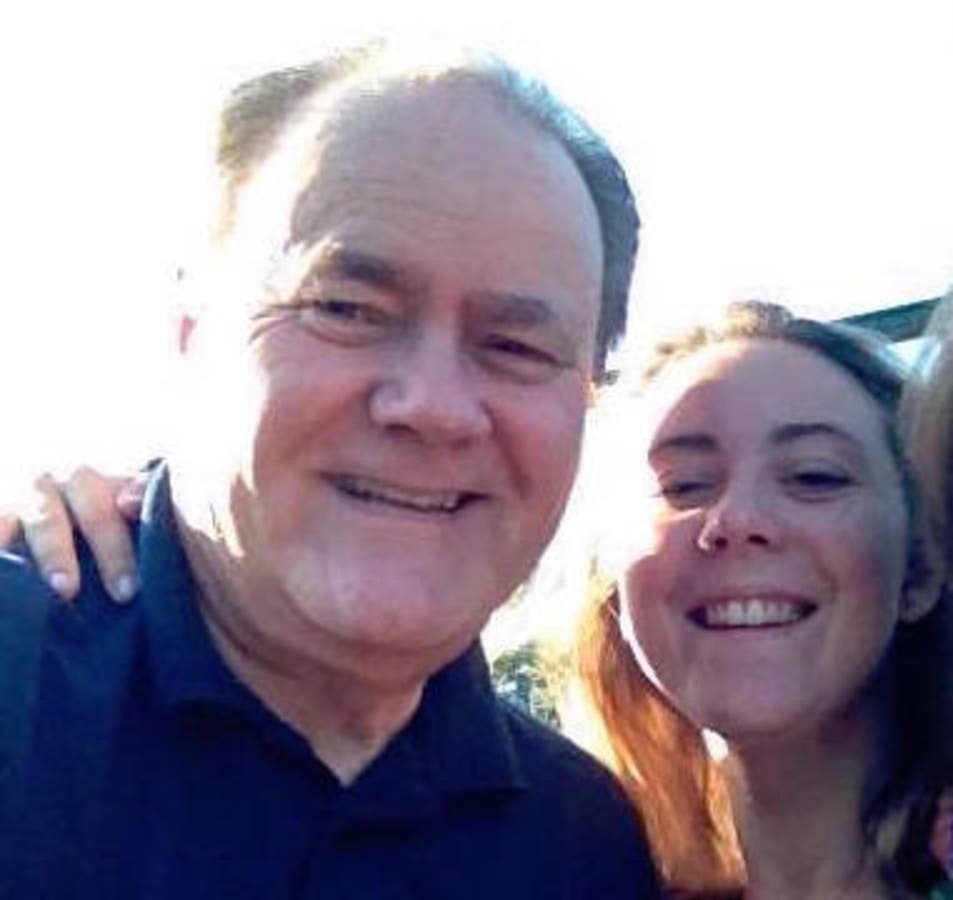
Drew Scott, whose beautiful granddaughter Hallie Ulrich was found on an East Hampton road in September, lost to an overdose, co-chaired the group with Southampton Town Supervisor Jay Schneiderman.
This week, he reflected on the task force's work: "We have such good talent on the task force that many of us plan to remain available if the town board wants to make us a permanent advisory panel," Scott said.
Find out what's happening in Southamptonfor free with the latest updates from Patch.
"The eight months have been a real learning curve for many of us but I am determined to keep working on this so the addiction epidemic doesn’t claim more lives. Hallie Rae, I think, would be proud of our work as a team. I did this in her memory," he said.
Schneiderman said the task force was formed to find ways to deal with a growing crisis. In 2017, he said, 19 individuals were lost to preventable opioid deaths; those deaths cut a wide swath across all demographics, young to old, rich to poor. Those who got addicted to prescription pain killers, unable to afford the pills, often turned to heroin, which was sometimes laced with deadly fentanyl, he said.
Find out what's happening in Southamptonfor free with the latest updates from Patch.
When Scott's granddaughter died, Schneiderman said he, and so many on the East End, were shaken and desperate to find ways to fight the insidious epidemic. "We knew we needed to come together as a community and figure out what we should be doing," Schneiderman said.
The group, which started small, grew to more than 40 people, Schneiderman said.
"The good news here is — and I hope some of it is attributable to the work we are doing — is it seems like we've turned a bit of a corner. I hope it stays that way," Schneiderman said.
In June, 2017 there had already been 12 overdoses in Southampton Town; so far this year, there has been one. "One is way too many but statistically that's over a 90 percent drop," he said. Factors such as the community working together, stepped up law enforcement, and working to shatter the stigma of addiction have all been positive steps, Schneiderman said.
At the meeting, the task force's four subcommittees — prevention, enforcement, treatment and recovery — presented their findings and recommendations.
Scott pointed out that there with 19 deaths in a town of 60,000 last year, there were "far too many dying. The nationwide epidemic was hitting home." With 64,000 dying of opioid drug overdoses nationwide in 2016, "That's more than were killed in the Vietnam War," he said, adding that it isn't just an urban community, but instead, a deadly scourge infiltrating small towns.
The task force, upon its creation, immediately organized a public forum, attended by more than 250 individuals; tears, hope and stories of survival were shared at a second forum in April. Youth forums were, held, as was a gathering of medical professionals — and a recent candlelight vigil for lives lost to the opioid crisis, held on Mother's Day weekend.
Powerful testimony touched hearts as mothers and fathers, grandparents and friends shared memories of unspeakable loss at the forums, hoping to use their pain to fuel a path to solutions. Frustrations were expressed, including insurance hurdles, a lack of resources, and the seemingly insurmountable challenges often faced by those finally seeking treatment — despite the fact that a young person reaching out for help has a 24-hour window to find placement.
At the candlelight vigil, hundreds of candles were lit for the lives lost in Suffolk County to overdoses, with 19 flickering for the beautiful souls extinguished last year, including Hallie's radiant light. One candle in the center was lit for the young woman who died this year.
Prevention subcommittee Linn Turecamo said that between she and her younger brother, they know "handfuls" of lives lost, including a neighbor who died of an overdose; four of her colleagues have had to bury their children.
"I know of even more people struggling with addiction. You wouldn't know it if you saw them around town. They have jobs. They're taking the drugs from their grandparents' medicine cabinets. They have secret bank accounts," to hide addiction from their loved ones, she said.
Addiction is stemming from other factors, the task force said; Nancy Lynott, Southampton Town youth bureau director, said data collected from high schools indicated 87 percent of teens have experienced anxiety in the last 30 days, with 78 percent experiencing difficulty in their lives due to this anxiety and 48 percent suffering from depression.
Kym Laube, executive director of the Human Understanding and Growth Seminars, herself in long-term recovery, said prevention is a long term process, as is recovery. "It takes five to 10 years of consistent effort for community change," she said. "The schools are doing a great job but the truth is, this is a community issue."
There needs to be a long term support system, as well as a focus on mental health issues, including in schools, they said.
Also, Laube echoed a statement she's adhered to for years —the dangers of underage drinking.
"We cannot minimize underage drinking and treat it as a safe thing, saying, 'At least they're not doing heavier drugs.' This conversation has to be about where it begins, not where it ends," Laube said.
She advocated for support in schools using evidence based programs and models. Media campaigns in towns and schools are critical, to educate parents, empower youth and support educational facilities, she said.
She added that the focus shouldn't be just on opioids.
"We need to stop focusing on the drug of the day and look at substance abuse as a whole," Laube said.
Lynott added that one factor that leads to drug use in young people is a "lack of connection, of feeling alone." Support is needed from areas including faith communities, sporting activities, and healthy programs for teens — including a transportation system to help them attend. Youth employment opportunities are also important, she said.
Hampton Bays School Superintendent Lars Clemensen said the report should be kept on the front burner. "We shouldn't let this report collect dust," he said. He also stressed a connection to community. And, he said, while surveys indicate that teens are trying drugs and alcohol "less and later," they are reflecting spikes in stress, anxiety and isolation. "The iGen" generation, born after 1995, interact differently and there's a need to find innovative ways for connection, he said.
Clemensen said science indicates that on the "happiest day of a kid's life, they have five times the dopamine. But opiates are exponentially more than that. We're fighting against a monster."
Treatment solutions were also discussed, with the committee explaining that treatment needs to be "person centered. It's a joint effort in engaging people as human beings. Addiction is an illness, not a choice," said Dr. Karen Martin of Alternatives Counseling Services in Southampton. "Nobody wakes up and says, 'Gee, I think I'll become an addict today.'" An addicts entire brain changes. "It's not a choice. You can't stop it. This is not about willpower," she said. "What we need to do is to take the stigma away."
Solving insurance issues are critical toward breaking the cycle, she said.
"Patients have to fail twice in outpatient treatment before they can be covered. I don't see that with cancer or diabetes," said Susan Sargent.
"We're really setting people up to fail," Martin agreed.
Sargent suggested a dedicated phone line, perhaps statewide, for insurance denials.
Sober houses also need to be de-stigmatized, Martin said. "Sober houses are not frat houses, not party houses. They're for people who seriously need to be in an environment to stay sober. It's not leprosy — but that's how it's perceived."
All agreed that a THRIVE Recovery Community and Outreach Center — the Hauppauge-based "Transformation, Healing, Recovery, Inspiration, Validation and Empowerment" facility is a place for those in recovery can go to find solidarity and resources — would be an invaluable asset to the East End.
Mental heath issues and substance abuse are often concurrent disorders, Martin added.
Southampton Town Police Chief Steven Skrynecki and Tom McAbee, community leader, spoke about enforcement.
"You cannot arrest your way out of a situation like this," Skrynecki said, pointing to the importance of awareness and education.
"The most definitive way to turn the tide on this is through the next individual. We're trying to prevent next person," he said, adding that law enforcement is tracking and collecting data to analyze patterns of where overdoses are occurring and crimes associated with those deaths. A detective is now assigned to every overdose, he said. Information sharing among law enforcement agencies has increased, the chief added. Narcan is also available to every police officer and detective, with 10 Narcan saves in 2017 and nine this year — but of that number, one individual was saved by Narcan four separate times.
A new bridge program aims to "bridge the gap" from first responder to treatment, Skrynecki said. Community outreach, Narcan training, and drug disposal are all tools helping in the war against drugs. Skrynecki also emphasized the Good Samaritan law, which says a person who calls for help if a person is overdosing will not face criminal charges.
Discussion prevention, former Southampton Village Mayor Mark Epley, who is also the CEO of Seafield Center Inc., said recovery is "all about sustainability. Recovery is about long-term. It's a lifestyle."
Just addressing opioids isn't enough, Epley said; while 64,000 died of opioid overdoses, 88,000 died from medical complications of alcohol abuse and 480,000 were tobacco-related deaths.
"This needs to be looked at not as an opioid task force. This is a task force about addiction," Epley said. And addiction affects the entire society, he said. "One alcoholic or drug addict negatively impacts the lives of 28 people. This is about addressing addiction on the East End, in Suffolk County, in New York State — in America."
Epley said parents need to look in the mirror. "If you're drinking and doing drugs, that's what your kids are going to do." He said youth programs needed to be expanded and public service announcements on how to find meetings.
Epley also discussed sober houses and challenges presented by the limit of days a patient can seek treatment under insurance. He also said many don't seek in patient treatment because of childcare concerns and economic issues — and for those who do seek help, the limited number of available beds on the East End is another challenge.
Community leader Alfredo Merat spoke on recovery: "Recovery is day by day. It's forever. The death of people — for me, it should be the birth of anything we do here."
The task force is made up 42 people from the community and includes medical professionals, educators, law enforcement officials and people in recovery.
Some of the final recommendations include:
- Support prevention education in the schools and community
- Create a new parent/guardian education program outlining signs to look for
- Facilitate prescriber education on addiction for medical professionals
- Maintain town multidisciplinary coalition that includes youth: offer school credit
- Create indoor public venue for winter events-youth socialization
- Create marketing campaign about resources available
- Develop regional transportation services
- Establish an East End THRIVE not further west than Riverhead, Stony Brook Southampton Campus or Gabreski Airport
- Create an education campaign to help remove the stigma of a 12 step program
- Request all businesses working with the Town of Southampton have insurance policies supporting the parity act for substance and mental health benefits, i.e: co-pay cancer
- Create a mental health and substance abuse dedicated phone line for insurance denials
- Continue coordinated sharing efforts with the Southampton Police Department and other area departments tracking OD cases
- Continue “Bridge the Gap” program, that voluntarily links people revived with Narcan to the Treatment subcommittee to facilitate long term care
- Create marketing campaign for “Good Samaritan Law”
- Develop a public awareness campaign for parents, “Look in the Mirror”, educating on how to talk to children and expose dangers of addiction
- Enlist SCCC to advocate careers for certified recovery coaches and sober companions
- Recommend that New York State create sober dorms at Stony Brook Southampton Campus
- Facilitate more sober housing but recommend the state enforce codes
- Create funding for alternatives to child care while in treatment
Now that the first phase of the effort is completed, the town board will review the recommendations presented and evaluate which of them can be effectively implemented, the town said.
Patch file photo of Drew Scott and his granddaughter Hallie Ulrich, lost to an overdose.
Get more local news delivered straight to your inbox. Sign up for free Patch newsletters and alerts.