Business & Tech
Southampton Gets Electricity
Several competing forces jumped on the bandwagon to get Southampton on the grid.


A common myth concerning Southampton is that it slumbered for more than two centuries following its founding in 1640 and was jolted into worldliness only when it became a fashionable resort. Even as late as the 1940s, a certain Mrs. Albert Jaeckel clung to the myth, informing author Cleveland Amory that "Southampton is a little backwater of God."
In fact, the frequent arrival in North Sea harbor of boats from other ports kept the early settlers in touch with the world from the start and the harbor remained a hub of brisk maritime trade until 1775. Later, when the whaling industry boomed, Southampton seamen circumnavigated the globe, returning with news and treasures from farflung places.
Certainly, by the end of the 19th century, Southampton was no backwater, thanks in part to the affluence and advanced ideas of its New York City summer population but also benefiting from its own inclinations. The swiftness with which the village made the transition to electrical lighting — and the singular way it was accomplished — is a case in point.
Find out what's happening in Southamptonfor free with the latest updates from Patch.
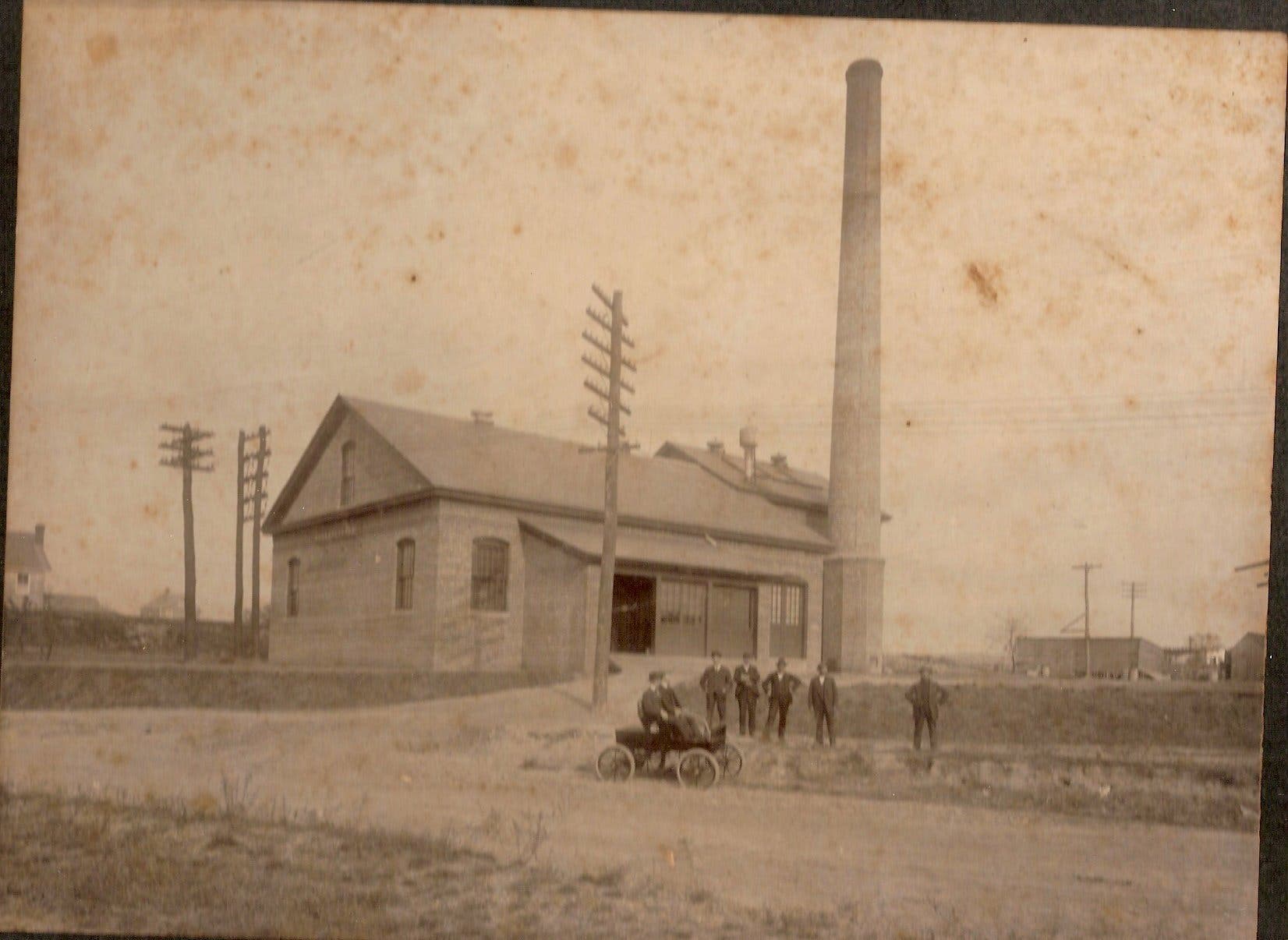
Sometime prior to 1893, Harri M. Howell of Southampton secured a franchise from the town for the distribution of electric service in the then-hamlet of Southampton. We know this because a cache of Terry family papers at the includes a full account of electrification, probably written by L.E. Terry. From a small brick building just east of the Southampton railroad station, service was run through Elm Street to Hampton Road, down Little Plains Road to Gin Lane and west to the .
Oddly enough, the Meadow Club took precedence over Main Street, which received service about a year later, fed from a transformer on the roof of Howell's law office. A number of the summer cottages in the south part of the village received service, some on a flat rate basis, others with meters at a cost of 25 cents per kilowatt hour.
Find out what's happening in Southamptonfor free with the latest updates from Patch.
Demand soared and the plant was rebuilt with bigger equipment in 1897. However, as the Terry account reports, there was "considerable dissatisfaction among the summer colony," the reason being that "the owner of the company refused to make connections for any customer unless the wiring of the house was handled by his crew."
Possessing the necessary wherewithal, the malcontents built a competitive plant of their own at the corner of Prospect Street and North Sea Road, the Suffolk Light, Heat and Power Company (of which L.E. Terry is listed in 1908 as secretary and treasurer). Competitive friction ensued until the newer company triumphed and bought out the original.
James Breese, a financier of fluctuating fortunes and extravagant tastes, was apparently flush at the time and not about to wait for service to arrive at his splendid Hill Street residence, "The Orchard" (now ). On August 12, 1899, The New York Times reported that Breese was sporting a new automobile after making the equally stunning move of "opposing the Southampton Electric Light Company by erecting his own electric plant."
This was exciting stuff for the Breese children. In her memoir, "Tanty," Frances Breese Miller wrote that the wiring of "The Orchard" and the installation of the estate's electric light plant were the "big events in the year 1899. My brothers and I made it an almost daily habit to go to the engine room in the stable yard to watch Patrick, the engineer, start up the monster dynamo."
Interestingly, the trend in these early days was toward a reduction in rates, which declined in the 1920s from an average of 16 cents to eight cents per kilowatt hour. Alas, the trend today is otherwise.
Sources from the Southampton Historical Museum: The Malcolm Terry Collection; "The Last Resorts" by Cleveland Amory; James Truslow Adams' "History of Southampton"; "Tanty" by Frances Breese Miller.