Neighbor News
Southampton Sewer Plan Threatens Dog Park, Historic Fort, and 17th-Century Graves
Hidden engineering alternatives, a flawed environmental review, and hundreds of historic graves at risk.

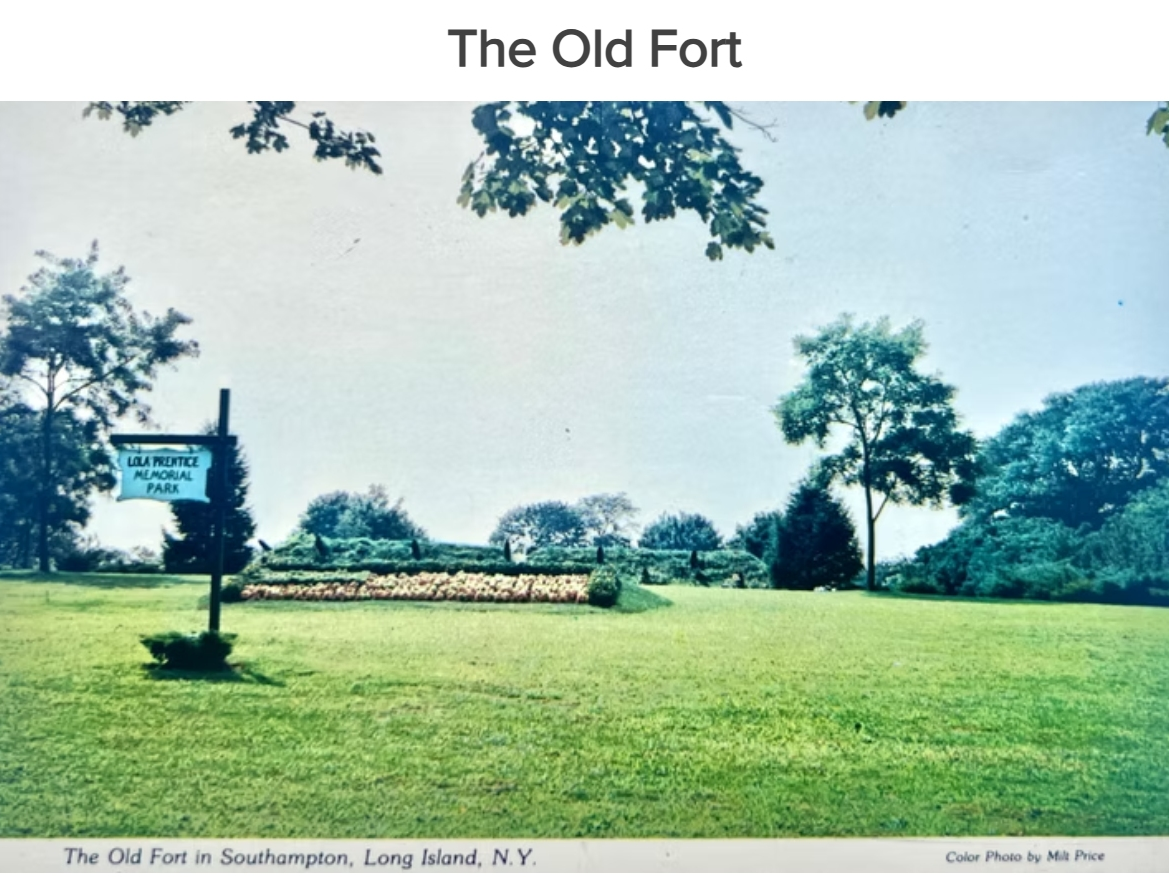


Southampton Village Board’s Sewer Plan Threatens Historic British Fort, Beloved Dog Park, and 17th-Century Burial Ground
By Blaise F. Labriola
The Village of Southampton is currently attempting to push through a massive, multi-million-dollar centralized sewage treatment plant. Clean water infrastructure is a goal we all share. However, the Village Board’s aggressive, secretive push to seize Lola Prentice Memorial Park on Windmill Lane as the "only" site for this facility is not just a violation of public trust; it is a brewing environmental and historical disaster.
Find out what's happening in Southamptonfor free with the latest updates from Patch.
If the Village Board gets its way, it will bulldoze a heavily utilized community dog park, pave over the site of a recognized Revolutionary War-era British fort, and create a catastrophic hydrological threat to the resting places of Southampton’s founding families and Revolutionary War veterans.
The proposed location at Lola Prentice Park is restricted by a 2019 Supreme Court injunction that limits the land to recreational and educational uses. To bypass this, the Village is currently lobbying the State Legislature in Albany to strip the park of its protected status. But their legislative maneuvering ignores a massive, fatal flaw in their engineering.
Find out what's happening in Southamptonfor free with the latest updates from Patch.
Lola Prentice Park sits on an elevated hill. Located a mere 50 yards directly down the slope from the proposed plant footprint is the Old Southampton Cemetery (the Old Burying Ground). Established in 1721, it is one of the oldest continuously used English burial grounds in New York State.
A centralized plant of this magnitude does not just make wastewater disappear; it discharges millions of gallons of treated effluent into subterranean leaching pools. Injecting this massive volume of water into the elevated soil of the park will create what hydrologists call "groundwater mounding." Gravity dictates that this subterranean water displacement will seek the path of least resistance, flowing laterally, straight down the hill to the Old Burial Ground.
The Village’s current engineering plan threatens to oversaturate the soil beneath these hundreds of colonial graves, causing severe ground destabilization. It poses an imminent risk of structural collapse to 18th-century burial shafts, the toppling of historic headstones, and the subsurface washout of unmarked archaeological remains. We are looking at the literal flooding of our own history.
The Village claims this park is the "only site that works." Yet, at an April 18th public informational session, their own engineering consultants admitted on camera that they possess a comparative document detailing a viable, cheaper, decentralized STEP sewer system that could be placed underneath the existing commercial parking lots. Instead of pursuing this safe alternative, the Board is choosing to fight its own residents in the Supreme Court to force the plant onto protected parkland.
Fortunately, the State is now stepping in. The New York State Historic Preservation Office (SHPO) has officially re-opened its archaeological investigation (Project 23PR02712) into the Village’s project.
The State’s intervention makes it legally impossible for the Village to issue a "Negative Declaration" to fast-track its environmental review. They can no longer claim this project has zero impact while state archaeologists are actively investigating the threat to colonial graves.
We cannot allow the Village Board to hide behind claims of "imminent necessity" while ignoring viable engineering alternatives and threatening a 17th-century cemetery, a British Fort site, and Lola Prentice Dog Park. It is time for transparency, a rigorous environmental review, and a halt to the destruction of Lola Prentice Park.