Community Corner
Op-Ed: Perspective On Black History In Putnam County
The writer, an Eagle Scout and Brewster High School graduate, is an intern in the county's PILOT program.


By Andrew DiFabbio, PILOT Intern 2020
Following the historic nationwide protests which began in late May, the Putnam County Historian’s Office has taken an increased interest in Black history in an otherwise extremely white county, an effort which involves identifying crucial Black historical sites and the stories of those who lived and worked on them. As a PILOT intern during the summer, part of my research has focused on two locations: Tone’s Pond, and Snowdale Farm.
What we know today as Tonetta Lake in the Town of Southeast is said to once be the site of a simple fisherman’s resort run by a former enslaved man, Tone Seeley, who was manumitted after his service in the American Revolutionary War. To date, it’s still unclear whether his surname is accurate. The story continues that after gaining his freedom from John Waring, Tone settled on what would come to be known as Tone’s Pond and started a small business catering to fishermen with food, drink, and whatever else they required. From this time period, there are no primary source records to verify this story. It is first recorded in William Blake’s 1849 book, “The History of Putnam County, N.Y.”, as just that, a story of a man named Tone and his wife Etta.
Find out what's happening in Southeast-Brewsterfor free with the latest updates from Patch.
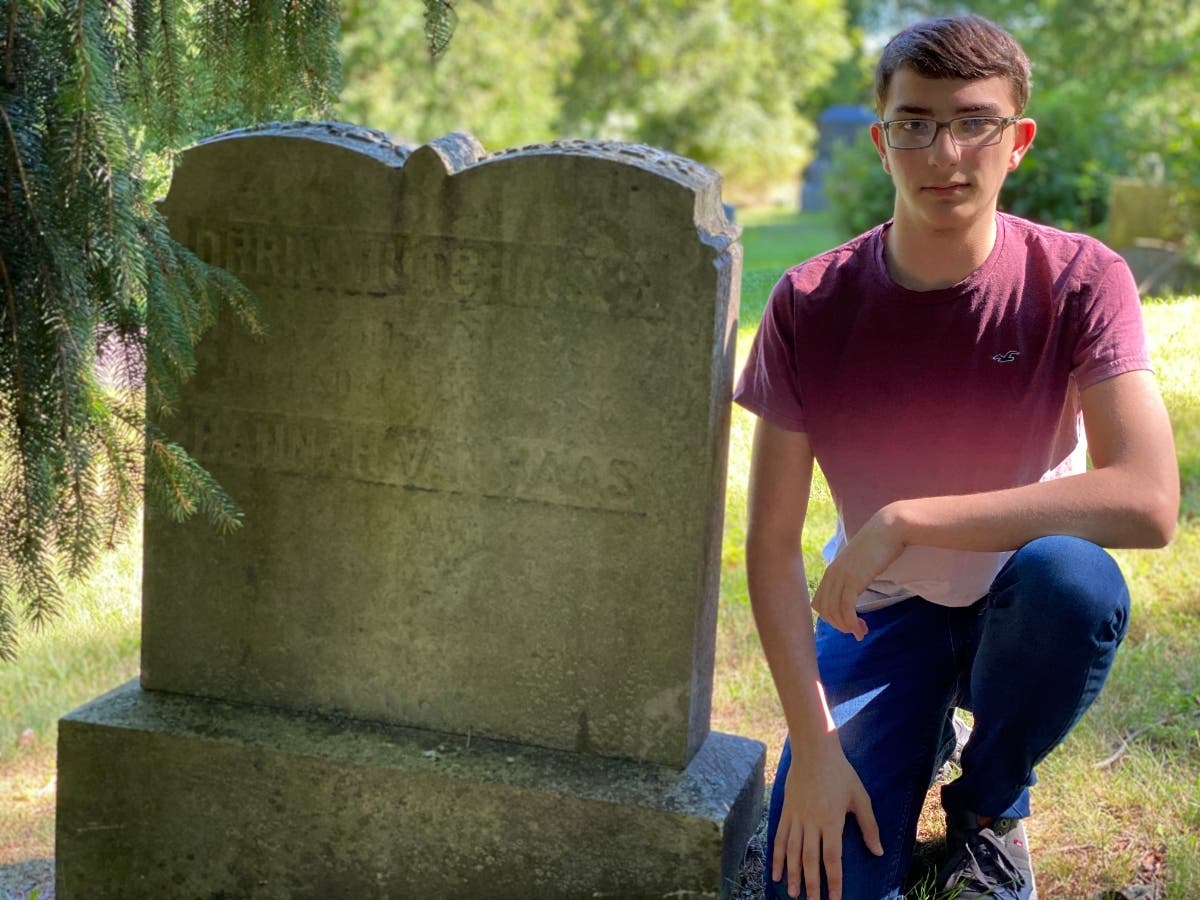
However, we do know that he fathered several children, and some stayed in the Brewster area. Jennie Seeley, Tone’s daughter, and Orrin Hutchinson, Tone’s grandson, both worked for the loved, and hated, businessman Daniel Drew. Orrin was able to purchase his own farm near Turk Hill and the Croton River in 1836. For many years, Orrin’s son Clark was a beloved barber in the village. One can find direct references to Tone in Orrin’s 1886 obituary. It takes a simple visit to the Old Methodist Cemetery just outside the Village of Brewster to see Orrin and Clark’s headstones and the graves of many of Tone’s descendants. Their lives are now our closest primary sources.
Aside from Tone’s Pond, a drive north on Farm to Market Road through the Big Elm district between Southeast and Patterson brings one through what was once Snowdale Farm, a farm-to-table bed-and-breakfast for African Americans, run by the Moran family in the 1920-30s.
Find out what's happening in Southeast-Brewsterfor free with the latest updates from Patch.
Augustus and Mary Moran, a Black couple, purchased the land that would become Snowdale farm in 1919 from Elbridge G. Snow for just five dollars. (Snow was an insurance business magnate and it is likely that Augustus had been in his employ.) The Morans ran advertisements in The New York Age and other metropolitan newspapers, inviting African Americans from as near as Westchester and Harlem, to as far as Houston, Texas, to experience their resort. They drew high-profile visitors with a swimming pool, tennis courts, horseback riding, hiking, fishing, and countless other activities. With easy highway and train access, Snowdale Farm became part of a flourishing recreational tourism industry for African Americans. The farm continued business with the Berkshire Rod and Gun Club and ultimately returned to the family’s private residence and farm in the 1940s. Unfortunately, there aren’t any records or photographs of Snowdale Farm in the Putnam County Historian’s Collection, but there are deeds in the Archives and newspaper clippings thanks to online newspaper searches on FultonHistory.com.
Recently, the Putnam County Historian’s Office has reached out to the Brewster Central School District, hoping to install and maintain historical markers at these locations. These would be the first historical markers in Putnam County dedicated to Black history. Along with this, it will bring curriculum on Black history. The district hopes to see this project completed within the coming school year.
Studying Black history can be difficult, largely because earlier records tend to ignore or downplay the role of Black men and women in the development of our county. While Putnam’s poor agricultural land did not lend itself to slave labor, it is nonetheless telling that in over 700 pages of William Pelletreau’s History of Putnam County, New York, published 1886, I found only thirteen references to Black individuals, almost none of which focus on them except for their relationship to white people. After all, none of those records were written by Black historians. Even the stories we can tease out are difficult to flush out. In the case of Tone’s Pond, we’ve been unable to find any primary sources, which makes some of the more essential details, like Tone’s surname and his wife’s name, unclear. Despite these hurdles, however, it is imperative that we continue searching for new information and sharing what little we do know of Putnam County’s Black history.
I first set foot in the Putnam County Historian’s Office a little over a year ago while looking for a sponsor for my Eagle Scout Service project, but it was not until two months ago that I began to appreciate its place in the pursuit of local history. Over my past several weeks as a PILOT intern for the office, I have been consistently impressed with the gravity and extent of their work to understand Putnam’s place in history from its foundation to today.
In 2020, Andrew DiFabbio earned the rank of Eagle Scout, graduated as Valedictorian from Brewster High School, and recently started his freshman year at the College of Arts & Science at Cornell University as a Tanner Dean Scholar, studying physics and applied mathematics.
Get more local news delivered straight to your inbox. Sign up for free Patch newsletters and alerts.