Politics & Government
Dems Debate Education
Democratic assembly candidates Tom Abinanti and Anna Sterne debate the future of funding for education in New York.

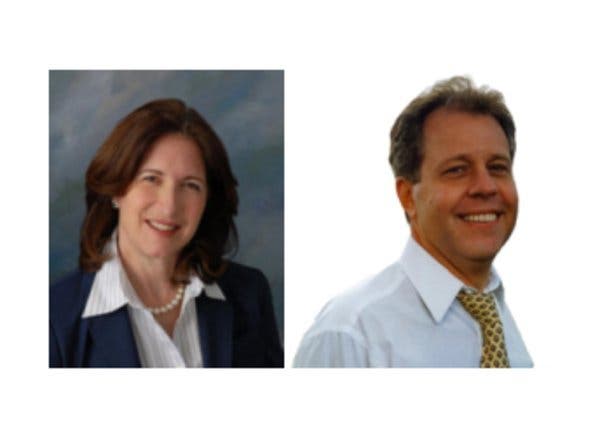
Democratic Assembly candidates for the 92nd District Anna Sterne and Tom Abinanti have been campaigning hard these last few months, appearing at such events as Tarrytown's Third Friday, Hastings Friday Night Live and Irvington's July 4 fireworks display.
Sterne, who entered the race predominantly because of her dissatisfaction with the current administration's management of New York public schools, cites her experience on Dobbs Ferry's school board as invaluable to her potential to enact change as a state assemblywoman. Abinanti, who cites his past political record as a Greenburgh town board member and Westchester county legislator, believes his deep understanding of all levels of educational institutions makes him very well suited to represent the district.
This week, we interviewed the candidates about their specific goals for New York's education system:
Find out what's happening in Tarrytown-Sleepy Hollowfor free with the latest updates from Patch.
Patch: What are the specific issues you have with the way the current administration is handling our public schools?
Sterne: I believe the state is imposing too many unfunded mandates on public schools. The schools are being overregulated, which places a huge economic burden on the districts; it doesn't make sense to add mandates and cut funds.
Find out what's happening in Tarrytown-Sleepy Hollowfor free with the latest updates from Patch.
Also, the state uses complex formulas to determine funding for education, and the money allotted to schools is unreliable and insufficient.
Another issue I have is that public districts are constantly audited, whereas charter schools are not. The charter schools are pulling money from our districts, which is an annoyance—and the charter schools aren't doing all that well anyway.
Abinanti: The biggest challenge for next year's administration, in my mind, is to shift the cost of education from individuals' property taxes back to the state where it belongs. I propose to do this in five ways:
1. The first is to immediately restore a fair state aid formula, which for us means grouping Westchester in with New York City and Long Island, rather than Rockland and Duchess counties, where the cost to run a school is less. Schools south of us get more funding because the cost of living is supposedly higher, but Westchester should definitely be grouped with them.
2. Along the same lines, another short-term fix is to fight for further changes to the state funding formula that will make Westchester receive more aid.
3. A longer-term reform is to begin to shift the burden of funding education from people's property taxes to broad-based state taxes. Schools currently get only 5 to10 percent of their budges from he state. That number should be significantly higher.
4. The state should assume the cost of special education—it is unfair for both the school districts and the children to have the cost and availability of services be dependent on where a child resides. School districts should not have to pay more to provide for special needs kids.
5. Finally, school boards should be more careful in administration of schools. Dobbs Ferry, for example, has only 1400 students and a large number of administrators, which is typical for districts in Westchester. We expect to cut the county workforce by 10 percent. School districts should do the same.
Patch: Where will the school districts and the state make up for the money you believe should be diverted to schools?
Sterne: I believe the state should freeze all non-vital mandates that require local funding. In 2003, there was a report done that revealed 122 unfunded mandates could be cut down to 22.
A few years ago, Governor Patterson passed a law saying that all mandates imposed on schools must come with appropriate funding; when we received another unfunded mandate, I called his office to inquire about the budgeting related to the mandate, and they had no idea what I was talking about.
Though I'm not a big one for raising taxes, one tax I think should be levied is the bonus tax for people earning $250,000 or more.
Abinanti: First, the state needs to go back to a progressive tax system, in which the wealthiest individuals pay the most. They have reaped the greatest benefits from the system, and they should now pay more in.
Also we need to revamp the basic Star (New York State School Tax Relief) Program, giving greater tax credits to people who pay the highest school taxes.
Also, schools should get creative and partner with nonprofits to provide programs schools wouldn't be able to offer with their budgets alone. An example of this is a program I initiated in which Westchester County partnered with an organization to provide art therapy to children with disabilities. Another creative way to increase funding is to share the state sales tax with school districts.
Patch: From which experiences in your lives and careers can you attribute your education policies?
Sterne: Many of my ideas were built from serving on the Dobbs Ferry School board and then serving on the Westchester-Putnam School Boards Association, so I believe my first-hand experience with educational programs and its funding will give me a unique perspective in the state assembly.
Abinanti: As a county legislator I have had extensive experience working with all the different types of schools in this district—that means primary schools, state and community colleges and special-act schools. This district is unique in that it has the highest concentration of special act-schools—[Greenburgh Graham, Abbott School and Children's Village]—of anywhere in the state. These schools are particularly tricky in that they are state-funded but not on the county tax roll. You need experience to make sure the right people are appointed to these boards to run them well. That's experience most other assembly-members don't have.
Patch: And your thoughts on the state's higher education system?
Sterne: When I lived in California, I noticed how highly regarded those schools were versus our state schools; I would like to improve the quality of the SUNY system and elevate it to better resemble California's system.
Abinanti: I think New York has one of the strongest state school systems in the nation. We have succeeded in providing quality educations at an affordable cost, and I have dealt with this issue head-on, because one-third of Westchester Community College's funds come from the county. As a state assemblyman, I'd work to assure tuitions didn't go up.
Patch: So what makes you more qualified, from the standpoint of education policy, to serve on the state assembly?
Sterne: As the legislative liaison to Dobbs Ferry's school board, I have gone to Albany a few times a year to speak to assemblyman and senators about how schools are funded. But I realized how much more I could do by working up there full-time. I also bring a non-partisan perspective to the assembly, having served with both republicans and democrats on the school board. I want to be a non-partisan voice for all New York state school boards.
Abinanti: Being on the state legislature requires being able to convert skills into actions. My experience at the town board and county legislature has taught me about this entire district and its unique needs, knowledge I need to "make government work." I've dealt with public schools, state colleges and universities and special-act districts.
The primary will be September 14, the winner of which will go on to face Republican candidate Tom Bock in the general election on November 2.
Get more local news delivered straight to your inbox. Sign up for free Patch newsletters and alerts.