Sports
Hockey, Minus the Skates
Sled Hockey offers competition, camaraderie and a new opportunities for individuals with mobility impairments.



Careening down the ice at high speed, Vic Calise raises his hockey stick and rockets a puck into the back of the net.
He executes a skidding turn and heads back to the center line to set up another shot.
It's ice hockey – but no one is standing up.
Find out what's happening in Tarrytown-Sleepy Hollowfor free with the latest updates from Patch.
"When I got hurt I was really upset, because I didn't know I could play sport again," Calise said. "Then someone handed me a Sports 'n Spokes magazine and it said something about sled hockey."
Calise is one of a handful of disabled players on the New York Rangers sled hockey team. The team consists of players aged 16-50 who are committed to overcoming their disabilities and their opponents on the ice.
Find out what's happening in Tarrytown-Sleepy Hollowfor free with the latest updates from Patch.
"It's full contact, full-force hockey," said Andrew Schwartz, head coach of the team. "It is every single component of regular hockey except the standing athletes."
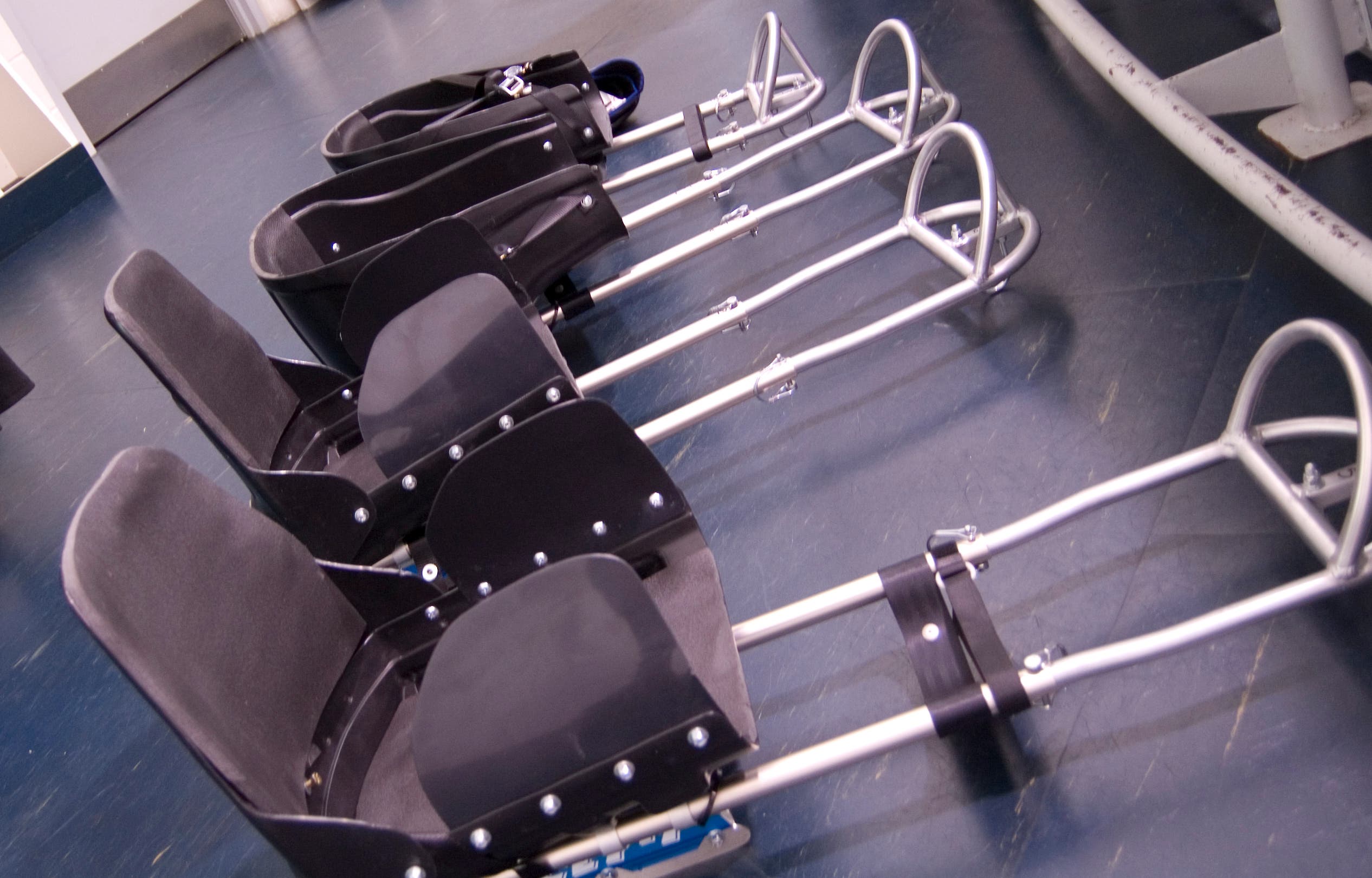
In sled hockey, players sit on their skates – a modified sled that is propelled with two miniature hockey sticks that are fitted with ice picks.
The team, organized by the Wheelchair Sports Federation and sponsored by the New York Rangers hockey team, practices at the state-of-the-art Rangers training facility in Tarrytown.
Aside from the physical benefits, sled hockey serves as an important means for players to experience the thrill and competition of hockey.
"I was an avid player before I got paralyzed in my car accident in 1987," Tony Fitzgerald said. "One of the first things my brother and I cried about was that we would never play hockey together again, but luckily we were mistaken, because we can play sled hockey together."
Fitzgerald was on the original 1998 US Paralympic sled hockey team along with teammate Calise. It was the first time sled hockey was folded into the Paralympic games.
"It was great to be there," Calise said. "The sense of community amongst disabled people is one thing, but the competition, to know it still exists is just amazing."
One of Calise's biggest pushes now is to get more people involved in the sport.
Thursday's practice was a chance reach out to a new wave of potential players – wounded servicemen returning from Iraq and Afghanistan.
John Hamre, President of the Wheelchair Sports Federation, is also a campaign manager with the Wounded Warriors Project. He has been using his position to help ease wounded veterans into modified sports.
"This is the first time we've done sled hockey for the Wounded Warriors," Hamre said. "And we're trying to get more of the injured men and women to come out and participate."
Ben Wolken is one of those servicemen who tried out the sport for the first time this week.
Wolken was injured in an IED blast in Iraq in late 2004. After "putting it off" for a long time, he decided to try a Wounded Warrior event as a means of getting himself back together.
"This is the first thing I've done with the Wounded Warriors, and it's taken me a long time to come out and do anything," he said. "I spent the first year being back doing stupid stuff and getting in trouble for it. I'm really now just feeling like I am starting to be here."
That is one reason, Hamre said, it is important to reach out and encourage more involvement with modified sports.
"Sometimes, if you are injured, you go home and stay on the couch for five or ten years," Hamre said. "We want to bridge that depression and keep them active."
To Schwartz, who coaches a team containing players that will be attending the upcoming Paralympic games in Vancouver, it is not how you got your impairment, but how you overcome it.
"Our athletes are victims of spinal cord disease, spinal cord injuries, amputations, etc.," he said. "How you are hurt is the last of our concerns. You are here now to get back in the swing of things, to exercise, to work on team work."
And it is those healing, driving elements that keeps sled hockey players coming back to the ice each month.
"Thank God for ingenuity and technology and those engineers so we can adapt sports, stay active and play the game," Fitzgerald said. "Every day I thank God for that."
Get more local news delivered straight to your inbox. Sign up for free Patch newsletters and alerts.