Politics & Government
Citizens Say Scrap Ban on Ballgames in Street
Others, however, see safety benefits in maintaining the seven-decade-old Sleepy Hollow law.
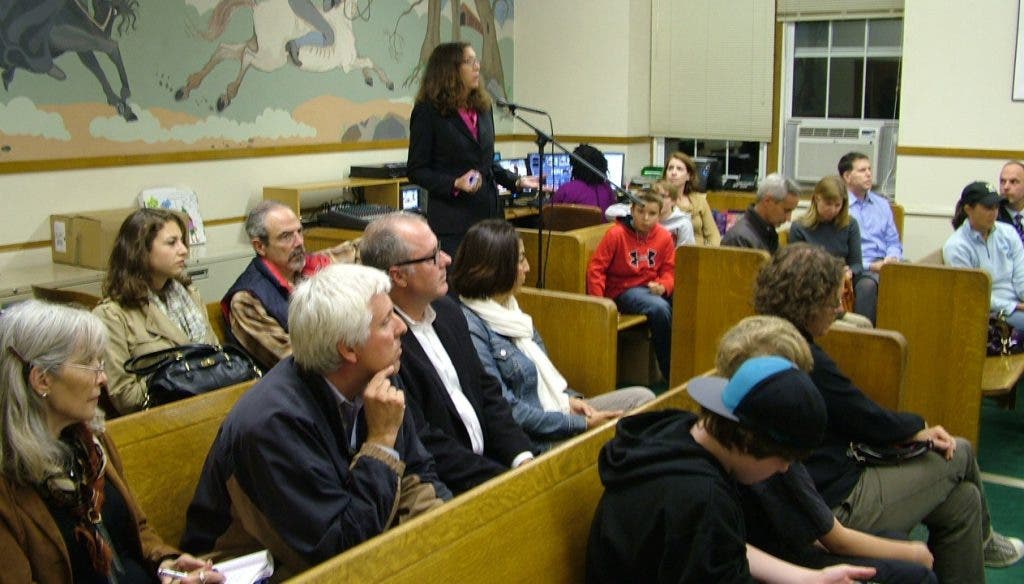


Sleepy Hollow’s efforts to blow the dust off decades-old ordinances ran into a billowing cloud of protest Tuesday over a ban on ball-playing in village streets.
Drawn in 1938, even carrying a threat of jail time, the statute is one of those prohibitions, like Prohibition itself, that winds up more honored in the breach than the observance. Nevertheless, it prompted a cavalcade of parents and others to bear witness at Village Hall Tuesday evening to that all-American right of kids to be kids.
“I think it’s just crazy this law is on the books,” Burns Patterson, a Hunter Avenue resident, told the village board, one of a dozen speakers who insisted the law deserves discarding, not dusting.
Find out what's happening in Tarrytown-Sleepy Hollowfor free with the latest updates from Patch.
His Hunter Avenue neighbor, Jennifer Kelly, decried the law's stiff, if never actually levied, penalties—a $250 fine and possible jail sentence—saying, “The punishment doesn’t seem to fit the violation.”
While no one Tuesday spoke in favor of what some called an “outmoded law,” Trustee Bruce Campbell made it clear the argument was far from one-sided—or decided. “We received several letters that are in direct opposition to the things that you say,” he advised the full house. Noting that the issue was “not necessarily a simple thing, Campbell said whether people lined up behind the law’s continuation or its repeal, both sides “seem absolutely convinced that it’s the common-sense thing to do.”
Find out what's happening in Tarrytown-Sleepy Hollowfor free with the latest updates from Patch.
In the board’s ambitious review of “every law the village has,” as Mayor Ken Wray put it, the ball-playing ordinance represents at best a minuscule piece. Still, a succession of speakers—most of them parents whose children would ultimately be playing in the streets—cast the law as a threat to the socializing benefits of pickup games played out in the road. “Children grow and learn to cope in society when adults get out of the way,” said Laura Laub, describing the ”freedom and joy that our children have of free play in our [Kelbourne Avenue] neighborhood.”
Her husband, Craig, agreed, saying, “I don’t see this particular topic as one of safety but liberty.”
Those social benefits can also extend beyond the youngsters, Judy Weitzner pointed out. On Bellwood Avenue, which her family has called home for 14 years, “we have a basketball hoop on our sidewalk,” she said. “My husband, my son, our friends use that hoop. It’s how we’ve met people. Some of our dearest friends we met accidentally, playing out in the street with our children.”
The street, David Yawman said, helped seal the deal before he and his family moved to Sleepy Hollow in 1999. Back then, he explained, “I needed hoop-ability in my [prospective] driveway.” But Yawman was not finding it. Then, “driving down Hunter Avenue,” he spied a neighborhood youngster “playing hoops out in front of his house.” Deciding he could find his “hoop-ability” in the street, Yawman made the move here.
A lawyer, Yawman said he recognizes the daunting task the trustees had assigned themselves in reviewing the code, offering “kudos to your efforts.” The board plans to take up the street-play issue at next week’s work session.
Like us on Facebook | Follow us on Twitter | Sign up for our newsletter