Arts & Entertainment
Seventeen Westchester Authors Honored at 2011 Washington Irving Book Awards
Some write in attics and others in coffee shops, some on legal pads and others on IPhones. Writers agreed on one thing -- libraries are essential fuel for their work. But will libraries exist in seven years?
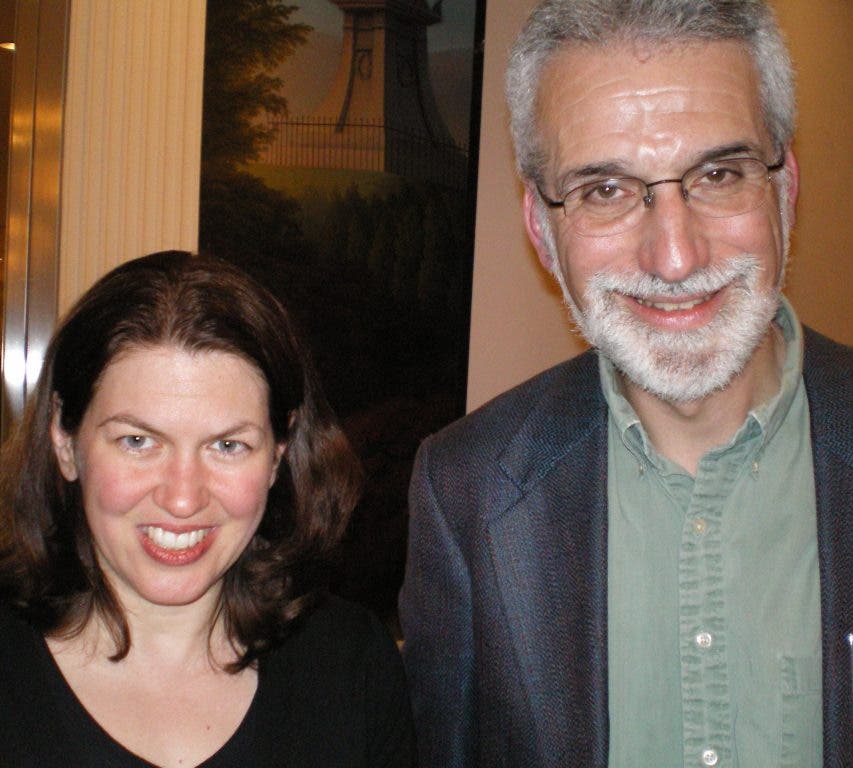


The Westchester Library Association recognized eight works of fiction and nine works of non-fiction written by Westchester authors with the Washington Irving Book Awards on Friday at the Doubletree Hotel in Tarrytown.
But before each author presented his work, keynote speaker and author Seth Godin of Hastings drew sharp reactions from many in the room. Godin, author of 12 books and a columnist for Fast Times and the Harvard Business Review, said Wikipedia was “better than most of your encyclopedias.”
Godin also cited the staff at Netflix as “better librarians than you,” because they know all your likes, habits and history.
Find out what's happening in Tarrytown-Sleepy Hollowfor free with the latest updates from Patch.
“Libraries will die in seven years,” Godin predicted, though librarians would be needed to give “clueless people clues.”
Tarrytown author Joe Queenan, winner for his memoir Last Call, strongly disagreed.
Find out what's happening in Tarrytown-Sleepy Hollowfor free with the latest updates from Patch.
“For the poor, books are ‘siege weapons,'” he said.
Queenan’s memoir recounts growing up in a housing project in Philadelphia, with books as his rescuers and models for writing.
Besides, Queenan quipped, “The Visigoths and Huns will always be at the gates, but I don’t see why we should invite them in.”
Other authors admitted that research, writing and the author’s task had changed dramatically through technology, and felt some of those changes were good.
Stephanie Pintoff, who has lived in Hastings for 11 years, said she was so grateful for the ability to do research for historical literature on the internet. Pintoff’s first novel, In the Shadow of Gotham, won not only the Washington Irving prize but the Edgar Award for Best First Novel. She chose the time setting of 1905 and the fictional town of “Dobson,” modeled on Irvington and Dobbs Ferry.
“1905 was a time of enormous change in technology and transportation,” Pintoff said.
Pintoff’s readers enrich their literary experience through modern technology, too.
“A book club in the Midwest developed a website to support their reading of In the Shadow of Gotham.”
But all this technology saps an author’s time. Pintoff says she routinely offers book groups a 15 minute phone interview.
As Godin said, “Authors now must build a tribe,” by personally connecting to their readers via blogs and websites and personal responses. The days of the reclusive J.D. Salinger producing one highly successful novel are over, he noted.
“You can’t retreat,” Pintoff agreed.“You must network and be available. That’s the hardest thing about being a writer today.”
Putting yourself out there to readers can be crushing to the ego, some said.
Jeff Pearlman of New Rochelle, author of The Rocket That Fell to Earth: Roger Clemens and the Rage for Baseball, recounted spending four hours at a book signing event at Fort Hood, Texas, where he sold and signed only four books. But Pearlman credited a librarian in Mahopac with starting him out as a writer.
“She saved every sports biography that came in for me,” Pearlman recalled.
When it comes to writing process, the Washington Irving Book Award winners represented most of the possibilities one can imagine.
Joe Queenan only writes in his office, away from his home.
“I never write on a plane. Writing is work,” he emphasized.
Wendy Corsi Staub of Katonah, author of more than 70 novels, writes in a home office, fueled by coffee in the daytime which, “magically turns to wine at 5.”
She was recognized at the awards for Scared to Death, which she called a “domestic thriller.”
Staub’s subject matter must ring true with not only suburban readers, because she's sold more than three million books worldwide.
Not all writers write in isolation.
Jeff Pearlman and Jonathan Tropper, also from New Rochelle, both write at their local Cosi.
“There’s one best table,” Pearlman insisted, “and we fight for it.”
Tropper, author of This is Where I Leave You, said he usually got that table because he was up earlier. He admitted, however, that he was on his “fourth deadline” for his current project.
Pintoff is also a proponent of writing in public.
“The noise around me forces me to focus even more deeply," she said.
While Pleasantville author Joseph Wallace writes at home, his novels are inspired in part by his time spent mentoring students. Wallace, a professional writer for more than a quarter of a century, won for Diamond Ruby, the fictional account of a young female pitcher.
“I could never have created the characters of Ruby, Amanda and Allie without everything I’ve learned from my students," he said.
Wallace’s research for his first novel began at the Baseball Hall of Fame library.
“I asked to see the photos no one else had looked at in a long, long time. And there was this picture of a young girl in uniform, with Babe Ruth. The real story had no arc, so I turned to fiction.”
For Wallace, winning the Washington Irving Award for his first novel was “huge.”
“I grew up going to the library," he said. "I would not be here without their bricks and mortar.”
For a complete listing of all winners, see the Westchester Library Association website: http://www.westchesterlibraryassociation.org/bookmark.pdf