Politics & Government
50 Years After Columbia SDS Vice-Chair Ted Gold's Death: Part 1
Revisiting how 1960's Upper West Side Movement organizer and former Columbia SDS Vice-Chair Ted Gold died on W. 11th St. on March 6, 1970.

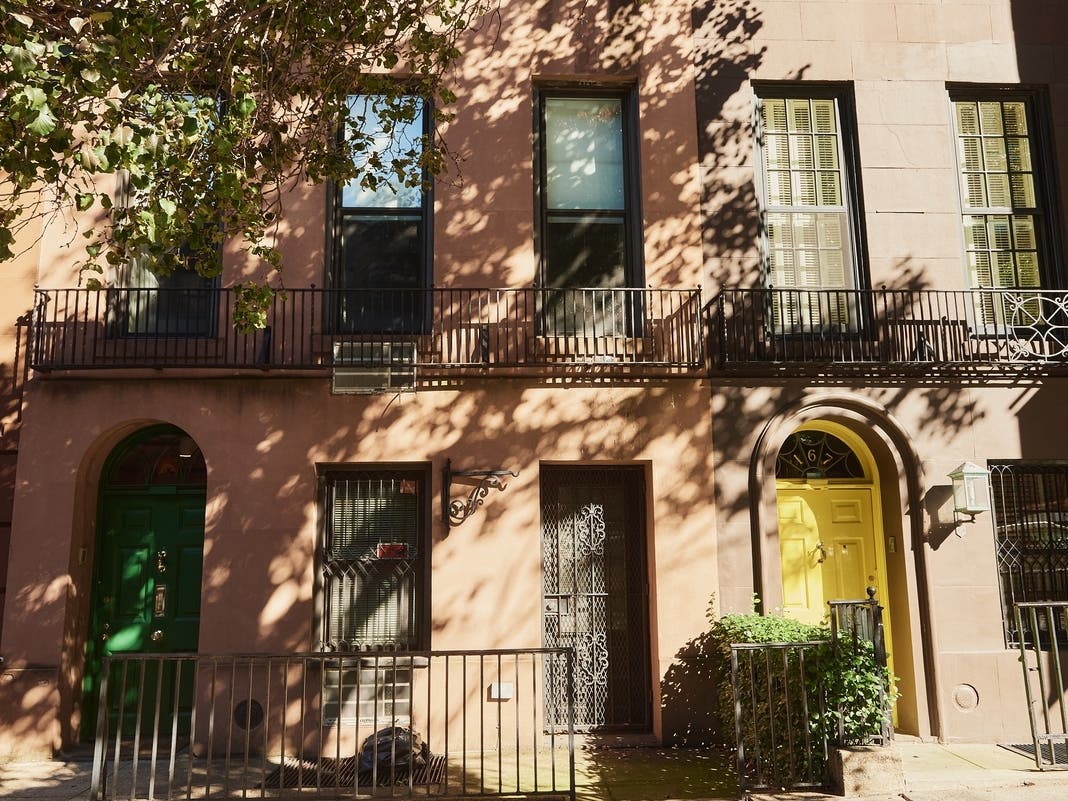
A few minutes before noon on Friday, March 6, 1970, a blast was heard on W. 11th St. in the West Village that, according to Douglas Robinson’s March 7, 1970 New York Times article was “powerful enough to tear a hole in the front wall” of a townhouse at 18 W. 11th St.; and, according to the same article, “as firemen arrived at the scene, two” more “lighter blasts shook the building as gas lines burst.” Then, “flames quickly engulfed the townhouse and, a few minutes later, the entire front wall collapsed;” and a former vice-chair of Columbia University’s Students for a Democratic Society [SDS] chapter, Ted Gold, and two other members of the Weatherman faction of National SDS, Diana Oughton and Terry Robbins, were killed.
David Dellinger’s 1975 Account
As the now-deceased longtime U.S. antiwar Movement organizer and 1969-1970 Chicago 8 “Conspiracy” Trial defendant Dave Dellinger recalled in his 1975-published book, More Power Than We Know, “shortly after the event, a private message from one of my underground Weathermen friends told me that Ted Gold…was killed only because he had been traumatized by a sudden realization of the horror they were preparing for their enemies and had come back to the house to try to persuade his associates to abandon the project.”
Find out what's happening in Upper West Sidefor free with the latest updates from Patch.
In addition, in his 1993-published autobiography, From Yale to Jail, Dellinger also wrote that “the message explained that they were making an anti-personnel bomb in the townhouse” and “that was what had upset Gold.”
One former Weatherman’s view, however, is that Dellinger’s 1975 account was after-the-fact wishful thinking; and, although Ted was critical and one of the main doubters in the pre-March 6, 1970 meeting debates within the townhouse, that got transformed, for what might be called ideological reasons, into Dellinger’s story. According to this former Weatherman, the story he heard on March. 7, 1970 was that Ted had gone out to a drug store to buy cotton to muffle the sound of the watch for the bomb they were making, but came back to ask Terry Robbins--the leader of the Weathermen inside the townhouse--if he should get balls or batts.
Find out what's happening in Upper West Sidefor free with the latest updates from Patch.
Although another former Weatherman also thinks it’s possible that whoever Dellinger’s contact was romanticized Ted as more fully opposed than he was, this second former Weatherman notes that there is good evidence that Ted felt conflicted about what Dellinger characterized in his 1975 book as “the horror they were preparing for their enemies.” But a third different veteran of the 1960’s New Left antiwar movement in Manhattan adamantly feels that Dellinger’s 1975 account was not historically accurate; and he greatly doubts that Ted was against whatever they were planning to do.
Did Columbia University Administration Receive False “Bomb Plot” Warnings Prior to Ted’s Death?
In an article titled “The House on 11th Street” that appeared in its March 23, 1970 issue, the then-Washington Post Company-owned Newsweek magazine initially claimed that “underground sources” had “told Newsweek’s Thomas Dotten” that the target of the Weatherman group’s project, was allegedly “buildings at Columbia University (and elsewhere);” and that “Columbia officials were relieved that the bomb plot against the university—about which they had received warnings—had failed.”
The same Newsweek article also initially claimed that “underground sources” told Dotten that, prior to Ted’s death 50 years ago, the Weatherman collective in the 18 W. 11th St. townhouse was allegedly planning “to blast” the buildings at Columbia “in conjunction with a planned protest on campus;” since “the new focus of their attention at Columbia was a demand by far leftists that the university admit its guilt as part of a `racist society’ by arranging the bail for the Black Panthers on trial in an alleged bombing conspiracy.”
What Was Actual Planned Target of Weatherman Collective in 18 W. 11th St. Prior to Ted’s Death?
Although, according to Newsweek, “Columbia officials” had “received warnings” prior to Ted’s death (presumably from either federal or local law enforcement agencies or informants) about a purported “bomb plot against the university,” in early March 1970 Columbia University’s buildings were apparently not actually being then targeted by the Weatherman collective in the 18 W.11th St. townhouse. As Dan Berger later observed in his 2006 book, Outlaws of America: The Weather Underground and the Politics of Solidarity, “the specific target” of the planned bombing project on March 6, 1970, “was a non-commissioned officers’ dance at” the Fort Dix “Army base” in New Jersey.
According to Bryan Burrough’s 2015 Days of Rage book, the decision. to target “the dance at Fort Dix” on Friday, March 6, 1970, was decided by and announced to the 18 W. 11th St. townhouse Weatherman collective members by its leader, Terry Robbins, on Tuesday, March 3, 1970—just 3 days before Ted was killed by the entrance to the townhouse; after “the collective” had “gathered to discuss” possible “targets” during the previous weekend. The same book also noted that “on Thursday, March 5”, 1970, the day before the former Columbia SDS vice-chair’s death at the age of 22, “Robbins chaired a final meeting in the townhouse kitchen going over details and assignments for the attack.”
In his 1975-published book, More Power Than We Know, Dave Dellinger, however, wrote that “a bitter argument had been raging for some days over the legitimacy of the enterprise” and “two days before the blast” that destroyed the townhouse and killed Ted, Terry Robbins and Diana Oughton, “Kathy Boudin…had told me her fears that they were losing contact with the revolutionary love that had motivated them to embark on their new course.”
In his 2004-published book, Bringing the War Home: The Weather Underground, the Red Army Faction, and Revolutionary Violence in the Sixties and Seventies, New School University Professor Jeremy Varon noted that, when he interviewed the now-deceased former 1960’s Lower East Side antiwar Movement activist and Weatherman faction member Robin Palmer many years later, Palmer recalled that Terry “Robbins `scared the shit out of him’ when they first met in early March 1970;” and “listening to Robbins talk wildly, with an embarrassed” now-deceased former Columbia SDS member and pre-May 1970 Weatherman faction of National SDS leader “J. J. [John Jacobs] present, of plans to bomb an Army dance, Palmer responded, `I don’t agree with what you’re saying.’” In addition, according to Varon’s book, Palmer felt that Robbins’ proposed planned action “was `crazy.’” (end of part 1)