Politics & Government
50 Years After Columbia SDS Vice-Chair Ted Gold's Death: Part 6
Was Upper West Side Movement organizer and 1967-68 Columbia SDS Vice-Chair Ted Gold under FBI, CIA or NYPD surveillance in March 1970?
Was Ted Gold Under FBI, CIA or NYPD Surveillance During His Last Three Weeks Alive?
In the month before 1967-68 Columbia SDS vice-chairperson Ted Gold’s death, two underground collectives of the Weatherman faction of SDS were apparently operating in Manhattan. According to Bryan Burrough’s 2015 Days of Rage book, “one…was headquartered in a Chinatown apartment under [former Columbia SDS member and Weatherman] J.J.’s supervision” where March 1968-September 1968 Columbia SDS chairperson Mark Rudd purportedly also “took a bed there;” and “the second underground Weatherman faction collective active in Manhattan in February 1970 apparently included a “dozen or so members” who “were initially spread across several” other “Manhattan and Brooklyn apartments,” according to the same book.
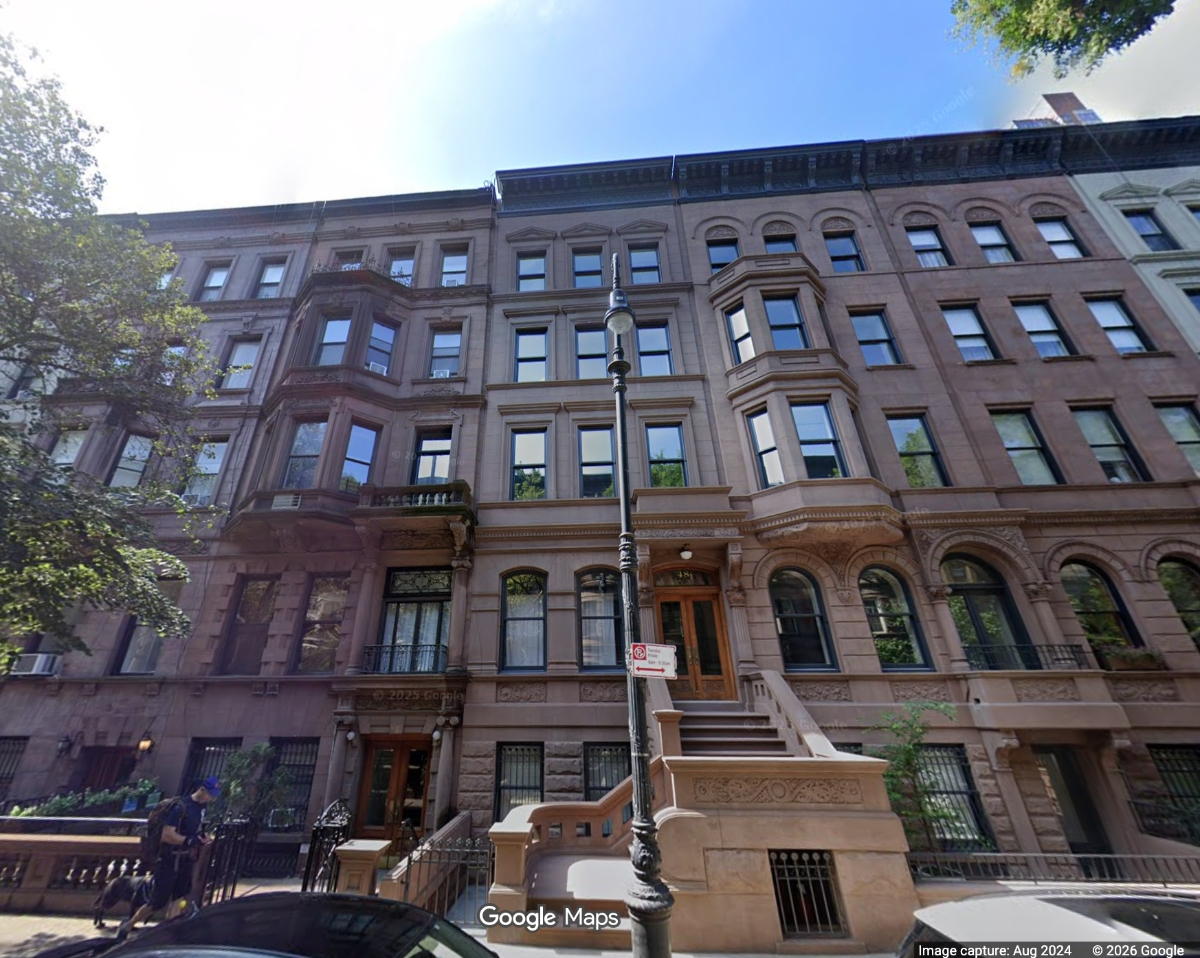
Ted apparently only first visited the 18 W.11th St. townhouse, on the street where he was killed, on Tuesday, Feb. 24, 1970 (just 10 days before his death), according to the 2015 Days of Rage book; and by “the following day,” Ted and four other members of the Weatherman collective he was in “had moved” into the townhouse, according to the same book. But the Days of Rage book also claims that 9 days before Ted’s death “at least a half-dozen members of the collective” still “lived elsewhere.”
Find out what's happening in Upper West Sidefor free with the latest updates from Patch.
On Feb. 21, 1970, three days before Ted first visited the 18 W. 11th St. townhouse, the Weatherman collective “cell” he was in apparently had “set off three fire bombs at the home of Judge John Murtagh, then presiding over the case of the New York `Panther Twenty-One’” (that a jury later found innocent of then-Manhattan D.A. and Columbia University Trustee Frank Hogan’s trumped-up Apr. 2, 1969 charge that these arrested members of the Black Panther Party’s New York City chapter were about to “bomb” department stores and public places in New York City), according to J. Kirkpatrick Sale’s SDS book. And in its Feb. 24, 1970 issue, the Columbia Daily Spectator student newspaper also reported that “detectives at the 26th Precinct” had “found shreds of glass on the floor of the burned room” of the Columbia Law School Building’s International Law Library and believed “the fire was set off by Molotov cocktails.” In addition, Spectator noted that “the same night as the fire at the Law School, three bombs were detonated at the home of State Supreme Court Justice…Murtagh” but “police officials declined to speculate a possible connection between the two incidents.”
According to Professor Eckstein’s 2016 Bad Moon Rising book, on Monday, March 2, 1970 (4 days before Ted was killed) then-U.S. President Richard Nixon next “ordered” his White House Chief of Staff H.R. “Haldeman to begin a nationwide campaign to politically isolate the antiwar radicals;” and “Richard Nixon in early March [1970]—before the townhouse explosion—was urging the FBI to use investigatory and surveillance techniques against the New Left which the FBI itself thought were dangerous,” “Nixon was impatient with any hesitation on grounds of legality regarding methods for going after the radicals” and he “offered to give political cover to the FBI.” And on Monday evening on March 2, 1970, Nixon “spoke at 9:47 p.m. at the Waldorf-Astoria in New York City, at a dinner given in honor of” then-French “President Pompidou,” in which then-Columbia University and Institute for Defense Analyses [IDA] trustee and CBS board member “William A.M. Burden…presided at the dinner,” according to the Public Papers of Richard Nixon 1970 book.
In addition, Professor Eckstein’s 2016 Bad Moon Rising book observed, for example, that a March 2, 1970 memo from Nixon stated that “from now on we are going to take a very `militant’ position against these people,” “I consider this new direction being of the highest priority” and “I want absolutely no deviation from it.” Jeremy Varon’s 2004 Bringing the War Home book also noted that “a month before the explosion” in which Ted was killed “FBI Director Hoover had” apparently “characterized Weatherman as the `most violent, persistent and pernicious of revolutionary groups.’”
Find out what's happening in Upper West Sidefor free with the latest updates from Patch.
On Tuesday, March 3, 1970 (the day after Nixon wrote his March 2, 1970 memo), “neighbors” of the 18 W. 11th St. townhouse that Weatherman faction member Cathy Wilkerson’s father owned “on 11th Street” apparently “watched” as Ted “supervised the unloading of crates from a van” (3 days before he was killed), according to Bryan Burrough’s 2015 Days of Rage book. And a member of an FBI surveillance team on W. 11th St. may have also been possibly watching Ted both supervising the unloading of crates from a van on March 3, 1970 and at the moment when Ted was killed at the front of the 18 W. 11th St. townhouse, at around noon on Friday, March 6, 1970. For, as Susan Braudy noted in her 2003 Family Circle book:
“In front of the burning house, an FBI agent who had been part of the surveillance team keeping watch on the young radicals quickly snapped pictures of the house’s crumpling brick Greek-revival facade. Since the buildings on the block were of significant design interest, he had been posing as an architectural historian.”
Yet if "an FBI agent who had been part of the surveillance team keeping watch on the young radicals" was present on the W. 11th Street block on the day Ted was killed, why did the FBI's surveillance team apparently allow, according to Kirkpatrick Sale's 1973 SDS book, "a white station wagon" to double-park" in front of the Town House "while several heavy boxes were unloaded" and "carried into the cellar" by the young radicals on the morning of March 6, 1970, where there were "perhaps a hundred other sticks of dynamite" and "a number of already constructed pipe bombs," without at least questioning the young radicals who were apparently under surveillance on that morning?
According to an article by James A. Naughton, titled “U.S. To Tighten Surveillance of Radicals”, that appeared in the Apr. 12, 1970 issue of the New York Times, “a Nixon aide who is aware of the Justice Departments intelligence operations” also “said that `We knew of the New York bomb factory in a Greenwich Village townhouse, but only just before it exploded on March 6 [1970].’”
On Wednesday, March 4, 1970, Columbia SDS’s former chairperson, Mark Rudd, was apparently first told by the leader of the Weatherman collective holding meetings inside the 18 W. 11th St. townhouse, Terry Robbins, “what his group was planning;” and that same day (while the townhouse was apparently under FBI surveillance) Mark “dropped Terry off at 18 W.11th St.” without going inside, according to Mark’s 2009 Underground book.
In his 2015 Days of Rage book, Bryan Burrough wrote that one of his unidentified sources purportedly claimed that the following incident occurred inside the 18 W. 11th St. townhouse the night before Ted was killed:
“There was…at least one naysayer. He will be called James. He was one of the Columbia alumni; he had been J.J.’s roommate at one point. James was a member of the collective who did not live in the townhouse. According to a longtime friend, `the target had been bothering him for days. Finally, right at the end, he went nuts. This was the night before. He just went crazy, crying and screaming. “What are we doing? What are we doing?” And you know what Teddy Gold told him? [He said] `James, you have been my best friend for 10 years. But you gotta calm down. I wouldn’t want to kill you.’ And he was serious.”
Yet at least one of the Columbia alumni who was one of Ted’s best friends for many years denies that he “had ever been J.J.’s roommate,” denies that he “was ever a member of the” Weatherman “collective who did not live in in the townhouse” and denies that Ted allegedly “told him” that “I wouldn’t want to kill you” on “the night before” Ted, himself, was killed. (end of part 6)