Politics & Government
50 Years After Columbia SDS Vice-Chair Ted Gold's Death: Part 7
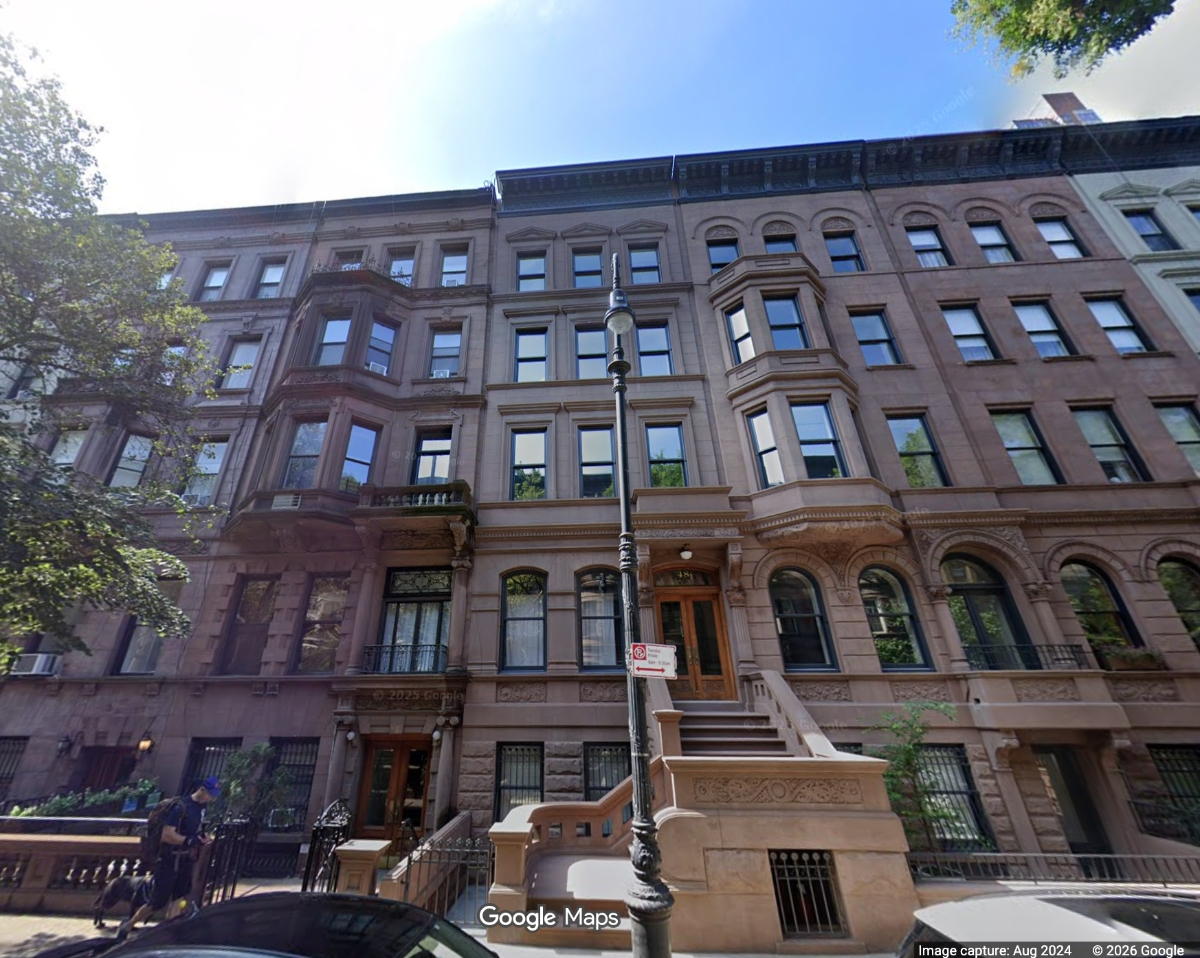
Revisiting what happened on West 11th Street in West Village of Manhattan around noon on Friday, March 6, 1970.
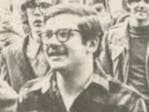
Fifty years after the death of Columbia SDS’s 1967-1968 vice-chairperson Ted Gold, it’s still difficult to ascertain to what degree Ted and the other New Left antiwar Movement radicals meeting in the 18 W.11th St. townhouse were under FBI, NYPD and/or CIA surveillance between Feb. 24, 1970 and high noon on March 6, 1970. One reason might be because no FBI documents containing references to Ted that were produced by FBI informants or FBI agents between Feb. 16, 1970 and March 9, 1970 were apparently released to 2003 Family Circle book author Susan Braudy, after Ted’s FBI file was de-classified.
Another reason might be that although “all FBI documents” related to its surveillance of Weatherman organization members “can be found in the National Archives under Record Group 60, Department of Justice File 177-160-33,” as late as 46 years after Ted’s death there were still “thousands of still-restricted pages concerning the FBI investigation of the March 6, 1970 New York explosion,” according to Professor Eckstein’s 2016 Bad Moon Rising book. But, as Bryan Burrough noted in his 2015 Days of Rage book, after NYPD Detective Albert Seedman “set up a command post in a basement across the street” from the burning site of the collapsed townhouse, the command post was “soon filled with…a milling squadron of clean-cut FBI men…”
What Happened Before, During and After First Explosion 50 Years Ago On W. 11th St.?
Find out what's happening in Upper West Sidefor free with the latest updates from Patch.
As J. Kirk Sale indicated in his Apr. 13, 1970 Nation magazine article, “the details of what happened in this tragic explosion” that killed Ted, Diana Oughton and Terry Robbins “are still murky”—even 50 years after Ted’s death. According to Newsweek’s March 23, 1970 “The House on 11th Street” article, after the first of three explosions that demolished the townhouse, “neighbors helped two young men over a backyard fence and saw a third escape by the same route.” And in his 1973 book SDS, Sale also noted that “out through the back garden …at least three people…made their way over the walls into adjoining gardens” and “they immediately disappeared and were never identified.”
In addition, according to footnote 3 on page 260 of Professor Eckstein’s 2016 Bad Moon Rising book, “Nina Herrick, who in March 1970 lived at 19 West 10th Street, and whose small backyard thus backs on the small backyard of the Wilkerson townhouse” told Eckstein in a Feb. 8, 2016 interview that “she and her husband heard the explosion and saw three people…running from the back of the townhouse and west toward Sixth Avenue.” Yet Herrick also told Eckstein that “neither she nor any of her neighbors on West 10th Street were ever interviewed by the New York Police Department or the FBI;” although, according to the same book, “as for the townhouse explosion,” the FBI’s New York office “had sent an initial report to” then-FBI Director J. Edgar “Hoover on March 13” in 1970, Hoover “had ordered a vigorous `correlative’ investigation,” and “the order from Hoover to begin conducting a specific investigation on the townhouse explosion went out on April 2” in 1970.
Find out what's happening in Upper West Sidefor free with the latest updates from Patch.
Ted’s body was found by NYPD officers “crushed in the rubble with his mouth wide open” at “around 7” p.m. on Friday, March 6, 1970, according to Bryan Burrough’s 2015 Days of Rage book; and “police found” Ted’s “body beneath the collapsed front wall” of the townhouse and “an autopsy showed” that he “had died from asphyxia compression,” according to a March 10, 1970 Columbia Daily Spectator article. A de-classified FBI document, dated March 26, 1970 (contained in Ted’s de-classified FBI file), stated that Ted’s death was “caused by a crushed chest.” And, coincidentally, the Associated Press reported that, on the same evening when Ted’s body was found at 18 W.11th St in Manhattan, a speech by Chicago 8 Trial Defendant Jerry Rubin at Rutgers University in New Brunswick, New Jersey was “delayed by a bomb scare.”
But it wasn’t until Sunday evening on March 8, 1970 that the body “crushed in the rubble” was identified as Ted’s body. According to a de-classified March 9, 1970 teletype document marked “urgent” (also contained in Ted’s de-classified FBI file), “as of March eight seventy cause of explosion had not been determined by NYCPD Bomb Squad” and “Identification Division of FBI on March Eight Seventy identified fingerprints of dead man found at site of explosions as Theodore Gold aka Ted Gold, BuFile One hundred-four five zero six seven eight, NY File one hundred one six one six-eight three.” The same de-classified teletype also noted that “Gold was a key activist” and “Gold had been characterized as head of WF of SDS in NYC.” In addition, an article by Linda Charlton that appeared in the March 9, 1970 issue of the New York Times noted that “”the identification of” Ted “as the former Columbia student was made at the morgue” by “a New York Times reporter and morgue personnel on the basis of photographs.”
The same March 9, 1970 New York Times article also initially reported that “Mr. Gold, according to a news editor at” WCAU-TV in the Philadelphia area, “was a founder of a New York City group calling itself the Mad Dogs.” But a March 11, 1970 Village Voice article noted that “a Times story implying that Gold was one of the founders of the Mad Dogs, a Columbia SDS faction, was said to be `absolutely incorrect’ by someone who knew Gold.”
In a 2007 book, titled Flying Close To The Sun: My Life and Times As A Weatherman (that was published 37 years after Ted’s death and 32 years after Dave Dellinger’s 1975 More Power Than We Know book), Cathy Wilkerson (who, with Kathy Boudin, was soon named as one of the two identified Weatherman group members who escaped from the front of the destroyed townhouse) wrote that after a second explosion, “I was barely able to notice another explosion as I concentrated on climbing, still holding on to Kathy and both of us barefoot, out through the hole and over more debris onto the sidewalk,” “Teddy had left the house I thought” and “it never occurred to me that Teddy had still been in the house.” And in a 2001 book, titled Fugitive Days (that was published 31 years after Ted’s death and 26 years after Dellinger’s 1975 book), former Weatherman faction leader Bill Ayers wrote that “I met with two of the comrades who’d come out of the explosion alive, burned and bleeding” and “we talked about time before the blast, and I pressed for details, but they didn’t know a thing beyond speculation about what had gone on in the last hour.”
But in a 2012 book, Love and Struggle: My Life in SDS, The Weather Underground and Beyond (that was published 42 years after Ted’s death and 37 years after Dellinger’s 1975 book), the then-imprisoned co-founder of Columbia SDS and former Weatherman, Dave Gilbert, wrote that his Weatherman collective in Denver, Colorado received a telephone call in “the middle of the night” (apparently on either March 6 or March 7, 1970) in which the caller stated:
“Three of our people, including Teddy, were killed in an explosion yesterday. I can’t go into details on the phone, but we think the police did it.”
Dave also recalled that “while I knew Teddy was in New York City, I had no idea who was in his collective or what they were doing;” and “in the context of what was being done to the Panthers,” the “`police attack’ version was entirely credible…and in Denver we were under intense surveillance.” (end of part 7)