Health & Fitness
Village Seniors Among Most Vulnerable Amid Coronavirus: Stringer
A new report by Comptroller Scott Stringer says the city needs to be doing more for thousands of Manhattan seniors who live alone.


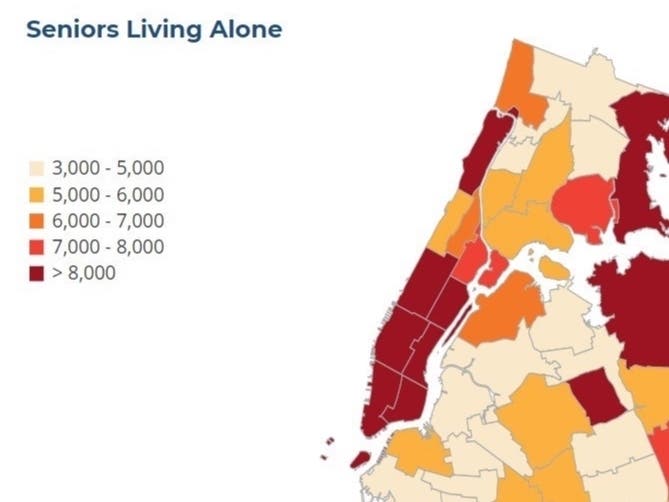
GREENWICH VILLAGE, MANHATTAN — Downtown Manhattan neighborhoods have some of the the most seniors who live alone in New York City, making its residents particularly vulnerable during the coronavirus pandemic, according to a new report.
New York City Comptroller Scott Stringer released a report Wednesday outlining 19 recommendations for how the city could do more to protect its most vulnerable populations during the pandemic, which has particularly put a strain on communities of color, immigrants, low-income and older New Yorkers.
Among those are the tens of thousands of seniors who live alone across Manhattan. All of Lower Manhattan was among the sections of the city, broken up by U.S. Census tracts, with more than 8,000 seniors each.
Find out what's happening in West Villagefor free with the latest updates from Patch.
Find out what's happening in West Villagefor free with the latest updates from Patch.
(To keep up with coronavirus news in the West Village, subscribe to Patch to receive daily newsletters and breaking news alerts.)
Among the top neighborhoods were Murray Hill, where 12,887 seniors live alone and Chelsea, where 11,199 live alone.The Upper East Side had the most, with 18,646 seniors living alone, followed by the Upper West Side with 16,695.
One third of all New Yorkers who live alone are over the age of 65, according to the report.
The Lower Manhattan neighborhoods also ranked high for a related vulnerable population, the number of mobility-impaired residents who live alone.
These residents not only need more help during the coronavirus pandemic to get essential services like groceries or medical care, but also are among those that may be feeling the largest impact on their mental health, Stringer said.
"They are stuck at home, cut off from friends and loved ones, lonely and anxious," he wrote. "In a city of small apartments and smaller living rooms, it is in the streets and parks and bars and theaters where our social lives are played out and fulfilled. Under quarantine, this is no longer possible."
Stringer's report laid out four recommendations for how to the city and state could be doing more to help these populations, including ensuring home health aides are protected, ramping up food delivery, having pharmacies prioritize requests from those that are homebound or vulnerable and proactively reaching out to every senior in New York City.
"We are defined as a society by how we treat our most vulnerable," Stringer said. "We have the tools, we have the data, we have the solutions, and right now — not later — is the time to act."
Read the full report here.
Get more local news delivered straight to your inbox. Sign up for free Patch newsletters and alerts.