Community Corner
Equity Urged In Wrongful Death Cases: 'Our World Came Crashing Down'
Families who lost loved ones in a LI crash and DWI crash that killed a Scout, as well as a limo crash and Bronx fire, fight for change.


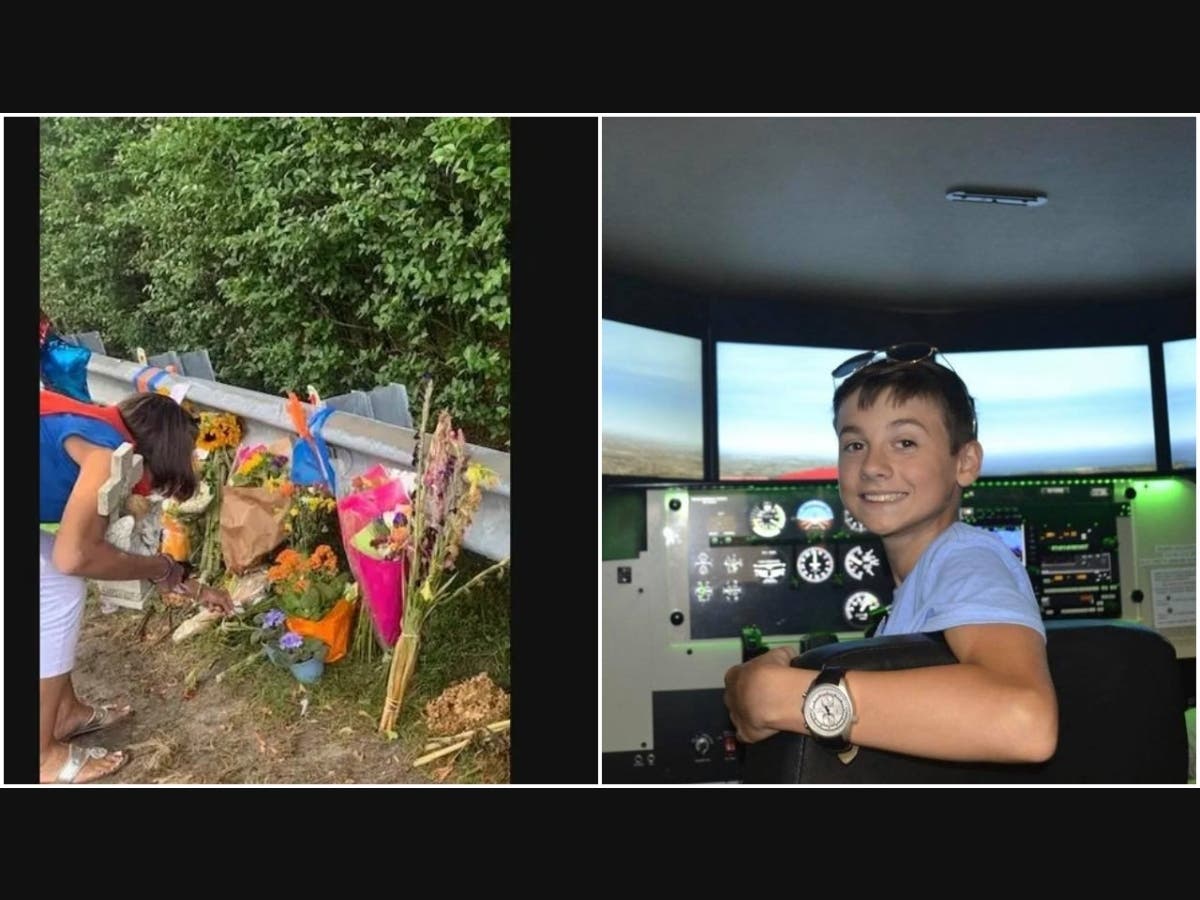
LONG ISLAND, NY — If only things were different, Kurt and Nina Kiess would have celebrated their son Ryan's 26th birthday last week; they would have welcomed him for Mother's Day.
But instead, Ryan will never come home again for holidays: He, along with James Farrell, 25, Michael Farrell, 20, and and Uber driver Farhan Zahid, 32, died in a high-speed, head-on crash on Montauk Highway in Quogue in July, police said. Ryan's girlfriend Brianna Maglio was critically injured in the crash, police said. The driver who crashed into the Uber head-on, Justin Mendez, 25, also died in the crash, police said.
Now, Kiess said, he has begun advocating for new legislation that would bring some equity to grieving families who have lost loved ones in wrongful death cases. He is meeting with lawmakers and other families, including the McMorris family of Wading River, who lost their son Andrew, a Boy Scout who was killed by a drunk driver in 2018 while out on a hike; those left behind after the"horrific" Schoharie limo crash that left 20 dead; and the recent Bronx fire — to pass the Grieving Families Act in the New York State Senate and Assembly.
Find out what's happening in Westhampton-Hampton Baysfor free with the latest updates from Patch.
On Tuesday, the New York State Senate voted to move the measure forward out of the judicial committee and onto the floor for a vote, Kiess said. The bill is also out of committee and now is waiting for calendar date for vote on the New York State Assembly floor.
A press event was held in Albany last week to urge lawmakers to move forward with passing the Grieving Families Act.
Find out what's happening in Westhampton-Hampton Baysfor free with the latest updates from Patch.
"Each year, New Yorkers are killed by drunk drivers, medical negligence, defective products,
dangerous roadway conditions, and countless other acts and omissions. New York’s 1847 Wrongful Death Law fails to deliver justice by not placing value on the loss of the love, affection, companionship and comfort that New Yorkers are deprived of when a loved one’s life is wrongfully taken," a release from the New York Public Interest Research Group said. "New York’s antiquated law effectively baked in the perspectives and biases of its times – devaluing the lives of children, seniors, people of color and women, depriving their loved ones of the full measure of their losses."
The Grieving Families Act, sponsored by New York State Senator Brad Hoylman and New York State Assembly Member Helene Weinstein "will bring New York’s pre-Civil War era wrongful death law in line with approximately 47 other states that already allow their courts to consider the full measure of lost relationships and the many states that recognize the grief that results
from a life wrongfully taken. It will also expand those who can file a wrongful death lawsuit to include close family members — for example, domestic partners— who experience the same sense of loss and pain and yet are barred from pursuing any accountability against the wrongdoer," the release said.
There are currently 50 bipartisan cosponsors of the bill in the State Senate and 66 in the Assembly, NYPIRG said.
"No amount of money can replace a father, a daughter, a sibling, a domestic partner, or a spouse — but financial compensation for family members grieving a loved one’s wrongful death is a necessary accountability tool," Hoylman said.
Weinstein added: "It is well known that New York's antiquated Wrongful Death Law has had a disproportionate effect upon women, children, and senior citizens, by valuing their lives at a fraction of the worth of others. This is why I have been fighting to change this law for nearly 30 years."
Kiess reflected on his family's unspeakable loss: "In July 2021, I lost my son. Ryan had done everything right. Planning a night out dancing with friends, they all took an Uber to be safe," he wrote. "It was the worst moment of my life and I’m still learning how to cope with the loss of Ryan. His death was entirely preventable and yet, like so many others who are tragically and wrongfully taken, his life is worth nothing in the state of New York."
He added: "This is not an attempt to make money off of loss. If I could trade all the money in the world to get Ryan back, I would. I’m sure other families who have suffered a similar loss would agree with me. But there is a true problem in our system when a pair of twins — one a millionaire and one of modest means — can both die in the same accident and the wealthier one is 'worth more' in the eyes of the law. Don’t both their families feel the same anguish? Don’t their children experience the same loss? Why then is it acceptable to tell one family that their tragedy is worth more or less than another’s?"
Kiess also said he believes the current wrongful death law does nothing but perpetuate inequality statewide. Those who are the most harshly impacted — seniors, women and people of color — are already "systemically underpaid, overworked and undervalued," he said.
"Take, for example, the horrible fire in the Bronx earlier this year that killed 17 people — eight of whom were children. If there is negligence found, as has been alleged by the surviving family members, the victims will be valued by their lost earnings alone. For many of them, including the children who perished, that valuation will effectively be $0," Kiess said.
Alisa McMorris, who lost her son, Boy Scout Andrew McMorris, is also advocating tirelessly for change: "What is your child’s life worth? How does one grapple with the long term effects of pain and suffering due to a tragic loss of life when it was 100 percent preventable?"
Reflecting on that dark day, she said: "When our dear sweet boy was struck and killed by a drunk driver, our world came crashing down. Just taking a breath was painful. It was as if we were caught in a hurricane in a little boat that was broken into a million little pieces, and we were clinging to the floating wreckage. Waves stuck us constantly and we could barely catch our breath. As the years have gone by, we have slowly and steadily tried to rebuild our boat. With the help of our friend’s family and community we have patched together something to allow us to go from parenting Andrew to parenting his legacy."
However, she said she and her family were shocked to find that "New York State does not value Andrew’s life – at 12 years old, the law that was written in the 1800s doesn’t account for pain, suffering, loss and other damages of those who loved him most."
When Andrew was taking his last breaths and the heart monitor went to a steady flatline tone, McMorris turned to the nurses and asked if she could clean him.
"My husband and I were the first to give him his bath on March 30, 2006 and on October 1 in the 4:00 a.m. hour we washed him for the last time. I examined every little piece of my boy from his little toes all the way to his eyelashes. I placed his body into the body bag, took one fine listen to his heart to make sure he was truly gone, I cradled his face and as my tears fell on his cheeks, I promised him I would make a change so his death would not be in vain. So we fight for the grieving families act so that other families do not have to hear these words: 'I’m sorry your child is just not worth anything in the eyes of New York State.'"
The McMorris family has also joined forces with Mothers Against Drunk Driving to change vehicular laws both nationally, and statewide so that no other family has to endure this kind of loss to drunk and drugged driving. Next week, Alisa will be in Albany again urging legislatures to support a bill to improve the ignition interlock and fix loopholes that allow convicted drunk drivers to avoid this necessary device, as well as to stop drug-impaired driving and ensure the modernization of laws and a measure making .05 blood alcohol the illegal level to drive on state roadways, she said.
According to the the New York State Academy of Trial Lawyers, the Grieving Families Act will align New York with 41 other states so that those who lost loved ones to untimely, wrongful death can recover monetary damages. Currently in New York, families can receive damages and compensation commensurate with what the deceased would have earned, had they lived — but there is no recourse for families that have lost a child or an elderly relative, or if the deceased was a low-wage earner.
"New York's Civil War-era wrongful death law denies any recovery for the emotional loss close surviving family members experience when a loved one is tragically killed," the New York State Academy of Trial Lawyers said. "This antiquated law significantly disadvantages low-wage earners, people of color, children and the elderly."
Elizabeth and Joseph Muldoon spoke out for Adam Jackson and Abigail King Jackson, lost in the Schoharie limousine crash.
"October 6, 2018, was like every other Saturday. We were spending the day with our granddaughters. Little did we know, it would become a parent’s worst nightmare," they said. "On that day, my son, daughter-in law and many of their friends lost their lives. That was the day, our two precious granddaughters 16 months and 4 years old at the time, lost their mommy and daddy, three aunts, a godfather and two uncles. . . Their parents matter, people's lives matter — and when taken wrongfully, it is worth something. The people lost cannot speak, so we need to do so for them."
New York State Senator Anthony Palumbo, a co-sponsor who voted to move the measure forward, told Patch: "For too long this bill has languished in the state legislature with New York lagging behind other states in providing grieving families the right to recover for lost ones. I was pleased to see this legislation advance out of committee today and look forward to its passage by the legislature and enactment this year."
Get more local news delivered straight to your inbox. Sign up for free Patch newsletters and alerts.