Health & Fitness
HV Hospitals Have Enough Beds To Avoid NY Elective Surgery Order
Statewide, up to 36 hospitals could be too short of patient capacity with the winter coronavirus surge starting, the governor said Tuesday


WHITE PLAINS, NY — About 36 hospitals in New York state could have to halt elective surgeries as of Friday under a new state order dealing with the rise in COVID-19 cases, Gov. Kathy Hochul said.
The order affects hospitals that are below 10 percent staffed bed capacity.
A USA TODAY Network New York analysis of state data said White Plains Hospital was among them, but Communications Director Michael Gelormino told Patch on Wednesday that "Currently we are above the threshold and expect to continue to be above that threshold."
Find out what's happening in White Plainsfor free with the latest updates from Patch.
Through an Executive Order signed by Gov. Kathy Hochul on Friday, the state Department of Health is allowed to limit non-essential, non-urgent procedures for in-hospitals or systems with limited capacity to protect access to critical health care services. Limited is defined as below 10 percent staffed bed capacity, or as determined by the Department of Health based on regional and health-care use factors.
"This is what keeps me up at night, making sure that our hospitals have the capacity to handle the influx of patients, whether it's from COVID or otherwise," she said Tuesday.
Find out what's happening in White Plainsfor free with the latest updates from Patch.
The new protocols will begin on Friday and will be re-assessed based on the latest COVID-19 data on January 15, though Hochul said Tuesday that any hospital that develops enough capacity will not have to wait.
COVID hospitalizations are trending upward significantly, she said, but the situation is different downstate than it is upstate. Upstate lost 10 percent of its bed capacity, downstate lost about 2 percent, while hospitalizations are up 150 percent upstate versus downstate.
The Hudson region's hospital bed capacity is the strongest in the state, at 31 percent, with New York City at 28 percent and Long island at 27 percent. "Those areas can handle the individuals who are seeking medical attention at a hospital," Hochul said, comparing them to capacity rates at 9 percent in the Finger Lakes and 11 percent in Western New York.
"Not that I'm trying to create an upstate downstate divide in our state. I don't believe in that, but just looking at the numbers, these are with the numbers we're seeing and they're very troubling," Hochul said. "We're going to be targeting and looking at specific regions and do whatever we can to protect access to critical health services."
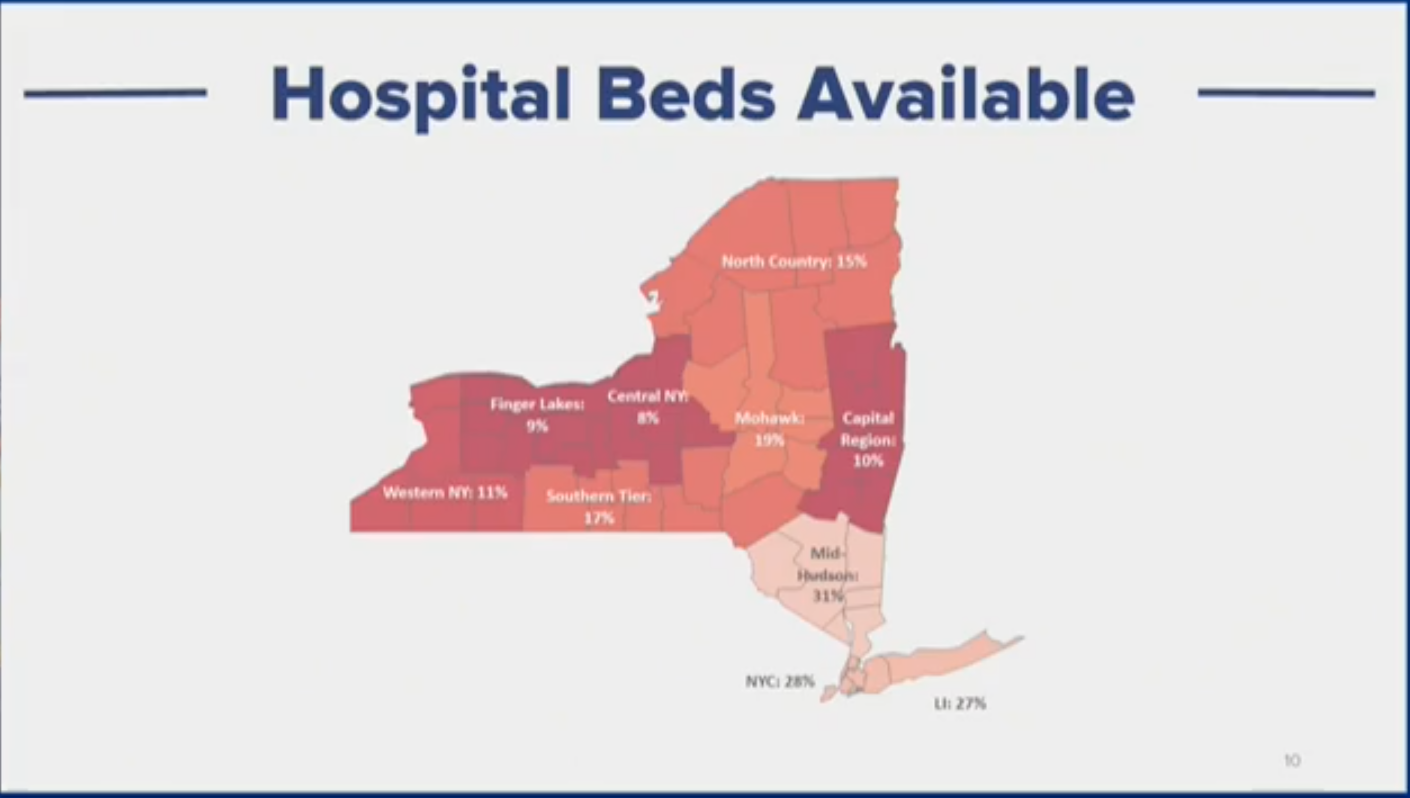
In addition to limiting non-essential, non-urgent scheduled procedures at hospitals with under 10 percent capacity, New York will use the "surge and flex" process first put in place at the start of the pandemic in 2020 to help move personnel and supplies to neediest areas.
"Essential procedures will continue," Hochul said. "And people who need cancer treatment, mammograms, colonoscopies, have traumatic injuries, heart surgery, they will get the care they need."
She reminded New Yorkers that many procedures to detect for cancer, such as mammograms and colonoscopies, can be performed at other places other than hospitals.
"And we want to make sure that no one puts off critically important preventative, procedures as well as happened during the pandemic, the first wave around and the second wave," Hochul said. "That ends up having long-term health consequences and perhaps that's one of the reasons we're dealing with a lot of people in the hospital now, one of the other factors as well."
Hochul said the strongest correlation in upstate New York was between vaccination rates and hospitalization rates, not between staffing losses due to employee vaccination mandates.
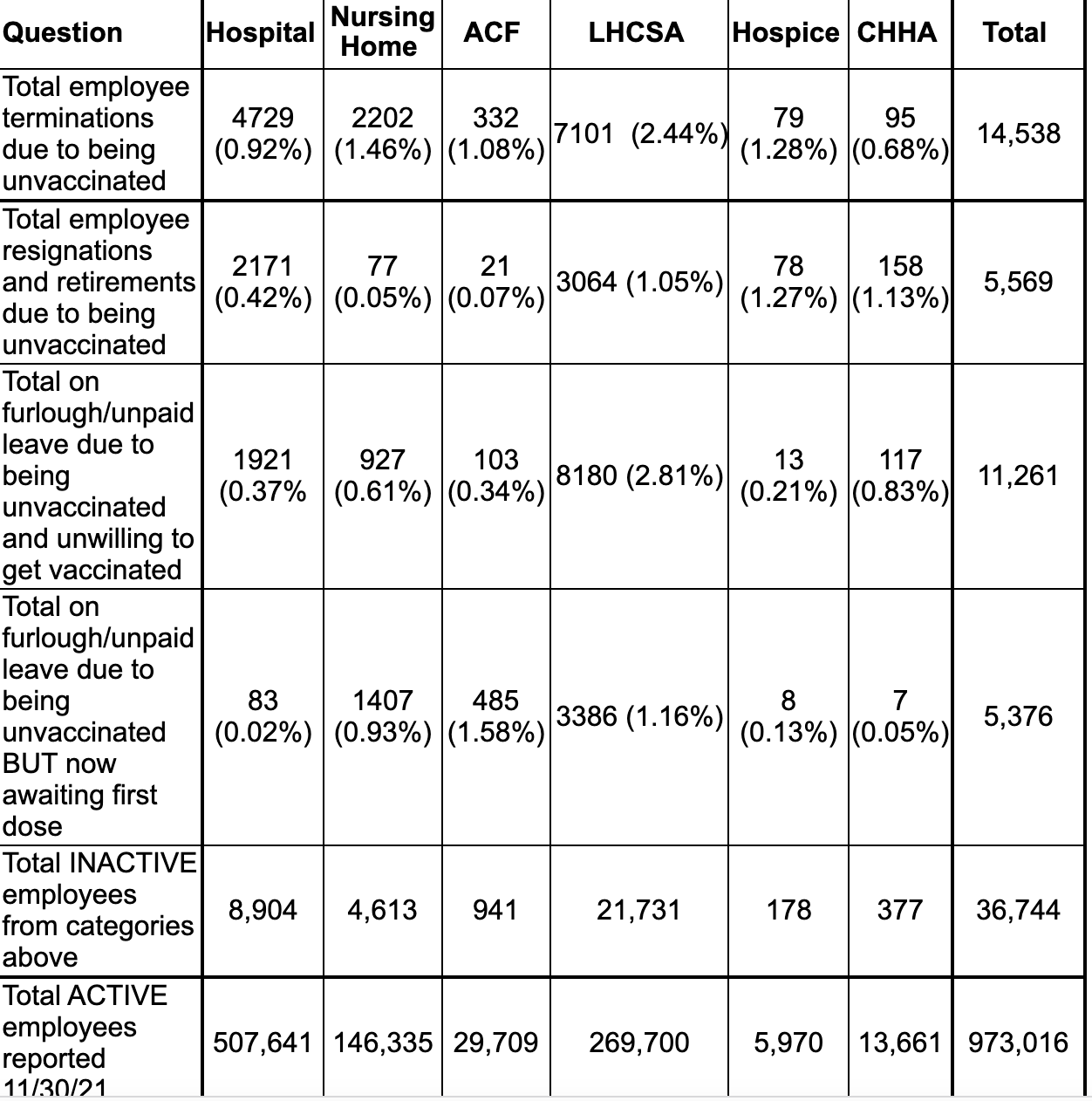
Monday, 45 New Yorkers died due to COVID-19.
Get more local news delivered straight to your inbox. Sign up for free Patch newsletters and alerts.