Arts & Entertainment
This Celebration Has Miró On The Mind, And A Field Trip Could Be In The (Library) Cards
The White Plains Library not only explores the life of a key figure in modern art, but also lends you a pass to see his work up close.


| by Gabi Rodriguez, Children's Librarian
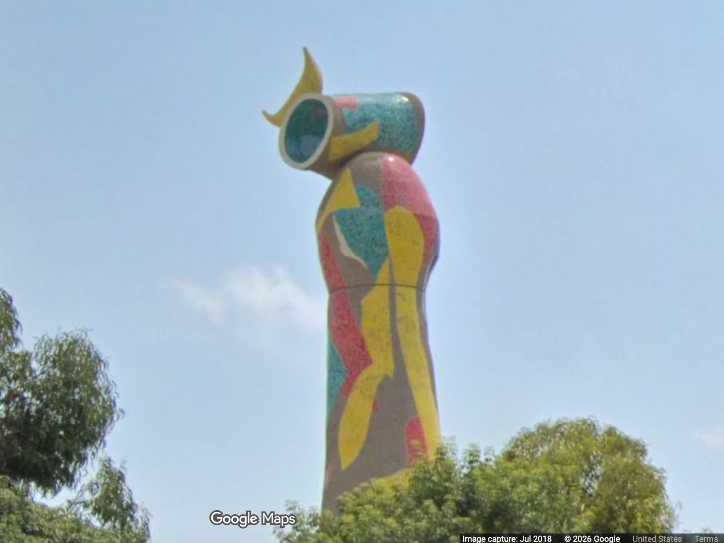
Born on April 20, 1893, in Barcelona, Spain, Joan Miró (1893–1983) is regarded as one of the major artists of the twentieth century and a key figure in modern art. He worked across many mediums, including painting, sculpture, drawing, and printmaking. His earliest drawings date back to when he was just eight years old, though they give little indication of the iconic artist he would become. Despite his enormous contributions to the art world, Miró’s life was relatively uneventful. His biographer, Jacques Dupin, wrote in Joan Miró: Life and Work that, “The existence of Joan Miró has been so completely lacking in adventure, so utterly devoid of anecdotal interest, that it is almost as though he had deliberately planned to make things difficult for his biographer.”
Find out what's happening in White Plainsfor free with the latest updates from Patch.
Miró was born in Barcelona, but his family roots stem from Catalonia and Mallorca. His father was a goldsmith, his paternal grandfather a blacksmith, and his maternal grandfather a cabinetmaker. Despite this artistic lineage, his father ignored Miró’s desire for an artistic career for many years and instead insisted that he pursue business.
At the age of fourteen, Miró entered business school, where he studied for three years while also taking drawing classes at the Llotja School of Fine Arts. Miró struggled with much of the curriculum, which focused on traditional academic art and did not align with his strengths. At nineteen, after returning to Barcelona from his family’s country house in Mont-roig, he enrolled in the private academy of Francesc Galí, a gifted teacher. Under Galí’s instruction, Miró developed a sense of form by touching objects with his eyes closed and then attempting to draw them.
Find out what's happening in White Plainsfor free with the latest updates from Patch.
In 1918, Miró held his first solo exhibition at a gallery in Barcelona. Both critics and the public reacted negatively, mocking the work and even damaging some pieces. He was given another opportunity in 1921 in Paris under the sponsorship of Maurice Raynal, though none of the works sold. It was not until 1925 that he achieved real success at an exhibition at Pierre Loeb’s gallery in Paris.
In 1924, the same year André Breton founded Surrealism, Miró completed his first Surrealist painting, The Tilled Field (now owned by the Guggenheim Museum—and yes, the Library offers a museum pass, so you might be able to see it in person!). Miró went on to exhibit frequently with the Surrealists.
In 1938, Miró proclaimed his desire to explore mediums beyond painting, including pottery, sculpture, and printmaking. In the last decade of his life, he moved further away from traditional easel painting, which he considered outdated, and increasingly focused on these other forms. He also delved into murals and architectural art in an effort to bring his work to a broader audience. In 1981, the Fundació Pilar i Joan Miró—a museum and cultural institution dedicated to his art—opened in Palma de Mallorca. Two years later, Miró died.

Check these out online or put them on hold from another library
Children's Books
 Miró: Earth and Sky: Art for Children by Claire-Helene Blanquet – This book tells about the life and work of Miró through a fictional class having a conversation about the artist and themselves learning about him. “Classmates discuss the life and painting of Joan Miró, who was born in Barcelona”–Publisher
 Famous Artists: Miró by Nicholas Ross – “Effective chronological overviews use double-page spreads and capsule discussions of distinct time periods, focusing on the artist's life and work within each. Color reproductions of period works and their place in the artist's development are well chosen and clearly labeled. Exercises for curious readers interested in duplicating artistic techniques are another fine enhancement”–The Horn Book Inc
Adult Books
Indelible Miró: Aquatints, Drawings, Drypoints, Etchings, Lithographs, Book Illustrations, Posters by Yvon Taillandier – “A handsome survey of the artists achievements as a printmaker and illustrator from the early 1930s to [1972]. it is beautifully illustrated with 115 examples of his aquatints, drawings, Drypoints, etchings, lithographs, book illustrations, and posters…Taillandier has known Miró for many years and has interviewed him several times…His penetrating interview with the artist and Miró's assistants included in this book offers invaluable insight into the thinking and work habits of a great artistic team.”–Publisher
Joan Miró: Catalan Notebooks: Unpublished Drawings and Writings by Gaetan Picon – This book contains 30 full color reproductions as well as 150 black and white illustrations from the years 1905 and 1941. “Most of these Drawings have never been reproduced: some have never been shown to an outsider and have been forgotten by the artist himself…They are accompanied by a double commentary. Miró's Own and that of Gaetan Picon. They Provide a precious record of the transition from figurative to symbolic imagery in Miró's work”–Publisher
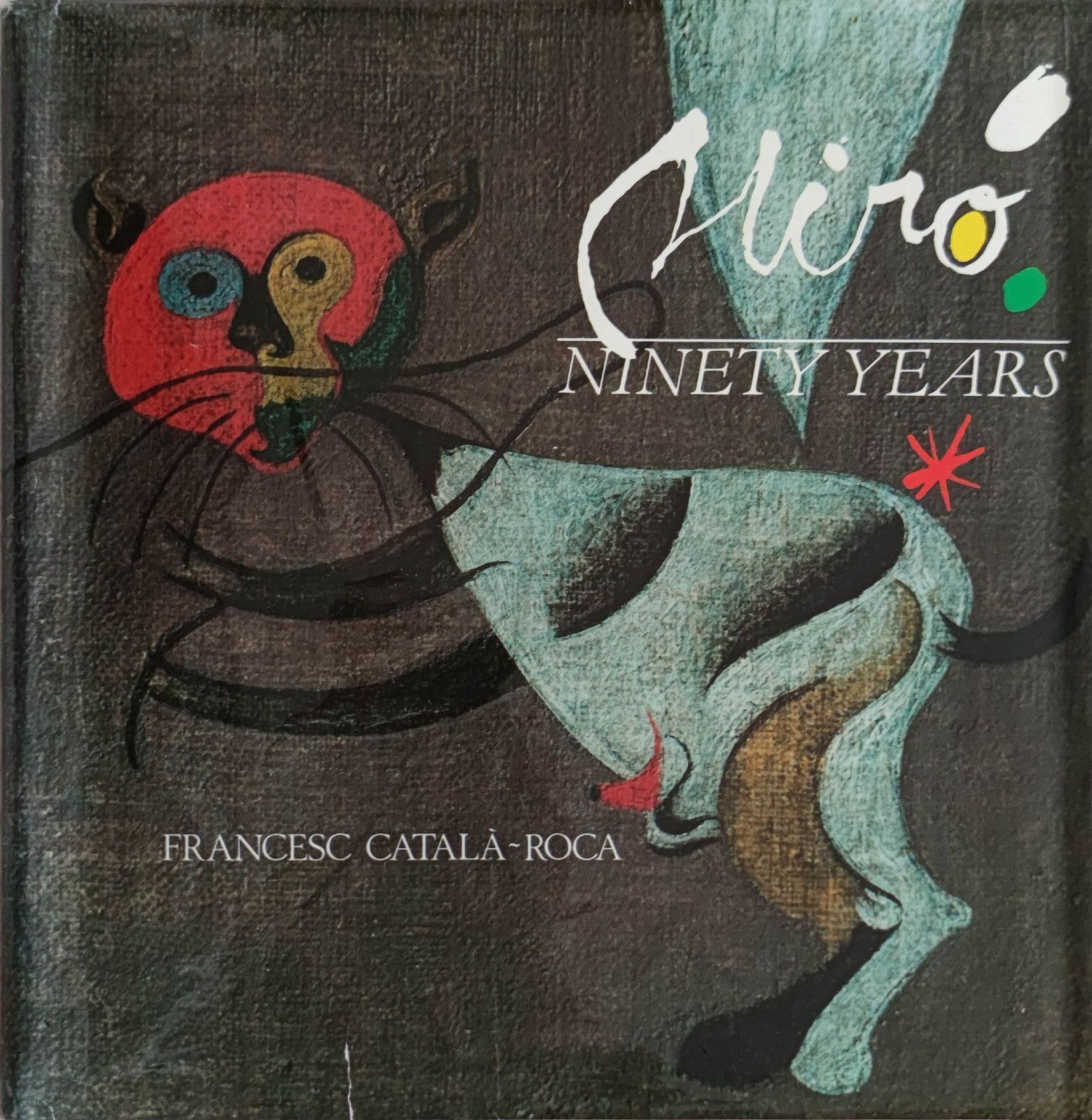
 Miró edited by Jose Maria Faerna – This book in four pages very concisely illustrates the different periods in Miró life from studying in Barcelona, to his time hanging out with the surrealists, the period of time when he was making his constellations series, until his last works. There are 73 full color reproductions of Miró's artwork in this book. Those are also broken down comprehensively into periods or series.
 Twentieth Century Masters: Miró by Mario Bucci – “This book provides a complete account of Miró's life and development and is illustrated by 36 black-and-white subjects and 40 pages of colour…Miró is internationally known for his vivid and fanciful paintings, peopled by strange symbolic shapes and creatures.” Half of this slim volume is dedicated to the different chapters in Miró's life, and the second half is dedicated to color reproductions of his work.
Miró by Janis Mink – “Joan Miró is one of the most significant Spanish painters of the twentieth century. His early work clearly shows the influence of Fauvism and Cubism…From the mid-twenties onward, Miró; strove to leave direct objective references behind and developed the pictograms that typify his style. The pictures of this period, which include perhaps the most beautiful and significant ones of his whole oeuvre, dispense with spatiality and an unambiguous reference to objects. From now on, the surfaces are defined by numerals, writing, abstract emblems, and playful figures and creatures. [1944] saw the beginning of his extensive graphic oeuvre, ceramics, monumental mural works, and sculptures…Joan Miró; developed in several stages his characteristic flowing calligraphic style and his world of forms resembling shorthand symbols.”–Publisher
 Miró by Walter Erben – “This book on Miró is a fine example of a successful book on an artist. Himself a painter and writer, the author Walter Erben succeeded in engaging his great “”colleague”” in numerous private conversations at the artist's house in Mallorca. In these talks Miró gave Erben many interesting and invaluable insights into his art, as well as his own interpretations of his most significant works. The last chapter of this book was written by Hajo Duchting, an art historian and painter, who was born in Dusseldorf in 1949 and currently lectures in the history of art at the university of Munich. He has supplemented Erben's text with a chapter on Miró's later life as well as numerous interpretations of a selected number of works.”–Publisher
 Joan Miró: Painting and Anti-Painting, 1927-1937 by Anne Umland – “This catalogue for a Museum of Modern Art exhibition focuses a microscopic lens on a single decade of transformative and willfully unbeautiful works of art, and gathers momentum from the artist's encounter with surrealism and his confrontations with his personal and the collective unconscious. The power that invades Miro's work during these ten years comes from his unflagging confrontation with all that he had beforehand taken for granted and now consciously rejected. The 109 works appear chronologically in the plates section, with each work reproduced in beautiful color within the essays.”–Choice
 Miró: Sculpture by Alain Jouffroy and Joan Teixidor – “Miró's sculpture forms an essential part of his work. Surprisingly, it is as little known as it is badly understood. His first almost abstract “constructions” date from 1930, and they were followed by Surrealist “Objects” of great freedom, many of which have not survived. By 1944 sculpture had become a specific means of expression for Miró, who modelled figures and birds that later were cast in monumental dimensions”– publisher
 Miró: The Experience of Seeing: Late Works, 1963-1981 by Carmen Fernandez Aparicio et. al.– “This book is a catalogue for a 2014-15 traveling exhibition of Miro's late work at the Seattle Art Museum, in collaboration with the Reina Sofia Museum in Madrid. It features three distinct essays (one really a dialogue with a collaborator of the artist), statements by the curators, a time line (1956-83), and a selected bibliography. What is important throughout are the details of Miro's antagonistic relationship with the Franco regime; his strong sense of being Catalan; his differences from surrealism, to which he is often too facilely connected; and his relationships with Marcel Duchamp. Also important are the effects on the artist himself of the time he spent in New York in 1947, as well as his effects on emerging artists in the city at that time; and the importance of sculpture in his work and the meanings embedded in it”–Choice
Miró by Roland Penrose – “The great surrealist painter Joan Miró stands out among twenthieth-century masters for the wit and spontaneity that pervade his work. Miró ‘s art went through many phases, and its major features–the birth of his signs and symbols, his series of anguished peintures savages in the 1930's, his lyrical, poetic gouaches, his monumental sculptures and ceramics, his unprecedented use of poetic titles, and his attachment to nature and to the night–are discussed here by Roland Penrose, a friend of the artist for nearly fifty years”–Publisher
Joan Miró: Life And Work Jacques Dupin – “A rather wooden translation from the original French, this extensive survey of Miró's work is laid out biographically. Dupin, who was associated with the artist for three decades as an assistant, exhibition organizer, and cataloger, brings firsthand knowledge to the story of the artist's life…[This book] will appeal to a [broad] audience.”–Library Journal
“Joan Miro (1893-1983) was a key figure in twentieth-century art, and one of the most engaging artists of our time. He left behind a remarkable legacy, a body of work that continues to reach an increasingly wide public today. Now, some ten years after his death, and to mark the centenary of his birth, this sumptuously illustrated volume offers new information and insights into Miro's long and extremely productive career.”–Book Jacket
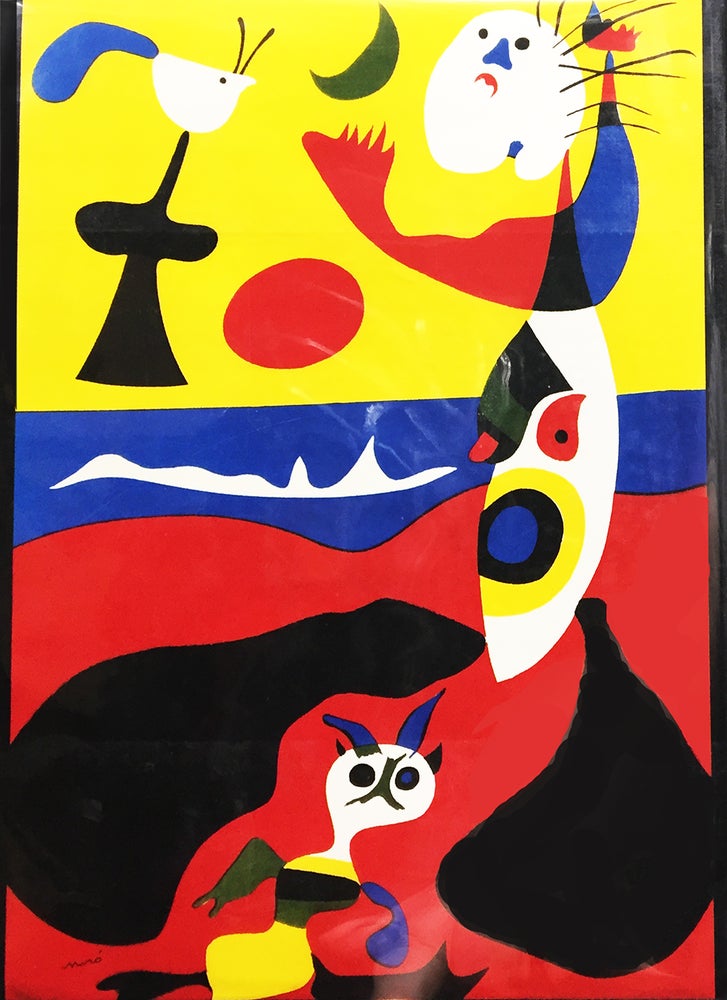 Miró by Guy Weelen – “Weelen gives a good overview of the genesis of Miro's style, the evolution of his symbols, and his mature innovation with them. In structure Weelen's book is modeled after Jacques Dupin's Joan Miro (1961) with chapters divided according to crucial year groupings, such as 1911-1918 or l944-1950, but Dupin's book is more of a personal biography. Weelen presents information of general art historical interest–Surrealism, Breton, Freud, for example–in relation to Miro's development. “–Choice
  Miro and Mallorca by Pere A. Serra – “in painting joyful, biomorphic fantasies abuzz with gnomes, stars, moons, sex symbols and snails, Spanish artist Joan Miro drew inspiration from the island of Mallorca (or Majorca) with its open spaces and luminous skies, its folk art and ancient history. Born of a Mallorcan motherand he later married a Mallorcan Miro left Barcelona every summer as a child to vacation on Mallorca. His annual visit was like a liberation, allowing the shy, introverted boy to bask in a world of the imagination…Miro found a safe haven in Mallorca. There he invented a circus of signs in harmonious canvases whose radiance gives no hint of the suffering and fear he and his family endured.”–Publishers Weekly
This press release was produced by the White Plains Public Library. The views expressed are the author's own.
Get more local news delivered straight to your inbox. Sign up for free Patch newsletters and alerts.