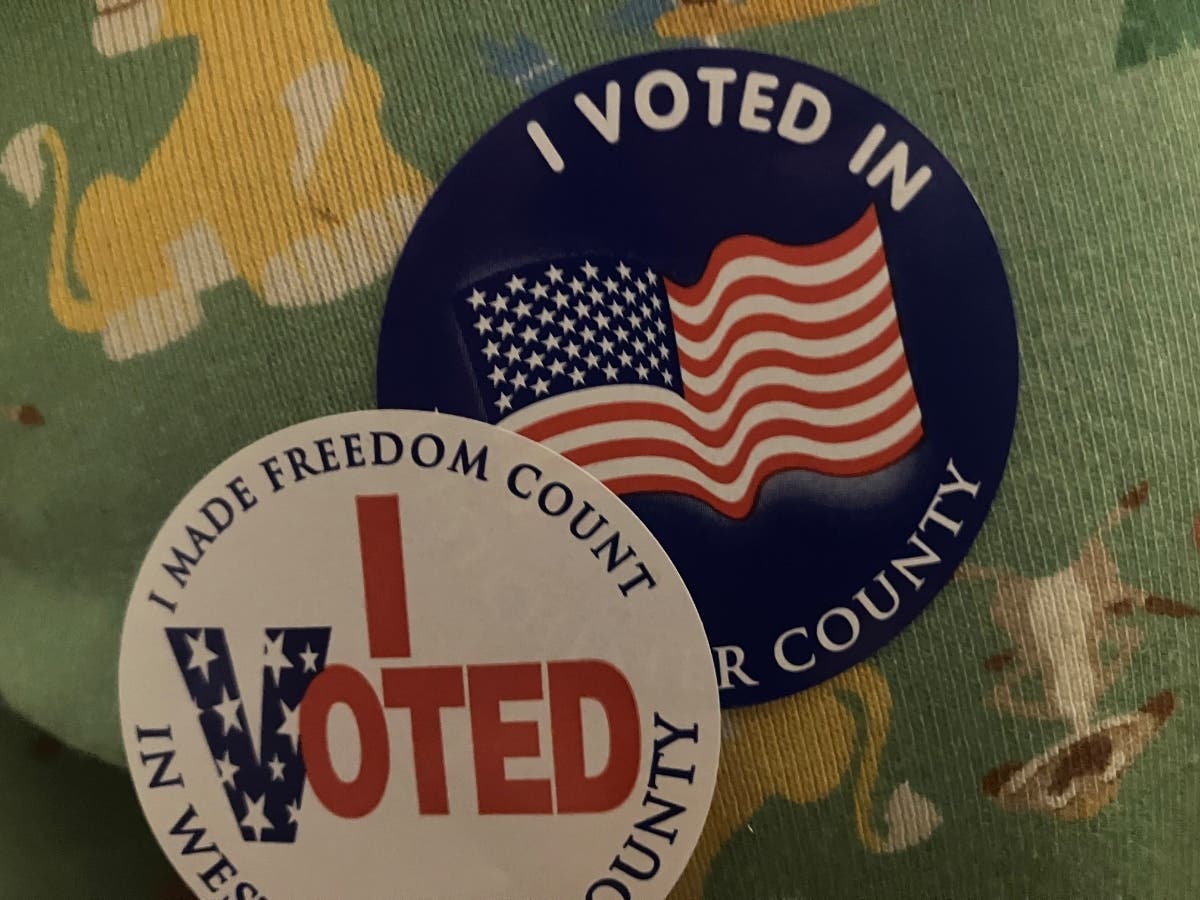
It's been difficult to watch the electoral circus over the last two weeks.
I can't remember a time when the feelings have been as intense. I wonder about the election of 1816 or 1948, and whether the vitriol was as brutal as some of our previous elections. According to many political scientists, political partisanship has increased enormously. We've seen an ideological intensification that has never been seen before.
Part of this has to do with the way our political institutions have been managed: elected officials choose how their districts rather than the other way around; and the electorate has bought into the view that there is no such thing as an objective media. Our primary system rewards the passionate and extreme other than the practical. And more people are moving to places where they meet fewer individuals of different political outlooks.
Find out what's happening in White Plainsfor free with the latest updates from Patch.
Americans in good conscience believe a wide range of ideas; some may be hawks and others doves, isolationists or internationalists, and have good reasons for being so. But traditionally, both parties, for better or for worse, believed that American power was beneficent in the world, and that market allocates resources wisely, while having different views about where government fits. Some independents do think of American power as disastrous; others that capitalism is inherently exploitative; or and still others that government itself is barely legitimate.
Still, the major parties each have their distinct constituencies, and by and large seek to nominate individuals who have participated in the political sphere, or show political skill, having the skill to make the broadest constituency possible so that an individual can win an election. Although some have a stronger innate ability,the art of politics requires skills that take time and practice to learn. It requires people who are able to compromise, listen to their constituents, and solve problems. It's imperfect, but this is the nature of our very human condition. We don't elect saints, nor would they be very effective.
I'm not someone who thinks that the ability to drink a beer with a politician is important. But I do think that the political sphere has some unspoken rules about magnanimity, civility that are worth cultivating and maintaining. And in such a game where conflict is part of the excitement, a good public servant needs a thick skin. In this sense, temperament and character are, perhaps, prior to policy.
I think that those of us who are religious must be able to participate dispassionately. Let us remember that much of this is theater; how easy it is to be seduced by the excitement of conflict and the passion of others; to gleefully enjoy the missteps of our enemies. We must also remember that much of the work we do is local, in our own communities, with the elected officials we've been given. We should alternately support and challenge them, appreciating their service, while also holding them accountable. The media at its best provides the stories that help us understand the world we live in. But in order to sell its product, to have its proud of flesh, it provides a steady stream of scandals we can barely turn our eyes from.
Our role, as Christians, is to discern between what is true, and the seductions of self-righteousness. Let us first seek to understand. We remember that in our community that our Lord has given us the freedom and space to turn toward one another. And in the midst of these trying times, have the patience to endure the vicissitudes and challenges within our current order. Let us not be overwhelmed by anxiety or trouble, but continue, step by step, to face whatever challenges are before us and find ways to solve them. Vote your conscience, but remember that the world is a messy place, and our redemption is found through the love of our enemy, our neighbor.