Politics & Government
Westchester, Suffolk Form Partnership To Buy Electric Vehicles
The announcement follows a plan to convert their county vehicle fleets to all-electric by 2030.


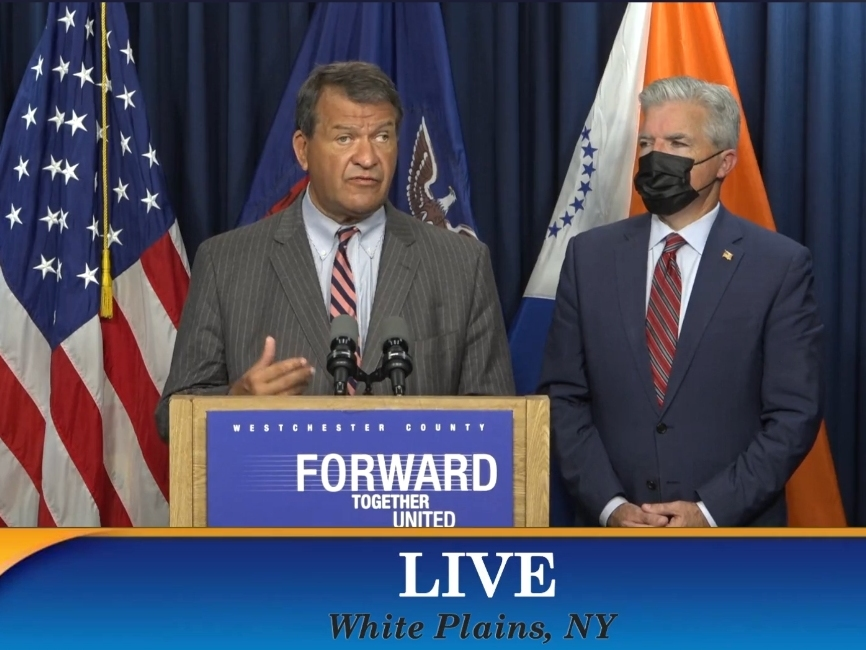
WHITE PLAINS, NY — A new shared services partnership between Westchester and Suffolk counties will procure electric vehicles, help tackle environmental problems and save taxpayers dollars.
During a news conference in White Plains Monday, Westchester County Executive George Latimer and Suffolk County Executive Steve Bellone announced the partnership they said would serve as a model for local government across the state.
Bellone said the decision of two counties will "lay the groundwork towards a clean, zero-emission fleet by 2030.
Find out what's happening in White Plainsfor free with the latest updates from Patch.
"Not only are we building back, but we are building back better with cleaner, greener energy," he said.
Latimer said that, as was seen with Hurricane Ida, "climate change is real, it is here and we must act not to do something about it.
Find out what's happening in White Plainsfor free with the latest updates from Patch.
"This policy will put Westchester and Suffolk counties on the forefront of this fight, leading by example so other local governments around the state and country can follow," he said.
The two counties announced in May plans to convert their vehicle fleets to all-electric by 2030. Their respective county departments were directed to submit plans to achieve clean and zero-emissions fleets by that time or sooner.
Westchester County's current fleet includes 17 all-electric cars and 68 plug-in hybrids. Six all-electric Bee-Line buses were added to the fleet a few weeks ago.
Just one of the new vehicles — a 35-foot, 32-seat bus — is expected to save about 5,000 gallons of fuel each year compared to a traditional diesel bus, according to a spokesperson.
Get more local news delivered straight to your inbox. Sign up for free Patch newsletters and alerts.