Politics & Government
Somers Ready to Adopt Cap-Compliant Budget
Public hearing finds no fault with $13.1 million spending plan; average tax bill grows to $891.
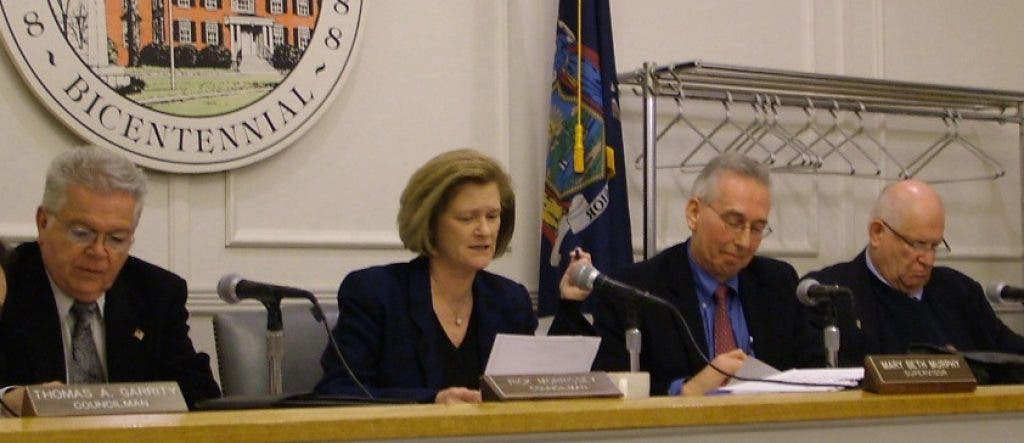
Packing few surprises and prompting no dissent at all, Somers' cap-compliant 2013 budget breezed through a brief public hearing Thursday evening enroute to an expected adoption next week.
While still facing a minor nip or tuck, the final document is expected to hew closely to the preliminary budget announced last month: a $13.1 million spending plan that raises the average property tax bill by $28.60, to $891.15.
“In this particular budget, there are no big surprises, no unusual occurrences from last year,” Supervisor Mary Beth Murphy said in opening the public hearing. Closing the hearing less than five minutes later, she set a vote for next week. None of the half-dozen spectators in town hall spoke at the hearing.
Find out what's happening in Yorktown-Somersfor free with the latest updates from Patch.
Somers’ overall property-tax rate—which determines the size of individual property-tax bills—will rise by 3.2 percent, to $13.71 for each $1,000 of assessed value. The average Somers home is assessed at about $65,000.
But the levy—the total revenue raised via property taxes and the figure that’s subject to the state’s 2 percent cap on annual increases—will go up only 1.8 percent, to $6,830,350.
Find out what's happening in Yorktown-Somersfor free with the latest updates from Patch.
Nobody suggested that coming in under the cap had been easy—or sustainable, especially as some costs, including those incurred by state-mandated programs, continue to grow without local ability to control them.
“More towns are having trouble staying below the tax-levy cap,” said Councilman Richard G. Clinchy. “Our neighbor, Bedford, had to wrestle with that for awhile.”
In Bedford, where it was unclear how much employee health insurance premiums would go up next year, officials learned only about 24 hours before adoption that the budget would squeak under the cap.
“I think the state has to address some of the [towns’] legitimate concerns,” Clinchy said.
Murphy called health-insurance and pension costs major drivers of expanding budgets.
Breaking out the appropriations, Murphy used a pie chart to show the hearing attendees and a television audience beyond just where tax dollars were going:
24 percent is earmarked for the highway fund and 23 percent for the administrative costs of running the town; 20.7 percent covers personnel; parks take 8.6 percent; library, 8 percent; debt service, 5.6 percent; emergency services, 2.3 percent; and insurance, 1.7 percent. The town’s part-time police force receives 6 percent.
“We had a lot of time to discuss the individual budget line items, and we all had a good opportunity to try and give our input," Councilman Rick Morrissey said. "So that was appreciated.”
Like us on Facebook | Follow us on Twitter | Sign up for our newsletter