Weather
Baby’s Death Illustrates Continuing Flood Threats In Carolinas
Floodwaters from the Cape Fear River spark new worries about coal ash pollution; mom of baby swept away in flood speaks out.


CHARLOTTE, NC — Nowhere across the flooded Carolinas are the devastation, heartbreak and danger more poignantly illustrated than with the story of a Charlotte mother who tried desperately to hold onto her 14-month-old son Kaiden. But as the roiling floodwaters in Florence's aftermath rose up around Dazia Lee, the baby slipped from her grasp.
Kaiden Lee-Welch is among at least 42 people who have been killed in the storm that parked itself over the Carolinas for days, dumping trillions of gallons of rain that caused epic flooding. It has stopped raining there, but floodwaters are meandering toward the sea, leaving death and billions of dollars of destruction in their path.
The flooding crisis is slowly moving to South Carolina, which Gov. Henry McMaster said is experiencing its worst natural disaster in modern history and already has caused at least $1.2 billion damages. In North Carolina, Gov. Roy Cooper said the effects of Florence are ongoing, so there’s no way to accurately calculate the damage because the effects of the storm are ongoing, but it will be in the billions of dollars.
Find out what's happening in Charlottefor free with the latest updates from Patch.
Officials issued dire warnings as the turbulent waters approach that Palmetto State residents will see flooding like never before. “We’re at the end of the line of all waters to come down,” Sal Hemingway, the county administrator in South Carolina’s Georgetown County, said.
The tragedy of the baby was swept away in the churning waters illustrates the danger of driving on flooded road, something officials have been warning against since Hurricane Florence smashed into the North Carolina coast a week ago. Lee told television station WCNC that she saw motorists driving on a closed road and barricades had been pushed aside, so she thought it was safe to enter the highway near New Salem Sunday night.
Find out what's happening in Charlottefor free with the latest updates from Patch.
(For more news like this, find your local Patch here. If you have an iPhone, click here to get the free Patch iPhone app; download the free Patch Android app here.)
It wasn't, and that split-second decision has forever changed the young mother's life.
Rains had sent the normally lazy Richardson Creek 10 feet out of its banks, swallowing the road and an adjacent soybean field. The powerful current swept her Hyundai off the road, across the field and into trees. Water quickly overtaking the vehicle, Lee was able to free herself and Kaiden and tried to dry ground.
She can't swim and struggled to keep her head above water before she was plucked from the raging monster of a creek, the Charlotte Observer reported.
“I was holding his hand, trying to hold him, trying to pull him up. And it got to the point I couldn’t hold on anymore — and he let go,” Lee told television station WJZY. “I did everything I could from the moment I was pregnant to the moment I lost him. I did everything I could as a parent to save him and protect him.”
Kaiden’s body was recovered Monday.
Union County Sheriff Eddie Cathey said the barricades had been placed to keep people off the road, but “whether someone else moved those barricades and she drove around ‘em, I can’t say.”
Both the sheriff’s office and the North Carolina Highway Patrol are investigating whether charges will filed in the child’s death.
MORE ENVIRONMENTAL THREATS
Though life is slowly returning to normal in North Carolina, the danger hasn’t passed. A curfew has ended in Wilmington, the largest city in the Tar Heel state with 120,000 residents, but access to the city was still limited and officials asked residents to wait a few more days before returning home.
Rivers receded briefly, but were periodically rising back to dangerous levels.
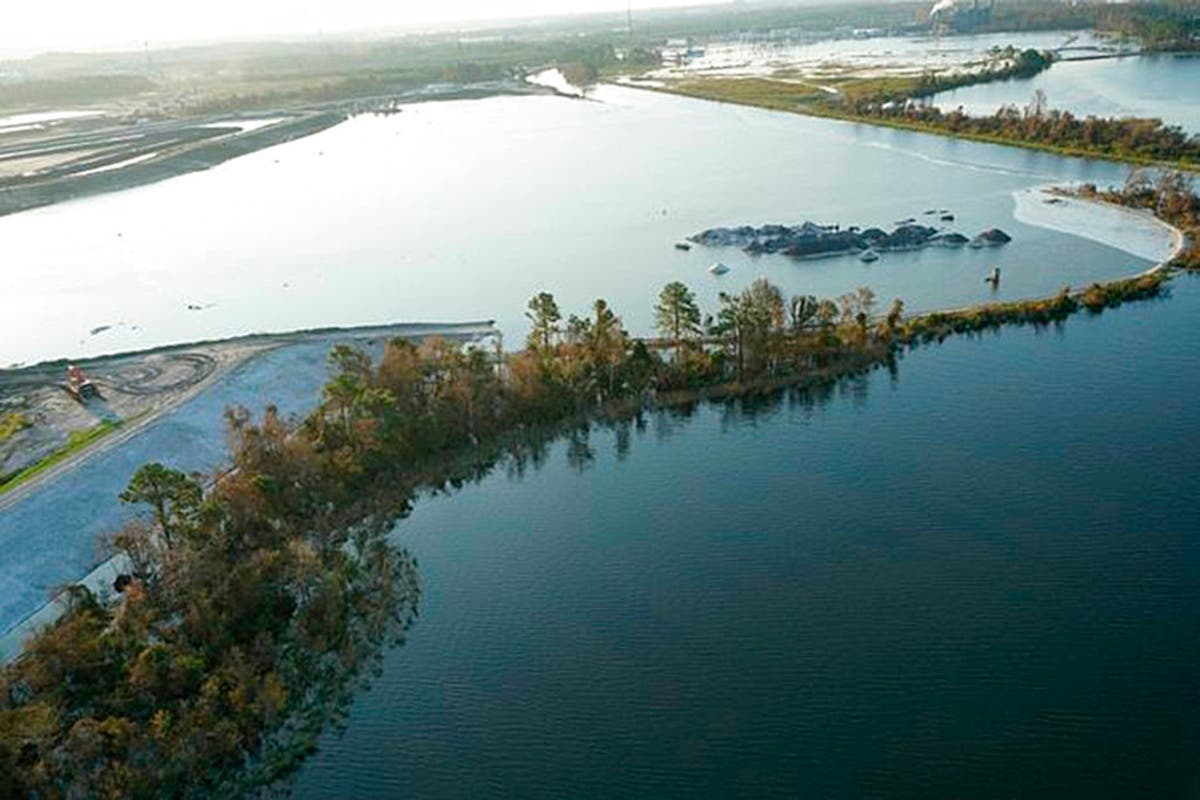
Floodwaters from the Cape Fear River spilled over an earthen dike and inundated a large lake at a closed Duke Energy power plant near Wilmington, and it’s possible coal ash — the toxic byproduct of burning coal — from an adjacent dump is flowing into the river.
An inflatable dam placed around the ash bond at the state-owned utility Santee Cooper in South Carolina will offers another 2½ feet of flood protection that officials think will be enough to keep pollution in check. But the environmental toll is mounting in the Carolinas as human, hog and other animal waste mix in with floodwaters.
South Carolina emergency officials also ordered about 500 people to flee their homes along the Lynches River, which the National Weather Service said could reach record flood levels late Saturday or early Sunday. Shelters are open.
The flooding continues to hamper travel, and parts of Interstate 95, the main north-south route on the East Coast, and Interstate 40, the main road to Wilmington, remained flooded and probably won’t reopen until the end of September, the North Carolina Department of Transportation said.
Across the Carolinas, more than 1,000 roads — major highways and neighborhood streets — remain closed due to flooding. Some of them have washed out entirely.
The Associated Press contributed reporting.
In this photo released by Duke Energy, The Sutton 1971 coal ash basin is seen Sept. 21, 2018, near Wilmington, N.C. Duke spokeswoman Paige Sheehan said Friday that floodwaters continue to overtop an earthen dike at the north side of Sutton Lake, a 1,100-acre (445-hectare) reservoir at the L.V. Sutton Power Station. (Duke Energy via AP)
Get more local news delivered straight to your inbox. Sign up for free Patch newsletters and alerts.