Weather
Hurricane Florence: Storm Begins Strike On Carolina Coast
"We're on the wrong side of this thing," Gov. Roy Cooper said Thursday as Hurricane Florence began making landfall in North Carolina.

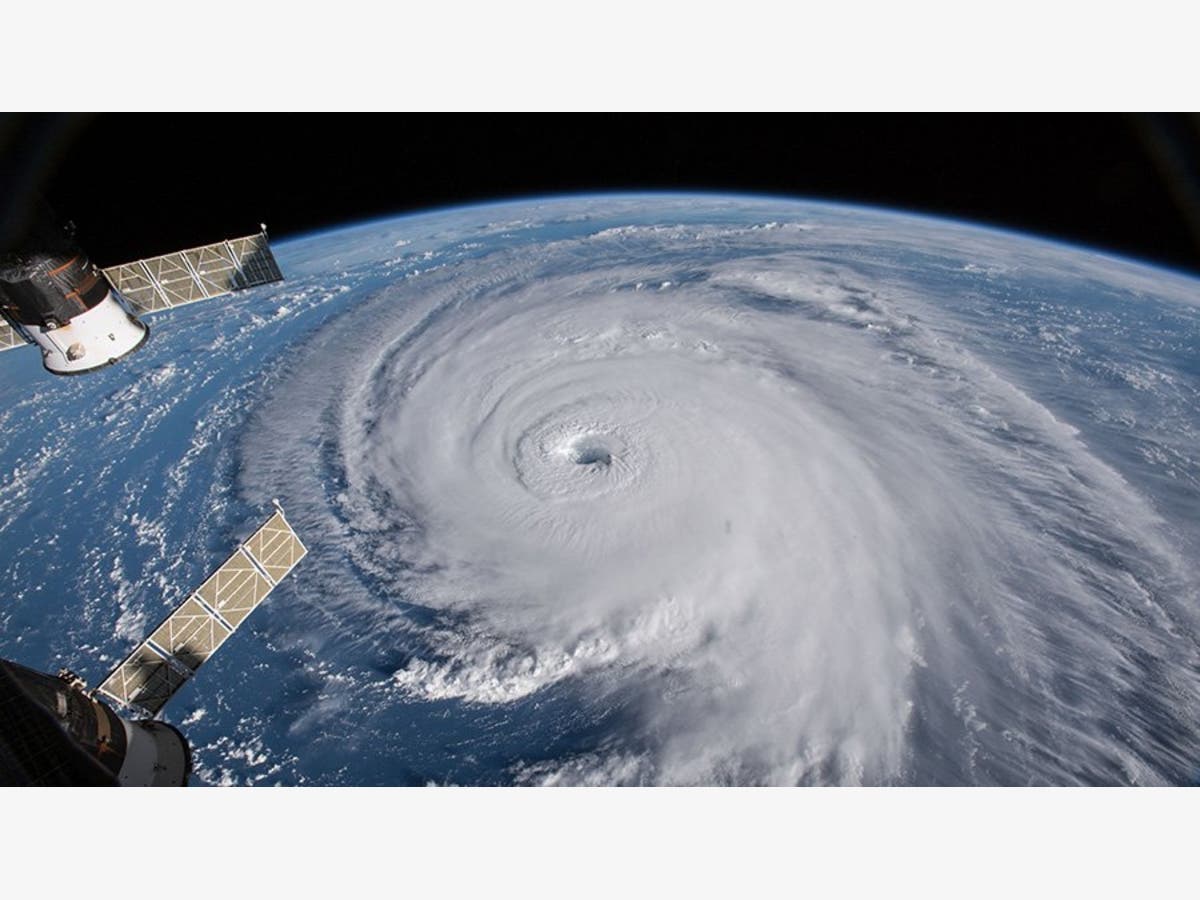
Hurricane Florence began making its presence known in North Carolina Thursday morning as its outer bands of rain and ferocious winds moved in on the state’s barrier islands and mainland coast. By daybreak, the wind speeds were slowing down for the monster storm, however the development only made it that much more dangerous, state officials warned.
“Get yourself to a safe place and stay there,” Gov. Roy Cooper said Thursday
By Thursday morning, Florence was downgraded to a Category 2 storm, with sustained winds of 110 mph, according to the National Hurricane Center. By 8 p.m. Thursday, those winds had dialed back to around 100 mph, as it slow churned about 85 miles east-southeast of Wilmington, and about 145 miles east of Myrtle Beach, S.C.
Find out what's happening in Charlottefor free with the latest updates from Patch.
Moving forward at about 5 mph, the destruction of hurricane-force winds crept up on the Carolina coast, almost at a walking pace.
“Wind speed may have dropped some from yesterday, but we traded that for a larger wind field," that extends 200 miles, NC Gov. Roy Cooper said in a press conference Thursday morning.
Find out what's happening in Charlottefor free with the latest updates from Patch.
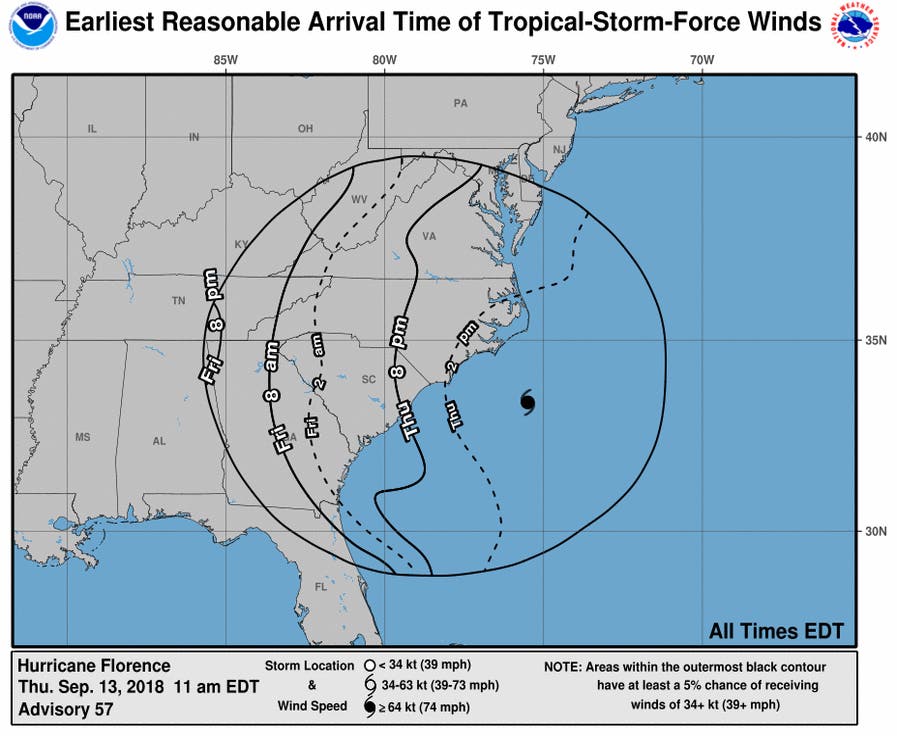
The storm’s advancement toward shore launched tornado watches in 15 coastal counties, as winds ranging from 40 mph to 73 mph radiated out nearly 200 miles from its center, the Charlotte Observer reported. The threat is expected to increase throughout the day as the storm moves west.
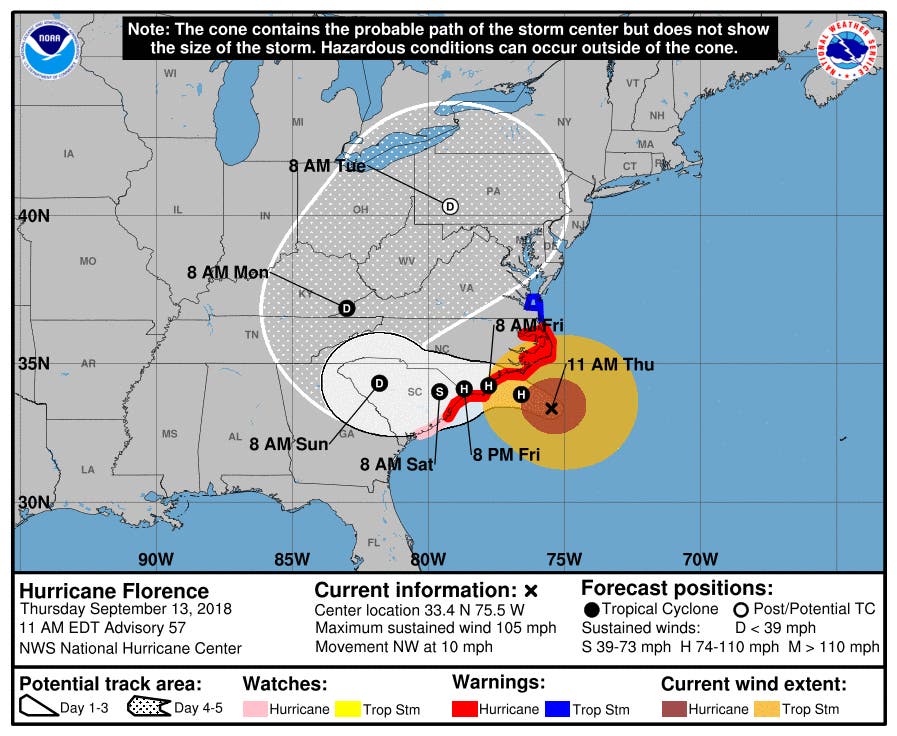
Updated weather projections from the National Hurricane Center show the storm lumbering southwest into South Carolina after striking the southern North Carolina coast near Wilmington.
State emergency officials, however, said that development didn’t mean the state was out of the woods. Even with the projected dip south into South Carolina, there will be “catastrophic effects,” relentless rain that will last for days, and a storm surge as high as 9 to 13 feet, Cooper said. Tens of thousands of structures are expected to be flooded throughout the state, he added.
“We’re on the wrong side of this thing,” Cooper said.
Coastal areas of the state are expected to receive 20-30 inches of rain with some isolated areas receiving as much as 40 inches, North Carolina Emergency Management said Thursday. The remainder of the state is expected to receive 6-12 inches with up to 24 inches in isolated areas.
“Florence has been downgraded to a high end Category 2 storm, but this does not change our impacts significantly,” NCEM said Thursday morning. “Significant impacts will extend far from the center of the storm.”
One impact that promises to be a near equalizer throughout the state is the loss of power.
Duke Energy estimated Wednesday that up to 3 million customers will lose power because of Hurricane Florence, and that it will take weeks — not days — to be restored.
"The magnitude of the storm is beyond what we have seen in years," said Howard Fowler, the company's incident commander. "With the storm expected to linger, power restoration work could take weeks instead of days."
"Disaster is at the doorstep and coming in," Gov. Roy Cooper said Wednesday.
While the coast of North Carolina will begin to "feel the blast" of the storm Thursday, central regions will see a prolonged storm that will begin Thursday night and last through the weekend, Cooper said. Western North Carolina should prepare for heavy rain, which could trigger mudslides and road closings, he said.
Cooper urged all state residents to plan on being without power for days. "This may be a marathon, not a sprint," he said.
"Every county and every person needs to stay alert and take it seriously," he said.
Statewide Readiness
Cooper authorized 2,400 additional National Guard soldiers to join 200 already on active duty, with more on standby, he said Wednesday. They will be tasked with route clearance of roads, logistics support, among other duties aimed at preserving life and safety, he said.
North Carolina prisons and jails are also being evacuated, with hundreds of offenders being moved to larger prison facilities within the state's prison system. All offenders under evacuation will be allowed to make a free phone call to a family member over the weekend to update them on their status, the governor's office said.
Offenders housed in county jails in Carteret, Beaufort, Dare and Chowan counties have also been evacuated to larger jail facilities in the state prison system, Cooper's office said.
North Carolina is closing 25 state parks by 5 p.m. Wednesday, as well as 14 historical sites. The North Carolina zoo in Asheboro, N.C. closed Wednesday through Friday, or until further notice, and the North Carolina Aquariums closed Tuesday.
WATCH: Live Footage from Frying Pan
(Stay on top of all the latest Hurricane Florence news with our free, real-time news alerts, find your local Patch here. If you have an iPhone, click here to get the free Patch iPhone app; download the free Patch Android app here. And like Patch on Facebook!)
RELATED:
- Hurricane Florence: How North Carolina Can Prepare
- NC Residents Advised To Review Homeowners Insurance Now
- Where To Find Gas In NC: Hurricane Florence Evacuation
- Hurricane Florence Prep: How To Keep Kids Safe And Calm
- List: North Carolina Schools Closing Due To Hurricane Florence
- 'This Storm Is A Monster': NC Governor Orders Coastal Evacuation
- Hurricane Florence Threatens Pigs, Catastrophic Waste Spills
- Freeze Your Leftovers And Other Tips Ahead Of Hurricane Florence
- Duke Energy: Florence Will Leave Millions Without Power For Weeks
- Hurricane Florence: Get Your Umbrella, Water… And Gun?
- Best Livestreams: Watch Hurricane Florence Barrel Into Carolinas
Patch Staff Writer Dan Hampton contributed
Photo via International Space Station
Get more local news delivered straight to your inbox. Sign up for free Patch newsletters and alerts.