Weather
Hurricane Irma: South Carolina’s Governor Declares State Of Emergency
South Carolina's governor has declared a state of emergency as Hurricane Irma barreled through the Caribbean Wednesday.


South Carolina’s governor has declared a state of emergency in the Palmetto State as Hurricane Irma barreled through the Caribbean Wednesday.
Gov. Henry McMaster signed the Executive Order Sept. 6, but stopped short of calling for an evacuation. That decision would likely be made by Friday, The State newspaper reported.
“I have been advised that Hurricane Irma, and the associated wind, heavy rain, flash flooding, and severe weather, to include tornadoes, may pose a significant threat to the State of South Carolina and requires that the State take timely precautions to protect property, critical infrastructure, communities, and the general safety and welfare of the people of this State,” McMaster said.
Find out what's happening in Charlottefor free with the latest updates from Patch.
Watch: Hurricane Irma Pummels The Caribbean; Florida Could Be Next
At a press conference Wednesday at the S.C. Emergency Management Division, McMaster said residents should, “pretend that a category 3 hurricane is arriving tomorrow morning and do what you would do then now and get ready,” the newspaper reported.
Find out what's happening in Charlottefor free with the latest updates from Patch.
Gov. Henry McMaster Asks South Carolinians to Prepare for Hurricane Irma, Declares State of Emergency pic.twitter.com/IxpyGY4EZX
— SC Governor Press (@scgovernorpress) September 6, 2017
According to S.C. Emergency Management, a category-3 hurricane could bring devastating damage with wind speeds ranging from 111 to 129 miles per hour. “Buildings may sustain major damage, including loss of roof decking and gable ends. Many trees will be snapped or uprooted, blocking numerous roads. Electricity and water will be unavailable for several days to weeks after the storm passes,” it said in the state hurricane guide.

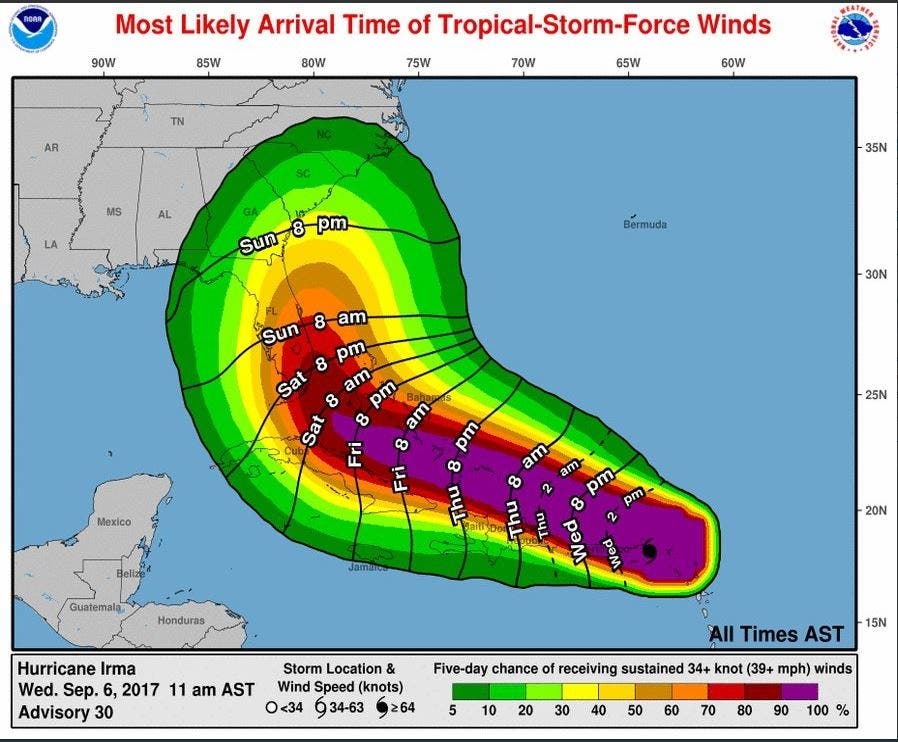
While the storm's exact path is impossible to predict, the latest National Hurricane Center projections show that tropical storm-force winds could make their way into the Carolina as early as 8 a.m. Sunday. Residents in all of Florida's 67 counties had been urged to prepare to evacuate, and multiple forecast models show the storm working its way into Georgia and the Carolinas after striking Florida.
Wednesday morning, Irma was packing maximum sustained winds of 185 mph, making it a Category 5 storm and placing it among the most dangerous ever experienced in the Atlantic.
As of 8 a.m. Wednesday, Hurricane Irma was located 15 miles west of St. Martin and was moving west-northwest at 16 mph. Hurricane warnings have gone up for Antigua, Barbuda, Anguilla, St. Kitts, the British and U.S. Virgin Islands, Puerto Rico and other nearby islands.
Hurricane-force winds were extending out 50 miles from the hurricane's center. Tropical storm-force winds were extending outward by 175 miles.
Tips for preparing for the hurricane include:
- Build an emergency kit.
- Make a family communications plan.
- Know you’re the routes you need to leave your home (evacuation routes). Locate your local emergency shelters.
- Closely watch/listen to the weather reports. Listening every hour as the storm nears.
- Put fuel in all vehicles and withdraw some cash from the bank. Gas stations and ATMs may be closed after a hurricane.
- If authorities ask you to leave, do so quickly.
- If you leave (evacuate), be alert to flooded or washed-out roads. Just a few inches of water can float a car.
- Keep a photo I.D. that shows your home address. You will need it when asking police if it is okay for you to re-enter your area or home.
- Secure your property.
- Bring inside all outdoor furniture, decorations, garbage cans and anything else that is not tied down.
- Cover windows with permanent storm shutters or board up windows with 5/8” plywood, cut and ready to install. Tape does not stop windows from breaking.
- Put in straps or extra clips to securely fasten your roof to the frame structure. This will lower roof damage.
- Trim trees and shrubs around your home, so they are more wind resistant.
- Clear clogged rain gutters and downspouts.
- Reinforce garage doors. If wind enters a garage it can cause dangerous and expensive structural damage.
Emergency Kits should include the following:
- Bottled water and non-perishable food to sustain each family member for three to seven days
- a weather radio
- flashlight
- extra batteries
- Toiletries
- change of clothes
- blankets or sleeping bag
- rain gear
- appropriate footwear
- Copies of important documents, such as birth certificates and insurance policies
Patch Editor Doug Gross contributed to this article.
Photo via National Weather Service
Keep up with more Hurricane Irma news by liking Charlotte Patch on Facebook:
Get more local news delivered straight to your inbox. Sign up for free Patch newsletters and alerts.