Weather
Tropical Storm Bertha On Course To Pummel Central NC With Rain
State emergency officials warn that the I-77 corridor is at risk for flash flooding Wednesday as Bertha makes landfall.

CHARLOTTE, NC — A newly formed tropical storm off the coast of South Carolina is set to make landfall Wednesday, and is on track to bring high winds and rain to central North Carolina, including the Charlotte metro. State emergency officials warn that the Interstate 77 corridor is at risk for flash flooding Wednesday as Bertha makes landfall.
The second named storm ahead of Monday's official start of the 2020 Atlantic hurricane season is expected to produce heavy rainfall across portions of eastern and central South Carolina, west-central to far southeastern North Carolina and southwest Virginia.
"This rainfall may produce life-threatening flash flooding," the National Weather Service said.
Find out what's happening in Charlottefor free with the latest updates from Patch.
As of 8:30 a.m. Wednesday, Bertha was located about 30 miles east-southeast of Charleston Wednesday morning with maximum sustained winds of 45 mph, according to the National Hurricane Center. It was moving northwest at about 9 mph.
Bertha was forecasted to move onshore Wednesday morning, and reach west-central North Carolina as a weakened tropical depression by Wednesday evening.
Find out what's happening in Charlottefor free with the latest updates from Patch.
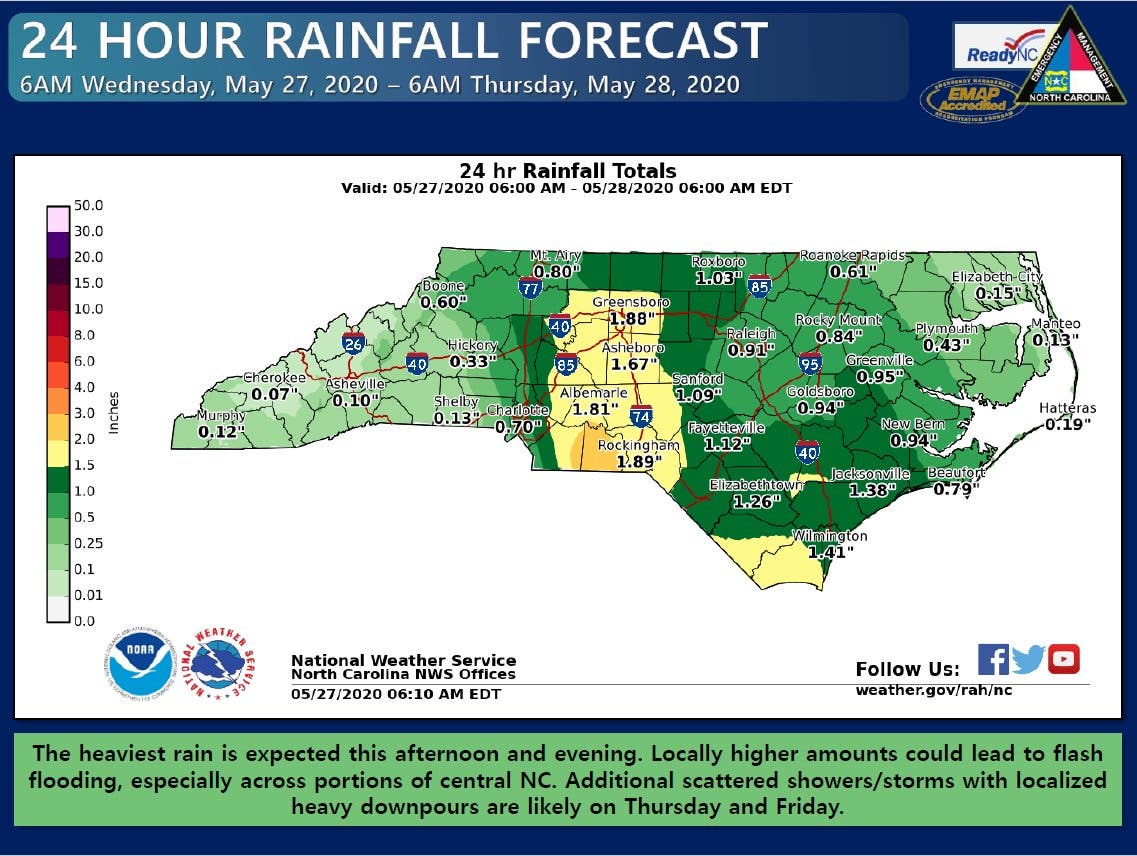
"Bertha is expected to produce total rain accumulation of 2 to 4 inches with isolated totals of 8 inches across eastern and central South Carolina into west central to far southeastern North Carolina and southwest Virginia," NWS said.
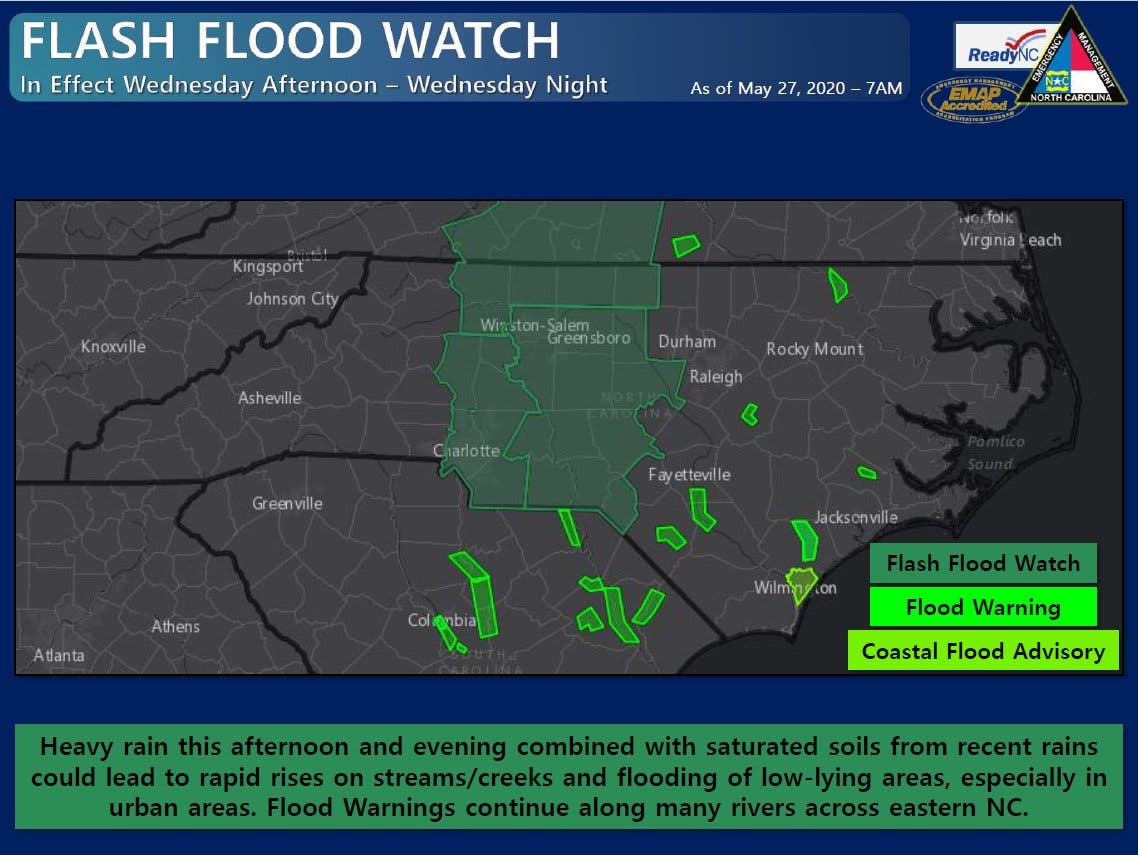
By Wednesday morning, a flash flood watch was in effect for much of central North Carolina.
"The heaviest rain and greatest threat of flash flooding will be around the I-77 and US-1 corridors this afternoon/evening," North Carolina Emergency Management said Wednesday morning. "
While Arthur — and now Bertha — became the two first named storms to form this year, the peak months of hurricane season run from August through October. The Atlantic hurricane season runs from June 1 to Nov. 30.
The National Oceanic and Atmospheric Administration is predicting more hurricanes in 2020 than during an average season on top of the coronavirus outbreak that first responders are already battling.
Forecasters predicted with 70 percent certainty there will be 13 to 19 named storms with top winds of at least 39 mph. Of those, six to 10 are expected to become hurricanes with top winds of at least 74 mph, including three to six major hurricanes of Category 3 and higher with top winds of at least 111 mph.
In April, Colorado State University meteorologists predicted the 2020 hurricane season could bring 16 named storms — four more than the average.
Paul Scicchitano, Patch Staff, contributed
Get more local news delivered straight to your inbox. Sign up for free Patch newsletters and alerts.