Crime & Safety
Ohio House Speaker Accused In State's Largest Racketeering Scheme
State Rep. Larry Householder has been accused of involvement in a $61 million bribery scheme to pass House Bill 6.


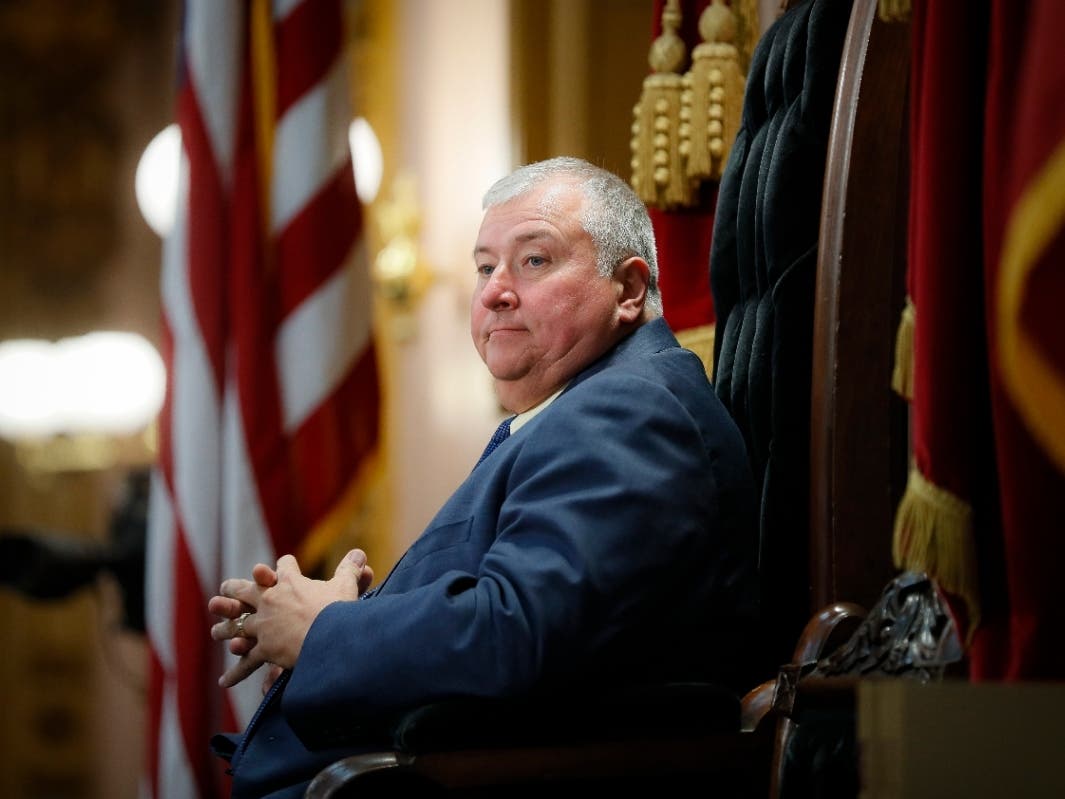
GLENFORD, OH — Ohio House Speaker Larry Householder was charged Tuesday with conspiracy to participate in a racketeering scheme as part of an FBI investigation into a $61 million money laundering effort.
"This is likely the largest money laundering scheme ever perpetrated against the people of Ohio," U.S. Attorney David M. DeVillers said.
Householder and the other people named in the affidavit are accused of accepting and overseeing the distribution of $61 million in "dark money" to pass a bailout bill for two Ohio nuclear plants run by FirstEnergy. The majority of the money went to advertisements to attack opponents of House Bill 6 and support candidates who would pass the legislation.
Find out what's happening in Across Ohiofor free with the latest updates from Patch.
"This is the first time a racketeering charge has been applied to an Ohio politician in the southern district of Ohio," said FBI Special Agent in Charge Chris Hoffman.
The other people taken into custody Tuesday in connection with the investigation were former Ohio GOP chairman Matt Borges, lobbyists Juan Cespedes and Neil Clark, and Householder adviser Jeff Longstreth, DeVillers confirmed. They also were charged with conspiracy to participate in a racketeering scheme.
Find out what's happening in Across Ohiofor free with the latest updates from Patch.
An unnamed company provided money to Householder and four other men, an affidavit said. The conspiracy had to create "Generation Now," a tax-exempt social welfare group — which does not have to disclose donors to the Federal Election Commission — to provide funds to Householder and others, DeVillers said.
Starting in March 2017, Householder began receiving quarterly payments of $250,000 from the unnamed company through accounts for Generation Now. Additional, larger payments were made in 2019, the affidavit said.
Generation Now was barred from involvement in politics and supporting politicians, authorities said. All of the money donated to the company was channeled to the five people named in the Department of Justice's affidavit and other political candidates, DeVillers said.
DeVillers would not confirm if other members of the Ohio House or Ohio Senate are currently under investigation.
"What they had to do was their part: Pass House Bill 6 and maintain House Bill 6, meaning it could not get reversed by petition," DeVillers said. "Millions of dollars was filtered through Generation Now to numerous enterprises controlled by members of this conspiracy."
The funneled money was used to get Householder elected speaker of the House and defeat opponents of the legislation, DeVillers said. In 2019, the unnamed company again funneled money through Generation Now to Householder and his co-conspirators' enterprises to get House Bill 6 passed, DeVillers said.
Then a petition to reverse House Bill 6 was proposed. Again, the unnamed company passed money to politicians and other companies to defeat the petition, DeVillers said. Signature collectors were bribed to neglect their duties, the affidavit found.
"They were successful [in defeating the petition]," DeVillers said. "We are still looking into accounts and exactly how much money went into whose account."
Householder specifically received about $500,000 for his efforts, DeVillers said. The money was used to pay for a house in Florida, the Department of Justice said.
Householder and four other people were taken into custody Tuesday morning. Hoffman said Householder was very cooperative with investigations. An FBI spokesperson confirmed to Patch that agents were "conducting law enforcement activity" on Householder's property on Tuesday morning.
Previous attempts to bail out the FirstEnergy nuclear plants had stalled in the legislature before Householder became speaker. Months after taking over, he rolled out a new plan to subsidize the plants and eliminate renewable energy incentives. The proposal was approved a year ago despite opposition from many business leaders and the manufacturing industry.
Hoffman said law enforcement brought charges against Householder and others as soon as possible, and could have done no more to prevent the bill's passage.
Gov. Mike DeWine called on Householder to immediately resign his office.
"I am deeply concerned about the allegations of wrongdoing in the criminal complaint issued today by the U.S. Attorney’s Office. Every American has the presumption of innocence until proven guilty," DeWine said, before arguing Householder would be unable to conduct the duties required of his position.
Householder's farm is in Perry County. He has been speaker of the Ohio House since 2019 and has had a long career in Ohio politics. He first served in the Ohio House from 1996 to 2004. He was forced out of office due to term limits and returned to the Ohio House in 2017.
FirstEnergy said they have been asked to participate in the investigation. The following statement was forwarded to Patch:
This afternoon, FirstEnergy Corp.received subpoenas in connection with the investigation surrounding Ohio House Bill 6. We are reviewing the details of the investigation and we intend to fully cooperate.
Reporting and writing from The Associated Press were used in this report
Get more local news delivered straight to your inbox. Sign up for free Patch newsletters and alerts.