Health & Fitness
Water Your Thoughts - Flooding in Avon Lake
ALMU is sensitive to this spring's basement flooding and is doing things about it. We need your help and have suggestions about what you can do. We want to hear from you and know water your thoughts.

Water your thoughts? As a way to more intimately interact with our customers, we are initiating this blog to provide an avenue to share thoughts and hear from you. We hope to spur open discussion that affects opinions and leads to actions that are in our mutual best interests.
Let’s talk about flooding—specifically in basements, yards and the woods.
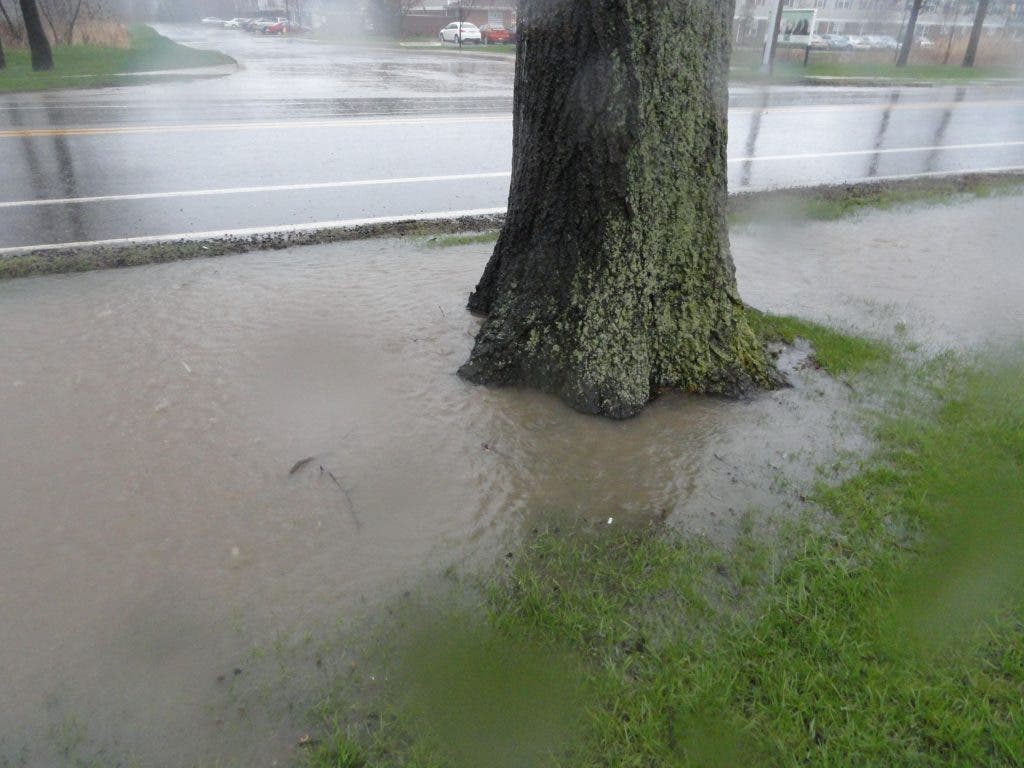
You probably know that April was the wettest April on record. Did you know that during the first four months of the year, we have received 6.5 inches more precipitation (17.6” total, almost 60 percent more) than normal? Not only does that lead to yards that are hard to mow and cancelled sporting events, it also results in a saturated ground and increased water flowing through storm sewers and sanitary sewers.
Find out what's happening in Avon-Avon Lakefor free with the latest updates from Patch.
Storm sewers and sanitary sewers are meant to collect different types of water and process it in ways that are both economical and appropriate for the environment. Storm sewers collect storm-related water from roads and parking lots, yards, and downspouts and send the water either directly to a receiving water body or to a detention structure/storm pond prior to discharge to receiving waters. Aside from peak flow moderation, little is done to stormwater with respect to treatment. Sanitary sewers collect wastewater generated inside homes, businesses, and industries and transport it to a water reclamation facility to treat it to a level that it may be beneficially used again, whether in a lake or stream or directly through reuse.
Sanitary sewers and treatment facilities are sized to handle normal flows generated in the homes, businesses and industries, along with a defined peaking or safety factor. These facilities are not usually designed to accept, transport, and/or treat storm flows because it is unnecessary to treat stormwater in that manner and it is cost prohibitive.
Find out what's happening in Avon-Avon Lakefor free with the latest updates from Patch.
Avon Lake is like many parts of the country, where there used to be just one sewer that collected both wastewater and stormwater, transported it to the treatment facility during dry periods, and sent it directly to the receiving water during wet periods. This is no longer legal, and Avon Lake Municipal Utilities (ALMU) has been separating the sewers since the mid-1990s.
In Avon Lake, sanitary sewers and wastewater treatment are the responsibility of ALMU and storm sewers and stormwater are the responsibility of the City’s Service and Engineering Departments. ALMU is removing stormwater from sanitary sewers through rehabilitation (e.g., Inwood/Dellwood/Bellaire project this summer) and blocking storm sources from entering the sewer. We have provided information on our website (www.avonlakewater.org) that helps residents reduce the chances for flooded basements. We will be presenting to the City Council’s Sewer and Public Service Committees at 7 p.m. Tuesday night, May 17 at City Hall regarding the partnership between ALMU, the City, and you (residents) that we must build and maintain to reduce chances for flooded basements. Tuesday’s discussion might extend into yard and woods flooding, which relates to stormwater—a city responsibility.
Provide us your thoughts here. We’ll post the presentation on our website. Come see us and make your thoughts known, if you would like to do so Tuesday night.