Health & Fitness
The Last Twenty Pounds: A Common Dieter's Dilemma
When is a weight loss effort done? Most of us still feel we could lose more, but do we need to?
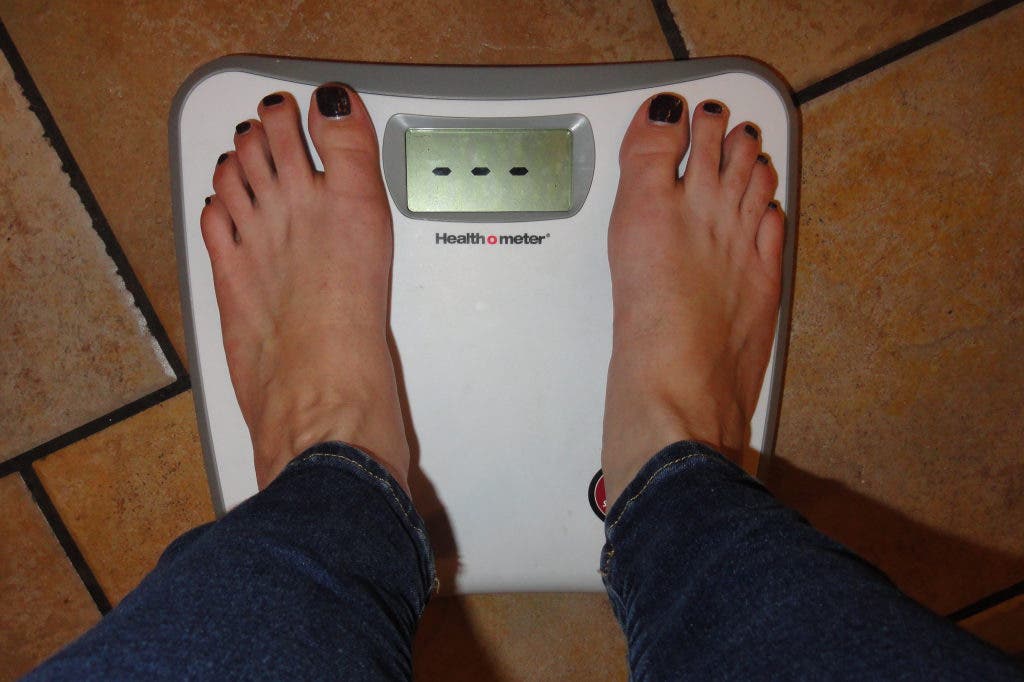
Here's something I can tell you. Many dieters are dissatisfied at the end of weight loss. And that makes me sad. Of course there is the occasional person who loses 100 pounds easily, never has a bad week, and ends up wearing size 4 jeans. That same person looks as if she had never been overweight, has no hanging skin and no extra pouches of flesh. She's happy alright, but she's also vanishingly rare.
Why is it so tough to get the final pounds off? And should we even try? Let's talk.
The first thing to consider is the fact that a weight loss diet is nothing more than you forcing your body to run an ancient starvation program. For more on this, you can read my earlier post on why weight loss diets stop working. Because weight loss occurs as a protective mechanism (your body burns itself in order to avoid starving in a famine), it triggers other protective responses at the same time. Most importantly, the body turns down its rate of calorie burning in order to keep you alive as long as possible. You become the equivalent of a house in winter whose owner is trying to save money on heating oil. The owner turns down the heat, closes up rooms that aren't essential and battens down for a long cold spell. So too your body. When calories are scarce, the body turns down the heat, stops doing things that aren't essential and generally settles in for a famine of uncertain length. This is an elegant and lifesaving response engineered by your brilliant genes. But it drives dieters crazy. Most of us have been conditioned to believe that, with small simple changes, we're supposed to MELT! Instead, we find that we are more like stubborn wooden sculptures whose outlines can be chipped away only through very hard work.
Find out what's happening in Beachwoodfor free with the latest updates from Patch.
At the end of a weight loss run, the body is at its most efficient...trying hard to keep you from wasting away to nothing. At the same time, the dieter is likely at his least efficient. He's tired, sick of it all, and burned out. His dietary rules have gotten a bit broader and he may be doing what one my patients calls, "coloring outside the lines" ...in other words, getting creative with the diet plan. This combination leads to a plateau. The weight loss stops.
Another issue with the final twenty is that the last pounds may be relatively unimportant. As I've written in the past, it's been my experience that people who were once overweight are "denser" after they lose. By this I mean that they weigh more on the scale than they might expect at a given size. They may look like a size 8 and fit in size 8 clothes, but still have a scale reading that they consider unacceptably high. When we gain weight, our body is forced to create millions of new fat cells to accommodate the fat that fills them. These cells look just like balloons and they swell when fat stuffs them. They then get smaller when fat is released. The question is whether these fat cells disappear after weight loss. I believe that they probably don't. They may remain as emptied tissue that is left behind. Perhaps the body will eventually resorb them and then again, it may not. But that empty tissue weighs something and it's my hypothesis that this is the reason that dieters often wind up being 20 pounds heavier than they think they should be.
Find out what's happening in Beachwoodfor free with the latest updates from Patch.
Here's another important question. What are you using as a reference for goal weight? I don't like BMI charts because they are not based on the weights of people who were once overweight and are now reduced. We don't know what optimal weights for that population look like, so why do we encourage POWs (previously overweight people) to get into the "normal" zone for NOWs (never overweights)? In my own case, after gaining 20 pounds and then reducing, I was never able to return to the weight I had been for most of my 30s and 40s. Yet at my current weight I am quite thin. On a recent trip to Asia, my distrust of some of the food sources combined with jet lag caused an eight-pound weight loss. I was back at my "original" weight but I looked really bad. Way, way too thin. Now I've regained to my new normal and this is most certainly the correct weight for me as a POW.
What are our expectations of a weight loss? It's been my experience that we often expect more changes than a simple loss of pounds can bring. Even the most physically blessed of us is not perfect and all the evidence points to the fact that most people are tormented by the feeling that there is always something else to correct. All we need to do is look at the gorgeous celebrities who continue to "tweak" themselves with plastic surgery, body contouring and the like. Where do we stop, get comfortable with our imperfections and let out a sigh of acceptance? Lynn Haraldson (my blogging partner) and I started our very first blogs with a discussion of this. Basically, we wanted to make the point that the body we come to inhabit after weight loss has its dings, scratches and non-working parts. Like the Velvteen Rabbit, we must come to love it simply because it has lived and bears the marks of living. As we approach the final pounds of weight loss, this is worth considering. If our body is objecting before we reach some "perfect" number, are we perhaps done?
What I've learned is that the biggest problem with weight loss is the perception that it's somehow done when the scale registers a certain number. As this blog has reiterated ad nauseum, initial weight loss is simply the price we pay for admission to the rest of a newly designed life with food. Once your body has stopped losing, it may well be time to start working on maintenance. Since you are going to vastly change the way you eat and move around, and since this is going to be a lifelong project, there is no hurry. Many people continue to lose as they learn to maintain. Perhaps that will be the better way to go. I know that this is anathema to those who want to be done...and for whom done means a particular number on the scale. To them I gently say, "What's the hurry? You've done wonderfully well and you have a lifetime to figure out your final equilibration."
If none of the above convinces you that it's ok to stop active dieting before goal, let me offer a few suggestions for getting the rest of the way:
1. Since you are so efficient at this point, you will have to force your body to give up calories. This means an increased focus on exercise toward the very end of your diet. Aerobic exercise is better for this than weights. Power walk, power swim, run, or do calorie burning activities like intensive yoga, assuming these are safe for you.
2. Take a look at your weight loss plan. Most people have loosened up on the rules by now. Go back to complete adherence. If there are still starches and sugars in your diet, remove them now. You may have been able to get by with weight loss before while eating them, but if you are producing alot of insulin now, your loss will stop. The same goes for salt. Take it out of your diet. You'll find that it's often coming from restaurant meals, so if you're truly serious, you may want to stop eating out until you're at goal. I would also suggest that you eat plenty of non-starchy vegetables but that you limit your fruit at this point. You don't need fruit and the sugars may be causing a problem.
3. Many people use a multiple-small-meal approach to dieting. It's my feeling that we don't spend enough time in the non-eating state. It's the time between meals and the hours of sleep that allow our body to switch over to the burning of stored fuels. Try to cut down on frequent snacks and get two to three hours between episodes of eating. This may help to move the scale downwards again.
4. If you are using a calorie approach, make sure you are really getting the calories you think you are. For the last part of your diet, I would suggest using more products that are calorie labeled. As unpopular as this suggestion always seems to be, using meal replacements like shakes and bars is really effective. It’s the approach I've used very successfully with hundreds of patients. Remember that you are not doing this for a lifetime, just to get where you want to be. I suggest that you use meal replacers during the day and eat a healthful, Primarian dinner.
And finally, if you are reading this post as someone who is close to goal, I want you to know that you have done an amazing job. Losing weight in the midst of the SAD is much more difficult than anyone leads us to believe. You have had the dedication to do it. You've put in the work. Bravo!! Now...the only thing I ask of you is that you please, please refuse to regain!
Read more by Dr. Barbara Berkeley at www.refusetoregain.com and on Facebook at Refuse to Regain: Barbara's World.