Politics & Government
Americans, skeptical of Trump’s “dereliction of duty” on climate, must lead where he will not
Opinion column on Ohio cities stepping up to lead on climate change in the wake of President Trump's withdrawal from the Paris agreement.


What can citizens do when their leader won’t lead?
Americans were recently confronted by this question.
On June 1, President Trump announced his unpopular, controversial decision to withdraw from the Paris Climate Accord, an agreement negotiated by 194 nations to act on climate change. Under it, the U.S. committed to work together with other countries to cut carbon pollution to keep global temperatures close to safe levels that scientists have indicated will avert the most catastrophic impacts for communities, wildlife, and wild places.
Find out what's happening in Clevelandfor free with the latest updates from Patch.
The decision makes the world less secure by increasing the likelihood and severity of conflict, mass migrations, and species extinctions as countries face higher temperatures, droughts, extreme weather events, and several feet of sea level rise. And it threatens the future of America’s majestic natural resources and wildlife.
Trump’s withdrawal is a disappointing, dangerous—and unpopular—abdication of leadership that isolates his Administration both abroad and at home.
Find out what's happening in Clevelandfor free with the latest updates from Patch.
National Wildlife Federation CEO Collin O’Mara called it a “dereliction of duty.” An Ohio newspaper has called it “self-serving grandstanding”, and cartoonists have lampooned it by depicting a man in a suit sticking his head in the sand.
Business leaders from Disney to Exxon Mobil to Starbucks have objected to exiting the agreement, and the decision has drawn bipartisan fire from members of Congress.
Opposition to Trump’s decision outpaces support by nearly 2-to-1, with 59 percent opposing the move and a measly 28 percent in support, according to a Washington-Post-ABC News poll conducted in the days after the announcement. More than 6 in 10 independent voters oppose Trump’s action.
Nor does a majority of Americans believe Trump’s argument that leaving the Paris agreement will benefit the U.S. economy: 42 percent say it will hurt and 20 percent say it will make no difference. The mayor of Youngstown, Ohio – a city Trump implied was somehow at odds with efforts to reduce carbon pollution – was unconvinced: “Nothing about the U.S. withdrawal would seem to indicate any form of job creation in Youngstown,” he said.
Ohio Republican Gov. John Kasich summarized the misguided nature of Trump’s withdrawal: “Climate change is a global issue and will need a global agreement to address. By withdrawing from the agreement, the administration has passed up an opportunity both to expand U.S. leadership in clean energy technology and to create well-paid American jobs with a future.”
It is important to note that the Paris Agreement will stand with or without the United States. The rest of the world will move forward, as will clean energy technology—and opportunities. These are considerable: solar jobs are growing 17 times faster than the overall U.S. economy, and wind turbine service technicians are the fastest growing occupation in the country. There are 2.6 million clean energy jobs across the country, with more than 100,000 of them in Ohio.
Trump has attempted to pit America against the world, but climate change is not a wedge issue. It is a problem faced in common the world over. No single city, state, or nation can solve it alone. Just as Great Lakes restoration requires international cooperation with Canada, so too does global climate change.
And yet in America, it is action by cities and states that must fill the void of leadership left by Trump.
The good news: state and local leaders have greeted Trump’s withdrawal with a tidal wave of commitments to live up to the Paris agreement regardless of the course the federal government takes.
Twelve states and Puerto Rico, representing more than one third of the population, have joined the United States Climate Alliance, a bipartisan group of states committed to upholding the Paris agreement within their borders.
Similarly, 289 mayors across the nation representing more than 58 million Americans have signed on to the U.S. Conference of Mayors Climate Protection Agreement.
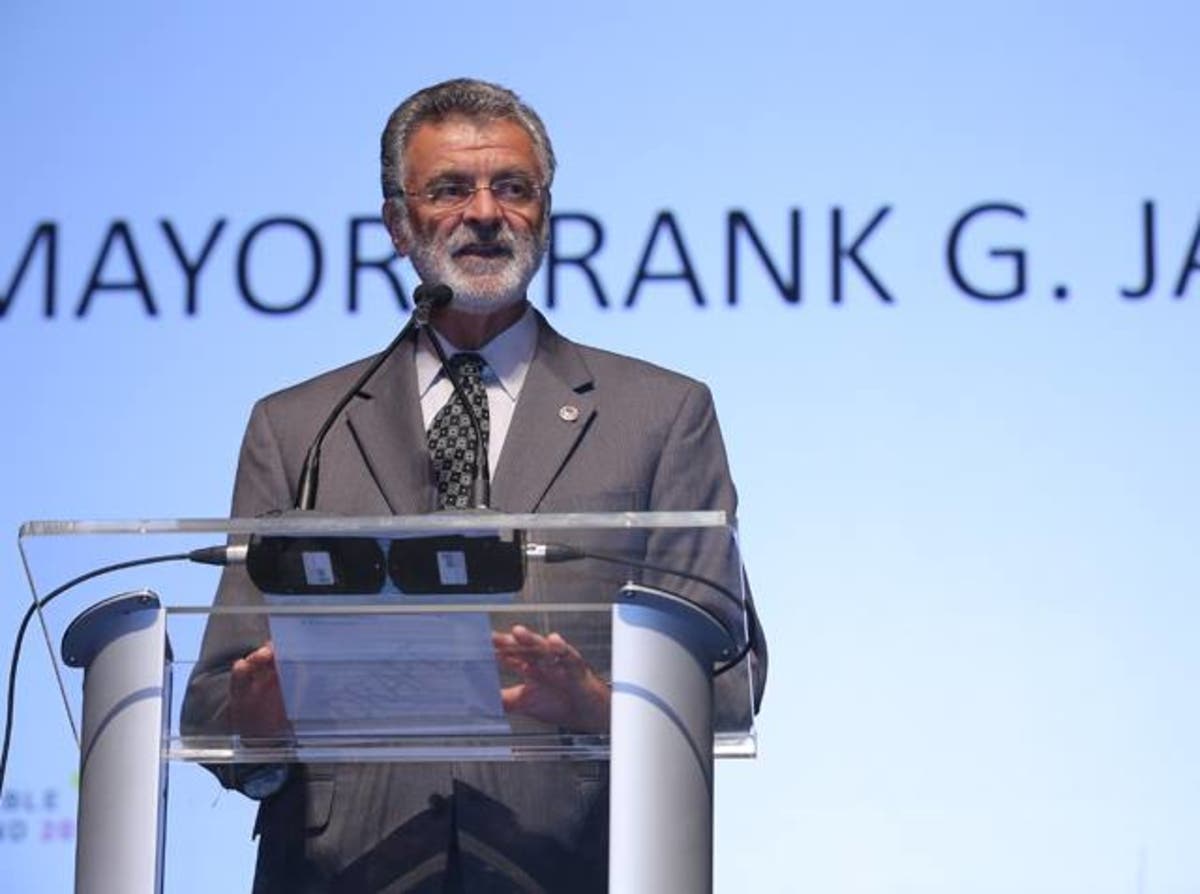
Locally, Cleveland Mayor Frank Jackson and Lakewood Mayor Mike Summers have chosen to join the Mayors National Climate Action Agenda, also known as Climate Mayors, along with four other Ohio mayors (including those from Toledo and Columbus).
Mayor Jackson indicated that the city of Cleveland is committed to continuing to do their part to support worldwide climate action, as well as action at home because, “It is simply the right thing to do.”
On top of this, business and university leaders have likewise committed to meet Paris agreement goals—bringing the total of such leaders to more than 1,000.
These leaders can continue progress to avert catastrophic climate change. They are creating forums to share information and best practices. They are unleashing American innovation to meet the challenge.
More Ohio mayors and business leaders should lend their support to such forward-thinking efforts.
Small steps can lead to big change. The best time to start working on a long-term problem is twenty years ago; the second-best time is right now.
If we use this moment to double down on efforts to build a robust and resilient economy, to protect wildlife, and to protect people against extreme weather events, droughts, and higher temperatures, we can achieve the progress needed.
Our children can’t take action to safeguard their future. If their president refuses to act responsibly, we must do so. We owe our kids–and ourselves–nothing less.