Local Voices
Affirmative Care for Transgender, Gender Diverse Individuals
A team of researchers from Case Western Reserve share their thoughts on the rights of transgender and gender diverse (T/GD) individuals

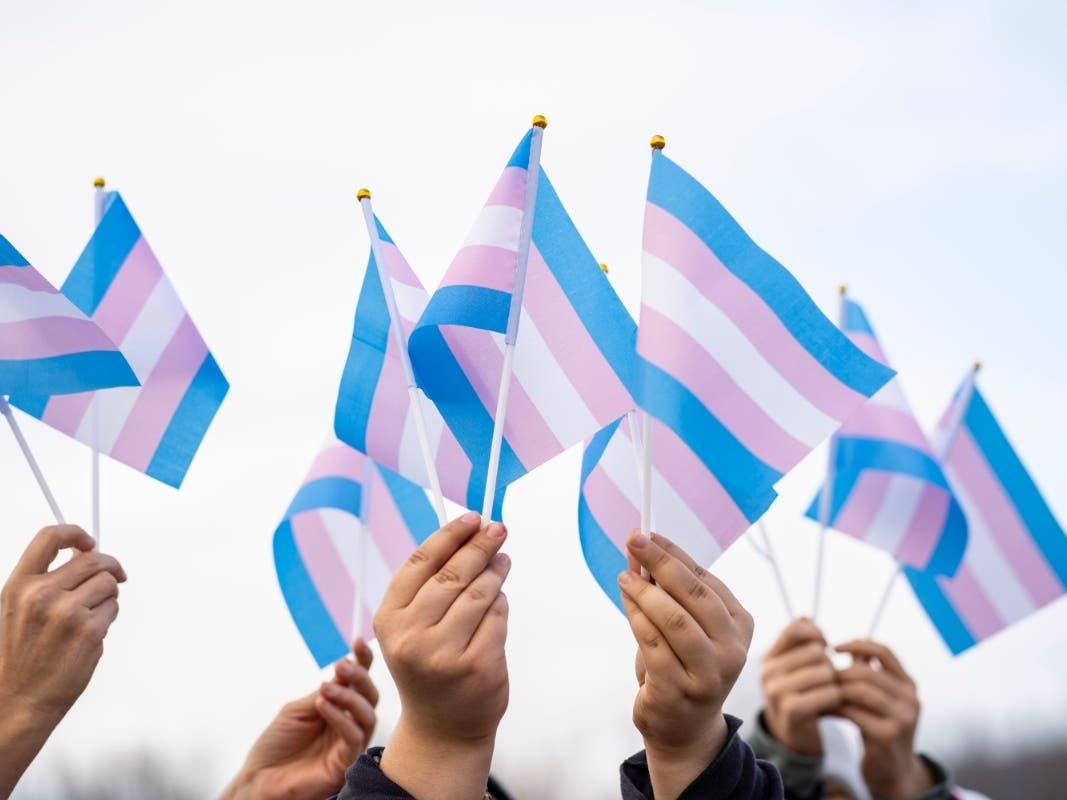
The following was co-authored by Dana Prince, PhD, MPH, assistant professor; Katherine Lewis, MSSA, LSW, research associate; and Braveheart Gillani, MSW, PhD student—all from the Mandel School of Applied Social Sciences at Case Western Reserve University.
Despite increasing support for equality across the US political spectrum, 2021 has been a record year for extremist agencies pushing state legislation to restrict the rights of transgender and gender diverse (T/GD) individuals. Their revived momentum is in part due to a small group of clinicians lending legitimacy to “non-affirmative” care.
On March 12, 2021, one of those clinicians, psychiatrist Dr. Stephen Levine, presented a lecture titled “The Mental Health Professional’s Role with the Transgendered.” His rationale for non-affirming care reads like a top ten list of Why life would be easier for you and everyone around you, if you just conform with our sexual and gender expectations. Levine recommended that parents should prevent youth from visiting trans-affirming websites because these websites reinforced identification as T/GD. He instructed therapists to facilitate a family negotiation regarding when and how the youth expressed their gender diversity, including the use of chosen names and pronouns. Levine’s recommendations constitute attempts to modify the behavior of T/GD youth, a key component of the conversion or reparative therapies renounced by professional organizations and banned by many US states and cities. In light of these social and legal pressures, clinicians promoting non-affirming care routinely deny the association.
Find out what's happening in Clevelandfor free with the latest updates from Patch.
They assert that affirmative care causes as much harm as conversion therapy. This is a gross misspecification of where harm lies. Non-affirmative practices result in increased risk of anxiety, depression, and suicidal behaviors in an already vulnerable population.
Levine cited a lack of scientific evidence as a reason to reject emerging affirming practices. Non-affirming clinicians selectively rely on evidence of individual causes in lieu of, rather than in addition to, evidence of social determinants of health outcomes T/GD youth experience significantly more bullying and victimization (abuse and rejection) in their families and communities. When the lives of our youth are at risk, none of us can afford to ignore social factors. How the individual is treated by family, peers, teachers, and yes, mental health professionals, matters.
Find out what's happening in Clevelandfor free with the latest updates from Patch.
Non-affirming clinicians challenge the capacity and the right of youth to make decisions regarding their gender identities. Their ethical foundation comes from the process of obtaining informed consent. Using a “case by case” approach to make decisions on access to gender-affirming medical treatment, Levine called himself a “neutral interpreter” of facts. But Levine’s professional activities outside of the clinic reveal his ideological biases. He provided evidence in the UK to limit use of hormone blockers in youth under the age of 16. He served as an expert witness in several US court cases, selected by those opposed to affirming practices in schools, private homes and prisons. Two correctional institutions contracted him to develop policies. In these roles, Levine was not just a clinician supporting individual clients to make informed decisions. He was advocating system-wide approaches to constrain the behavior of our most vulnerable members of society: T/GD youth and prisoners.
This raises questions about Levine’s ability to act ethically in his role as a clinician. In Norsworthy v. Beard (N.D. Cal. 2015), the court determined that Levine was not a credible expert witness because (1) he fabricated a case study to support his claims and (2) he provided institutional training recommending a blanket ban on gender-based surgery for prisoners. How is this the “agenda-free” professional idealized by non-affirming clinicians?
We propose that an ethical mental health professional embraces their agenda to:
• Protect the right to self-determination in T/GD youth,
• Develop competency in the “nature of social diversity and oppression,”
• Design a person-centered, structurally-competent gender-affirmative care model
• Invest in a flexible repertoire of interventions to reduce distress and empower youth with the space and time to explore their gender identity,
• Educate families and communities on strengths-based approaches to prevent or reduce discrimination, rejection and abuse of T/GD youth
• Advocate for systems and practices which respect chosen names, pronouns and other expressions of gender, and
• Obtain ongoing education and supervision.
When affirming adults understand and accept a wide range of gender identities and expressions as normal and healthy, youth do more than survive: they thrive.
If you or a loved one are experiencing distress, call the National Suicide Prevention hotline on 800-273- 8255. If you are looking for resources to support yourself or a loved one, call 2-1-1 to find out about mental health agencies working in your area.