Business & Tech
China Retaliates In Trade War, Midwest Will Get Hit: Experts
Agriculture is connected to one out of eight jobs in Ohio. It's not just family farmers that should be worrying about a pending trade war.


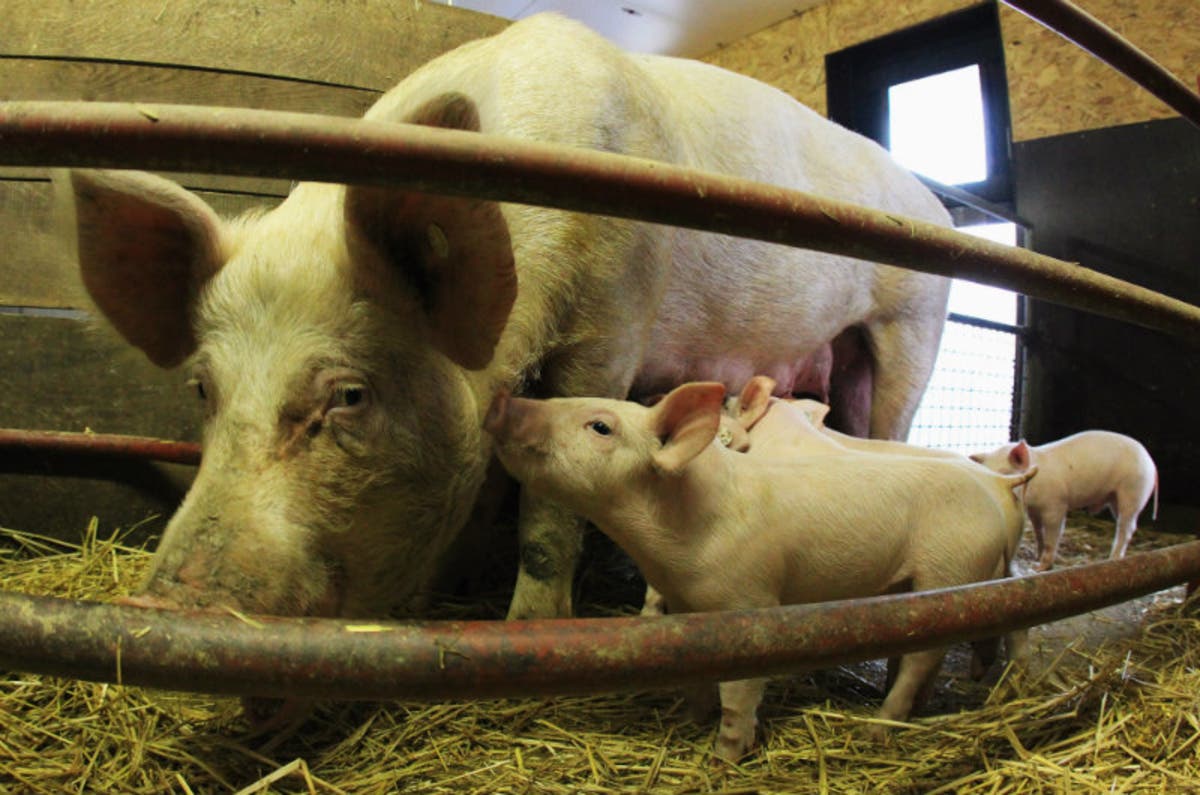
CLEVELAND, OH — On Monday, the concern and fears of agricultural producers across the Midwest became reality. China announced retaliatory tariffs against the U.S., specifically targeting pork, scrap aluminum, dried and fresh fruits, nuts and sparkling wine. To many economists, these appear to be China's opening salvo in a burgeoning trade war — a trade war that could have a disastrous impact on all of the Midwest.
"These are warning shots in an initial clash that could turn into a pretty ugly trade war," Ian Sheldon, an economist at Ohio State told Patch. "[A trade war] is getting more likely by the day."
After the U.S. announced it would place tariffs on Chinese steel products, the world's second largest economy responded with its own tariffs, primarily targeting American agriculture. Pork, and scrap aluminum, will be subject to a 25 percent tariff. Fruits, nuts and sparkling wine will be hit with a 15 percent tariff.
Find out what's happening in Clevelandfor free with the latest updates from Patch.
China appears to be targeting U.S. farms for two reasons. First, it's one of the few industries where China has a trade deficit with the U.S. That is to say, the U.S. exports more agricultural products to China than it imports from China.
Second, politics. States where farming is a key part of the state economy tended to vote for Donald Trump in 2016. Squeezing industries near and dear to the Midwest, for instance, could apply additional pressure on the president to remove trade barriers, said Chris Hurt, an agriculture economics professor at Purdue.
Find out what's happening in Clevelandfor free with the latest updates from Patch.
And agriculture is a major industry throughout the region. In Ohio, for instance, agriculture is connected to one out of every eight jobs, it also accounts for $1 out of every $13 of Ohio's gross state product, according to a study from Ohio State University. It's a big industry and its role is even bigger in other states.
Sheldon believes that even these initial tariffs could have disastrous implications. He pointed to another Asian market as an example.
"The U.S. used to be the leading exporter of beef to Japan and we’ve lost market share since the Mad Cow Disease scare in 2008. We lost market share to Canada and Mexico and most importantly to Australia," he said. "If we lose market share in China, it could be filled by European producers. There are short and potentially medium- and long-term effects to this."
Why This Matters
Let's look at the Buckeye State.
"Agriculture is hugely important in Ohio and exports are hugely important to agriculture," Joe Cornerly, the senior communications official for the Ohio Farm Bureau told Patch.
He's right. Approximately 525 million pounds of pork were sold to China last year, by the U.S., Hurt said. That's $1.1 billion in sales. More than a quarter of the U.S.'s pork was exported.
And Ohio is the eight largest producer of pork in the U.S.
In fact, the 10-largest producers of pork are nearly all Midwestern or Great Plains states: Iowa, North Carolina, Minnesota, Illinois, Indiana, Nebraska, Missouri, Ohio, Oklahoma and Kansas, according to the Pork Checkoff's 2015 stats. Eight of those 10 states went for Trump in 2016.
And the impact of these tariffs won't just squeeze the rural portions of the Midwest. The pain will send shudders throughout the region's metro areas.
"When we start doing things that could disrupt our markets, we’re hurting people in the transportation industry, we’re hurting people in finance, marketing, the dockworkers that load ships in Cleveland. It’s more than just the family farmer," Cornerly said.
And pork could be just the tip of the iceberg.
One of Ohio's largest agricultural products is soybeans. That crop has been mentioned as a possible candidate for further tariffs from China should a trade war develop. If that happens, Ohio's economy is going to take a hit.
While pork exports to China are worth about $1.1 billion, soybean exports to China are worth $12.4 billion annually. That loss could particularly sting the Buckeye State because Ohio's biggest agricultural export is soybeans, Sheldon said.
“This is a big deal,” he said. “There could be a lot of unintended consequences that I don’t think have really been thought through by the administration.”
The Future
Some forecasters, and market analysts, have already started looking ahead to looming impacts from a possible trade war. Purdue's Hurt is hoping there may still be time for a more universally beneficial resolution.
"If we can still talk with China, maybe we can get an agreement hammered out that says, these things are not going to go ahead and be put in place," he said.
Should nothing change, though, he said the situation will be "bleak."
(Photo by Joern Pollex/Getty Images)
Get more local news delivered straight to your inbox. Sign up for free Patch newsletters and alerts.