Health & Fitness
Ohio's Syringe Exchanges Need State Funding: Report
Officials hope the programs can curb outbreaks of HIV and hepatitis in the Buckeye State. But first they need funding, a new report finds.


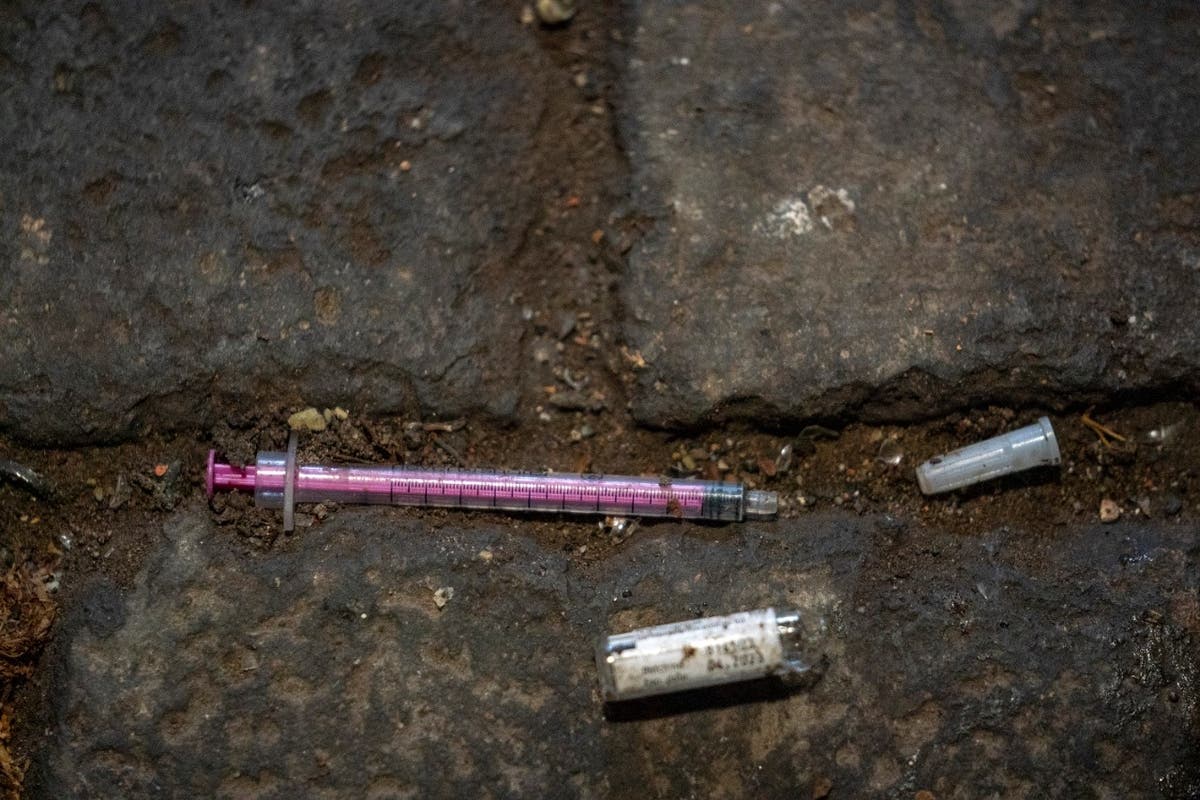
The number of syringe exchanges in Ohio has doubled since 2016, according to a new report from The Center for Community Solutions. Officials hope the operations will reduce the possibility of HIV and hepatitis outbreaks, but the programs have been underfunded by the state.
Syringe exchanges offer a place for drug users to trade-in used syringes for sterile equipment. The facilities often offer additional services, like hepatitis C and HIV screening, along with access to detox and rehabilitation programs.
Since 2016, at least 10 syringe service programs have been established in Ohio, the report found. There are now a total 16 programs operating throughout the state.
Find out what's happening in Clevelandfor free with the latest updates from Patch.
(For more news like this, find your local Patch here. If you have an iPhone, click here to get the free Patch iPhone app; download the free Patch Android app here. And like Patch on Facebook!)
“We think it’s important to offer this syringe services program in our community,” said Diane Thompson, director of nursing at Canton City Public Health. “We want to provide a clean, safe environment for clients, and also offer information about other services including mental health care referrals, detox and treatment.”
Find out what's happening in Clevelandfor free with the latest updates from Patch.
The Canton City Public Health program has worked with more than 300 people, exchanging more than 60,000 needles since it opened in 2017. Critics of similar programs have argued they enable drug use, more than prevent it.
One client of CCPH, who wanted to remain anonymous, however said: “Without [the syringe services program] I would be using anyway – except I would be in much more danger. I would never have got [sic] the Narcan kit that saved my children’s father. I can’t tell you how much [the program] has helped me along my journey. I owe them some credit for saving my life as well as the lives of people I love.”
HIV and Hepatitis
The Centers for Disease Control and Prevention have identified several Ohio counties as being vulnerable to hepatitis and HIV outbreaks. In fact, the Buckeye State has already begun experiencing an outbreak of hepatitis in its southernmost counties.
Since the start of the hepatitis A outbreak, in January 2018, there have been 1,687 documented cases of hepatitis A in Ohio. The majority of affected people are male (60 percent of patients), but people as young as 2 and as old as 81 have been diagnosed as suffering from hepatitis A.
Ohio typically averages 40 cases of hepatitis A per year, the Ohio Department of Health said.
According to the report, there are three syringe exchange programs in Northeast Ohio: one in Cleveland, one in Akron, and one in Canton. The majority of programs are located in southern Ohio. The goal of many of the programs is to reduce the possibility of HIV and hepatitis outbreaks.
“The state had only one syringe exchange, in Cleveland, for nearly 20 years,” said Melissa Federman, the Treuhaft Chair for Health Planning at The Center for Community Solutions. “And it was effective in reducing HIV rates among people who inject drugs. In the past few years, especially since a change in regulations in 2015, we have seen a much needed increase not just in needle exchanges, but also in syringe services programs, that offer a spectrum of services that keep clients and the overall public safer.”
However, the report found that many of the safe syringe programs in Ohio have been underfunded by the state. For example, the Summit County Public Health operation gets most of its funding from its addiction services department's surplus. The local United Way also offers some funding to the program.
The Summit County program has had 674 unique visitors since its opening in 2016. It works with an average of 90 people per week. Health officials have also been tracking local rates of HIV and hepatitis A, B, and C.
“The state’s 16 Syringe Services Programs offer a way for Ohioans who inject drugs to do so as safely as possible, in a way that also helps to prevent the spread of HIV and hepatitis C,” said Tara Britton, the Director of Public Policy for Community Solutions. “Many of these programs also offer other crucial services like disease screening, wound care, fentanyl testing strips and naloxone.”
None of the programs surveyed by The Center for Community Solutions had more than eight people working for the program at a time. Most programs had five or fewer workers.
The entire report can be accessed online.
Get more local news delivered straight to your inbox. Sign up for free Patch newsletters and alerts.