Health & Fitness
Home Economics
The home economics portion of the economic development pie undergirds the other portions, because it recognizes that work is more important than jobs...
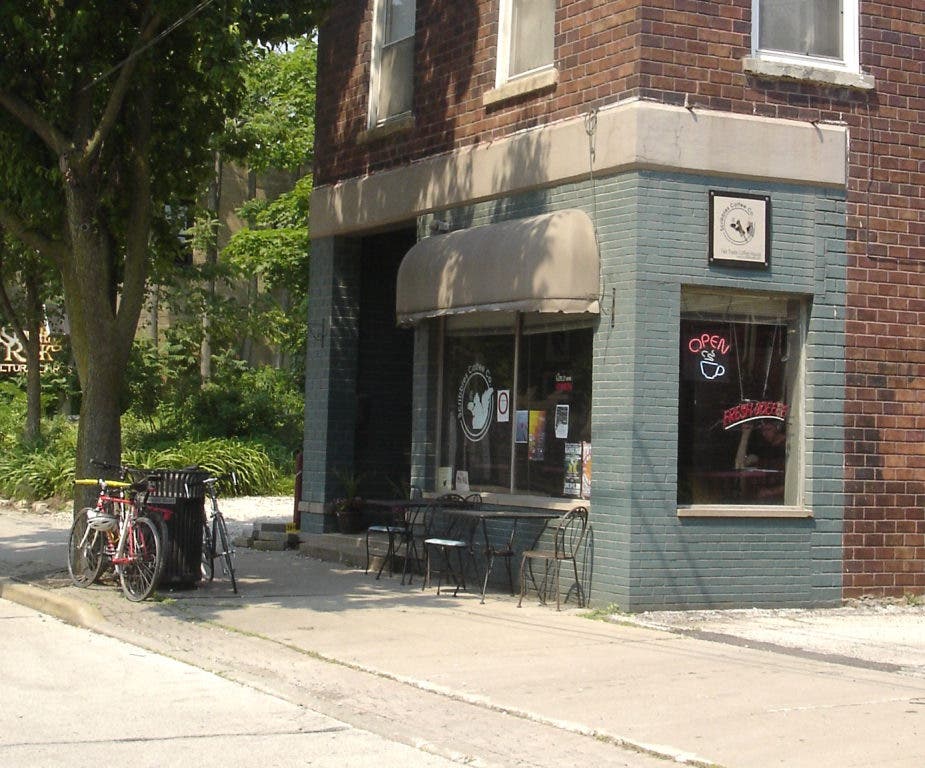


As one who has long been a booster of downtown revitalization and sustainable transportation it is hard for me to not be excited by the dirt piles and cranes in and around Kent these days. They are a sure sign of a large amount of public and private investment and hold great promise for our economic prosperity. As economic development projects go, a new bridge, a multi-modal center, a new alley and streetscape improvements are key public infrastructure investments that will help our downtown thrive and leverage private dollars. Even the city's support of the Main Street Kent group has had the effect of stimulating projects that probably wouldn’t have happened otherwise.
I know that some do not agree with spending public (read:tax) monies to leverage private investment. The debate over the long term costs and benefits and even the stimulative effect are matters of dispute at the local, state and federal level. What is indisputable is that government always has and probably always will play a vital role in economic development. The question is, what do we mean by economic development, and how do we make sure that we are approaching it as best we can?
If you survey the region, cities and counties are all involved in promoting projects that expand and retain existing businesses as well as attract new ones. Tax reductions, credits and expenditures, public investments and all matter of creative financing are used to promote employment. While this often results in communities and even states competing with one another, the bottom line is that local or state governments subsidize large projects for economic development in order to bolster the tax base, which supports the government. Because Ohio municipalities are highly dependent on income tax to generate revenue to operate, job retention and relocation, as well as the controversial “job creation” and the more nuanced “quality of life” investments to make our communities attractive have become second nature. This top down, large-scale economic development is therefore always at the forefront of the work of mayors, town managers and councils, and Kent is no different.
Find out what's happening in Kentfor free with the latest updates from Patch.
Approximately $10 million, or 30 percent of Kent’s $35 million dollar budget, comes from the municipal income tax. Of that amount, nearly 70 percent comes from Kent State University. Making Kent more attractive to faculty, staff and students therefore makes much sense for the long term vitality of the city. While some say that Kent State isn’t going anywhere anytime soon, the university is under increased competition from both traditional and non-traditional educational institutions for students and staff, and it would be short sighted for us to neglect what I call the top one-third of the economic development pie. If a new job pays $50,000 a year, the city gets roughly $1,000 in taxes. Without getting into the nuances of compensation, this means that to support a $50,000 city employee a city needs to retain or create 50 jobs paying $50,000. No wonder we have full time professionals working on attracting employers to our towns.
The middle third of the economic development pie is creating a community that attracts people to live, work and make investments in our community. While this is difficult due to the effect of Kent State students on our neighborhoods, there is a growing interest among the younger generation to live in diverse and culturally exciting urban places that are difficult to create outside of large cities and college towns. Finding ways to attract the “creative class” to make Kent home and to become the next generation of entrepreneurs therefore needs to be a central objective for our economic development efforts. The city and university have some role in this effort in direct and in direct ways. Recent investments in parks, bikeways and pedestrian facilities demonstrate a commitment to the quality of life of our future leaders. Investment in the downtown and support of the arts will pay long term dividends. Public, private and citizen sector investment in future-thinking projects that focus on neighborhood preservation and improvement will be required to assure that Kent is an attractive place to live, work and play in the years to come.
Find out what's happening in Kentfor free with the latest updates from Patch.
The last third of the economic development pie is what I call “home economics.” This is the grass roots, backyard and neighborhood component that speaks to the small things that do not show up so readily in the big project and quality of life wedges. These are the pieces that have to do with conservation of our place and the creative work of families and neighbors to meet their own needs. This piece is articulated in the success of the Haymaker Farmer’s Market, the development of local food initiatives, and the willingness of people to live with one car, or on one income, and to walk and bike as much as possible.
The home economics portion of the economic development pie undergirds the other portions because it recognizes that work is more important than jobs, and that everyone, including our youth, has vital gifts and talents to share with our community. The growing Kent Community Time Bank initiative points to the worthiness of the small acts of kindness and sees helping ones neighbor is as important, or perhaps more important, than punching a time clock.
Another important aspect of home economics is the recognition that we are not consumers by nature, and that conservation and community need to be given a higher priority than consumption. Kent’s “Goals for Sustainable Development,” generated nearly 20 years ago and before “sustainability” became applied to every kind of business enterprise, speak to the importance of gaining livelihood from and through the stewardship of our place. Every dollar that is not spent on gasoline, that is not handed to an out-of-town corporation or financial institution, and that is instead invested in our local economy, is multiplied as many as six times. The home economics sector of our economy, which is the foundation for the money economy, requires that we spend as much or more time thinking small as we do thinking big. It requires seeing the home based business and the backyard garden as the import investments of time and talent that they really are.
Scanning some of the current thinking about home economics, we can find all manner of organizations that seek to encourage local communities to make more deliberate choices about economic development, starting with each household. One such organization is the 10percentshift.org that seeks to “build strong local economies by purchasing with purpose.” This organization provides educational information and tools for local communities to help them understands “the profound impact that an incremental change in purchasing behavior can transform our local communities." Similar to, but more sophisticated than, the350project.net idea of spending 50 dollars per month at 3 local businesses, 10percentshift.org encourages us to take a comprehensive look at the way we spend and invest. What would happen for instance if 10 percent of the money that is in the stock market seeking the highest returns were invested locally in the people who are struggling to find work?
TransitionsUSA.org is a “re-localization” movement of which I am a part through a new local organization called TransPORTAGE. TransPORTAGE follows the transition town model of encouraging citizen’s sector initiatives that seek to create a sustainable prosperity based on investing in people, and the conservation of land, energy and our common natural heritage. Creating sustainable prosperity means producing more locally through in-sourcing, in terms of food, energy and other elements of life, and smoothing off the hard edges of globalization that have caused so much disruption to our lives. TransPORTAGE understands that government follows citizen’s economic and lifestyle choices and that all sectors of economic development must work together if we are to envision a future that is based on conservation and a reduction of our reliance on fossil fuels.
A key aspect of the transition to a post petroleum society is the recognition that there cannot be economic or ecological losers if we are to create a sustainable prosperity. We cannot pollute the air, water or the landscape nor leave the poor behind if we are going to become the civilization that we envision. We cannot be thrilled to see piles of dirt nor cranes in the sky if everyone is not included in the prosperity and if our legacy is one that our decendents are ashamed of — if we have dispoiled our home in the pursuit of economic development that only sees money and tax revenues.