Health & Fitness
Organic Lawn Care Basics
Learn the basics of organic lawn care. You can maintain a lush, healthy yard without any of the toxins. Mo helps you green your green!


Organic lawn care is one of those things that seems daunting, but in all actuality it's comparable in price and time commitment to traditional lawn care.
For those of you who just can’t bear the thought of dealing with it on your own there are a couple of companies that now offer full service organic lawn care. However, for those of you who do not fear the spreader or the hose I would like to give you the basics on providing your own organic lawn care.
The goal with organic lawn care is to promote the positive traits of grass and reduce the ability of weeds to compete. Basically, we want to give grass the competitive edge and let the plants fight it out. In many cases this involves nitrogen loading using a product called corn gluten, an application of a mid-summer balanced fertilizer, and another round of nitrogen in the fall. Nitrogen-loading your grass allows the grass to grow very strong. One other effect of high nitrogen content in soil is that it acts as a pre-emergent. Pre-emergents prevent seed germination. This is useful when you are trying to deter weed seeds from germinating and then growing in your yard. However, keep in mind that grass seed will also not germinate under very high nitrogen conditions. So, before you spend any time trying to get your grass in fighting shape, make sure that any major patches are seeded with grass seed and that those seedlings have been able to grow for a few weeks before starting your corn gluten regime.
Find out what's happening in Kentfor free with the latest updates from Patch.
STEP ONE: Get your soil tested. Add lime if the pH is below 6.0 and add gardeners sulfur if it is above 7.0. You can buy a kit for $17 at and do it yourself, but there are many places that will do this for you for a small fee like the Ohio State University Extension Campus.
STEP TWO: Weeding! Remove by hand any weeds that you can. If you have high numbers of legumes, like clover, they will most likely drop out of your community after you start your corn gluten regime. (This is because legumes are less competitive under high nitrogen conditions). If you can’t or don’t want to pull weeds use an environmentally safe herbicide (St. Gabriel’s BurnOut II – ready to use 24 oz. $10 up to 2.5 gallons concentrated for $120). However, you will have to wait two weeks after the weeds have died to replant new seed.
Find out what's happening in Kentfor free with the latest updates from Patch.
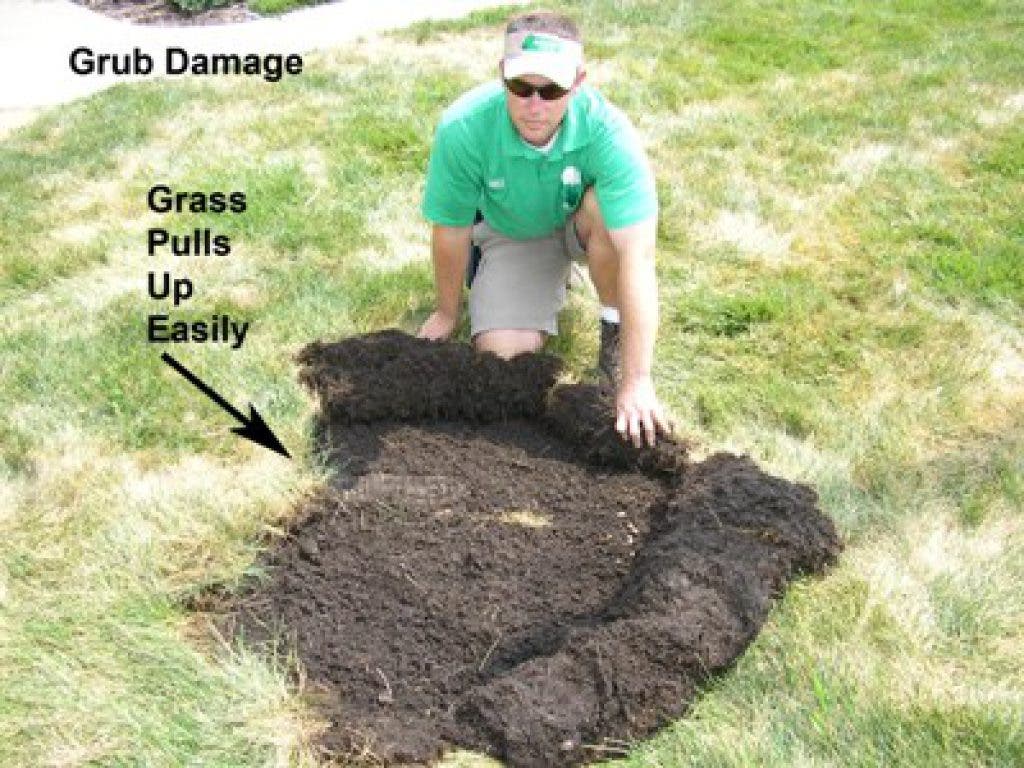
STEP THREE: Check for grubs and moles and other pests. Both can cause havoc on your lawn. If you are struggling with grubs you can inoculate your lawn with a fungus called Milky Spore. Milky spore is AMAZINGLY effective and ridiculously long lasting. Because it is a fungus that will now become part of the community of your lawn it could last forever – however, it is guaranteed for 10 years. A treatment for moles and voles is a product called Holy Moley. Holy Moley is made from castor oil and Fuller’s earth, can be spread with a broadcast spreader and deters moles via smell and taste ($18 for 10 lbs and covers 5,000 sq ft). This can be a very effective treatment for low level issues. If you have a very severe problem you may have to take more drastic measures.
STEP FOUR: After you have dealt with any complicating issues and any herbicides have had some time to be washed out of your lawn you need to plant grass seed in any holes or bare spots. Plant high quality grass seed. While you will have to order it online at this point — I highly recommend a product by Pearl’s Premium Plus. Pearl's Premium Ultra Low Maintenance Lawn Seed saves you dramatic amounts of money, time and water. This type of grass seed puts down 12" deep roots and grows at ¼ the rate of other lawns. So, you only mow once a month and seldom water once established. Let seeds germinate and grow for about 2 weeks before the next step. Somewhat expensive but worth it.
STEP FIVE: Apply fertilizers. Dr. GreenBee carries Ohio Earth Foods products. Corn gluten is applied in late March and April and again in early fall. It slowly releases nitrogen to keep your lawn thick and green. It is very safe. Children and pets can be active on the lawn immediately after treatment. For your first year apply 20 lbs per 1,000 sq ft and 10 lbs per 1,000 sq ft in subsequent years ($35 for 50lbs). In May or June you can apply a balanced fertilizer (8-3-3). I recommend ReVita Organic lawn Fertilizer (40 lbs for $33).
Here is a little scenario to help you visualize all of this. Let’s say you have ¼ acre of grass (10,750 sq ft) and you have a minor weed problem and a moderate grub problem. You will need to pull weeds, possibly spray weeds and apply Milky Spore now. Let’s say this costs $20 for the Burn Out Herbicide and $100 for enough Milky Spore to treat your whole yard. If you used any herbicides you should wait a week or so – if not you can immediately reseed any bare or thin spots. If you use a high end seed it may cost you between $20 and $100 depending on the area you need to reseed. After seedlings have established you can apply corn gluten ($140 for the first year, $70 all subsequent years). In June you can apply the balanced fertilizer (($140 for the first year, $70 all subsequent years). In fall you can apply the corn gluten again if needed. In this example, your budget for the first year would be $540 and about $210 in all following years. You would be busy with your lawn for the next two weeks, then two more days later in the season.
Like most projects where you are looking for a high quality outcome most of the work is in the preparation. If you spend the time to do the weeding, reseeding and pest management this year you set your yard up for low maintenance success. A little work today makes for less work in the long run!
Peace, love and happiness!
Mo @ Dr. GreenBee
Just a little disclaimer: I am not a lawn care professional and am learning as I go. You should get your soil tested or test it yourself to see if you need nitrogen, etc.