Neighbor News
Demodex Mites in Dogs
Demodicosis is a disease that that comes from the skin mite called Demodex Canis. It can make dogs very itchy, and can lead to hair loss.

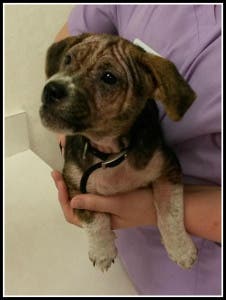


Hi guys! Floyd here and I wanted to tell you about mine and Dr. Murphy’s friend, Willie, as his skin condition that he had when he was just a young pup. The disease is called Demodicosis, which is an infestation of the skin with a specific skin mite (Demodex canis). It can make dogs very itchy, as well as cause hair loss, redness of the skin, and secondary infections. Cats can also get a similar disease, but it is usually caused by a different mite (Demodex cati or Demodex gatoi). God news is, after some treatment and time, Willie is feeling much better now!
Demodex canis mites inhabit the skin of dogs in small numbers as part of their normal flora. Demodex canis are spread from the mther to her puppies shortly after birth, during the nursing period. These mites typically do not cause any disease of the skin unless they occur in large numbers; this typically happens when a pet’s immune system is weakened (immunosuppression) and cannot control the growth and spread of these mites. THings that can affect the immune system’s ability to function would be chronic stress, ectoparisitism (i.e. flea infestation), certain diseases (hypoadrenocorticism, hypothyroidism, etc.), as well as poor nutrition early in life. However, there has been some research conducted that demonstrates a genetic predisposition to acquiring overgrowth of this mite.
Demodicosis can occur in 2 forms- localized and generalized. THe localized form occurs mostly in young dogs (<2 years old) and often resolves without treatment; however, we will sometimes need to treat secondary issues such as bacterial infections. Signs may include individual patches of hair loss, redness of the skin, as well as crusting (many dogs will have between 1-5 affected spots). Most dogs with this form do very well.
Find out what's happening in Kentfor free with the latest updates from Patch.
Generalized demodicosis is a bit more complex; it affects larger portions of the body with skin irritation, hair loss, and secondary infections. Generalized demodicosis can be further classified into juvenile-onset (aged 3 months to 18 months old) or adult-onset (over 18 months old). The juvenile form can be brought upon by poor nutrition, infestations with other parasites (fleas), other illnesses that cause the immune system to be weakened, and stress. Often times the adult-onset form is brought about after immunosuppression from some underlying cause, such as endocrine diseases, immunosuppressive drug therapy, or cancer. Clinical signs consist of extreme itchiness, loss of hair and secondary skin infections in mor than 5 local areas, and greasy/patchy/scaly coad and skin. Skin issues can occur on any part of the body with this disease. Treatment includes oral and topical medications to help control the mite infestation as well as treat secondary issues. Flea prevention is also key during the course of this disease. Treatment can be long and tedious depending on the severity of the dog’s condition, sometimes taking weeks to months for resolution. Prognosis is good to fair, witht he more severe cases having a worse prognosis. Breeding is not recommended for dogs with this condition. Diagnosis of this condition in all forms is made by scraping the skin and looking at a slide under the microscope. The mite can be seen, and looks almost like a cigar. Multiple repeat scrapings will need to be done over the next few weeks to months during treatment. If you think your pet may be affected by this or any other skin disease, please contact us and we will get your fury friend in for an examination.
Until next time!
Find out what's happening in Kentfor free with the latest updates from Patch.
Floyd and Jessica Murphy, DVM
Stow Kent Animal Hospital
Portage Animal Clinic
Stow Falls Pet Clinic
Additional Resources:
http://www.veterinarypartner.com/Content.plx?P=A&S=0&C=0&A=630