Schools
Lakewood School District Keeping Its Head in the Clouds
Cloud computing is the way of the future in the eyes of school officials who want to broaden Lakewood's classrooms by turning them into digital learning environments.
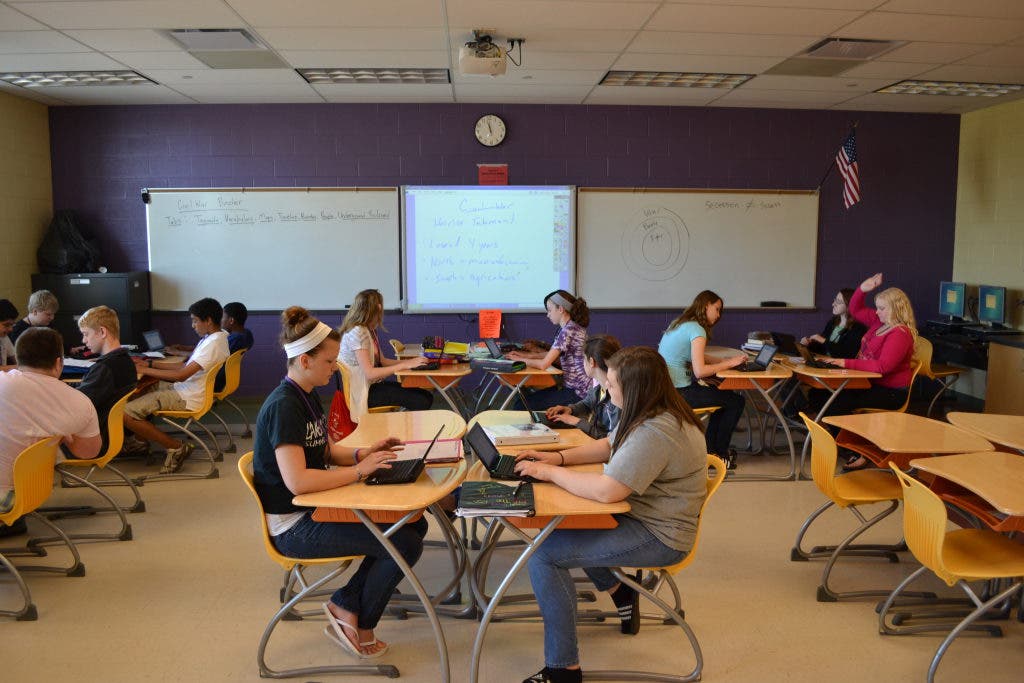
The have their heads in the clouds — but in this day and age, that’s a good thing.
For years, the district’s teachers and staff have leveraged changing technology to accelerate and widen the scope of students’ learning in the classroom.
But now they are just beginning to scratch the surface of a new technology: cloud computing, said the district's tech coordinator Jim Marras.
Find out what's happening in Lakewoodfor free with the latest updates from Patch.
Cloud computing will enable Lakewood’s students, teachers and staff to connect to secure online servers offering a variety of learning platforms and software applications that bring the classroom to any computer 24 hours a day — seven days a week.
Treasurer Rick Berdine called it “the Lakewood cloud.”
Find out what's happening in Lakewoodfor free with the latest updates from Patch.
As of now, the Lakewood cloud pertains to three digital platforms: Moodle, Google Apps and the Citrix Portal, he said.
The Moodle platform is an online curriculum connection point where students and teachers can use various templates involving podcasts, pdf’s, message boards and hyperlinks that relate and can be intertwined with lectures, assignments and homework.
Google Apps spins off Moodle, and uses applications like Google Docs where students work on the same electronic document that can be accessed from any computer.
The third, and perhaps most important, is the Citrix Portal.
It’s in a pilot stage and can grant access to 250 simultaneous users who want to use Microsoft Office (Word, Excel, Powerpoint and Outlook).
“With Citrix, we’ll no longer need to buy individual pieces of software or manipulate it on a single computer,” he said. “We’ll do it on the portal level. If it lives in a server world, you don’t need to use more RAM or hard drive space to run it…This will hold our costs down, and will provide a secure and broad online learning environment for students and teachers.”
“With these initiatives, we’re staying ahead of the curve, and I have my tech staff to thank for it.”
All-in-all, these three electronic initiatives can intermix or stand alone, depending on the needs of teachers and students in a given curriculum.
As the year goes on, Marras and his tech department will take user feedback to help decide how and where the platforms should be expanded.
"...The (Ohio Department of Education) is asking for higher rigor in terms of students' thinking, mastering learning, project-based learning and the critical thinking skills," Mark Gleichauf, director of teaching and learning, said.
"We're really trying to make an emphasis here on those types of skills within the classroom, and then supporting that with technology."